

AI CERTS
4 months ago
Inside Political AI Campaigning: Super PAC Ads Target Alex Bores
Bores, an ex-Palantir engineer, now champions tougher Tech Regulation in Albany. Consequently, he became a convenient example for big donors demanding a national AI framework. This article unpacks the money flows, tactics, and policy stakes behind the unfolding fight.
AI Industry Money Surge
Leading the Future filed its super PAC paperwork on 15 August 2025. Subsequently, FEC records show the group raised over $50.3 million before 2026. Press tallies place the broader network near $125 million in pledged or banked resources. Moreover, reports say the coalition entered 2026 with $70 million cash on hand.
- Network fundraising in 2025: approximately $125 million pledged.
- Cash on hand entering 2026: about $70 million reported.
- Think Big New York ad spend: roughly $1.1 million disclosed.
- Anthropic counter donation: $20 million to Public First Action.
Money flowed from OpenAI president Greg Brockman, a16z partners, Perplexity executives, and Palantir co-founder Joe Lonsdale. In contrast, safety-focused lab Anthropic sent $20 million to counter organizers at Public First Action. Such dueling checks illustrate how Political AI Campaigning now resembles an arms race. Consequently, specialists warn spending totals could eclipse recent crypto lobbying efforts. The numbers confirm unprecedented cash for AI policy battles. Therefore, finance alone may steer public debate before any vote occurs. Against this financial backdrop, strategy decisions determine which messages actually move voters.
Aggressive PAC Ads Strategy
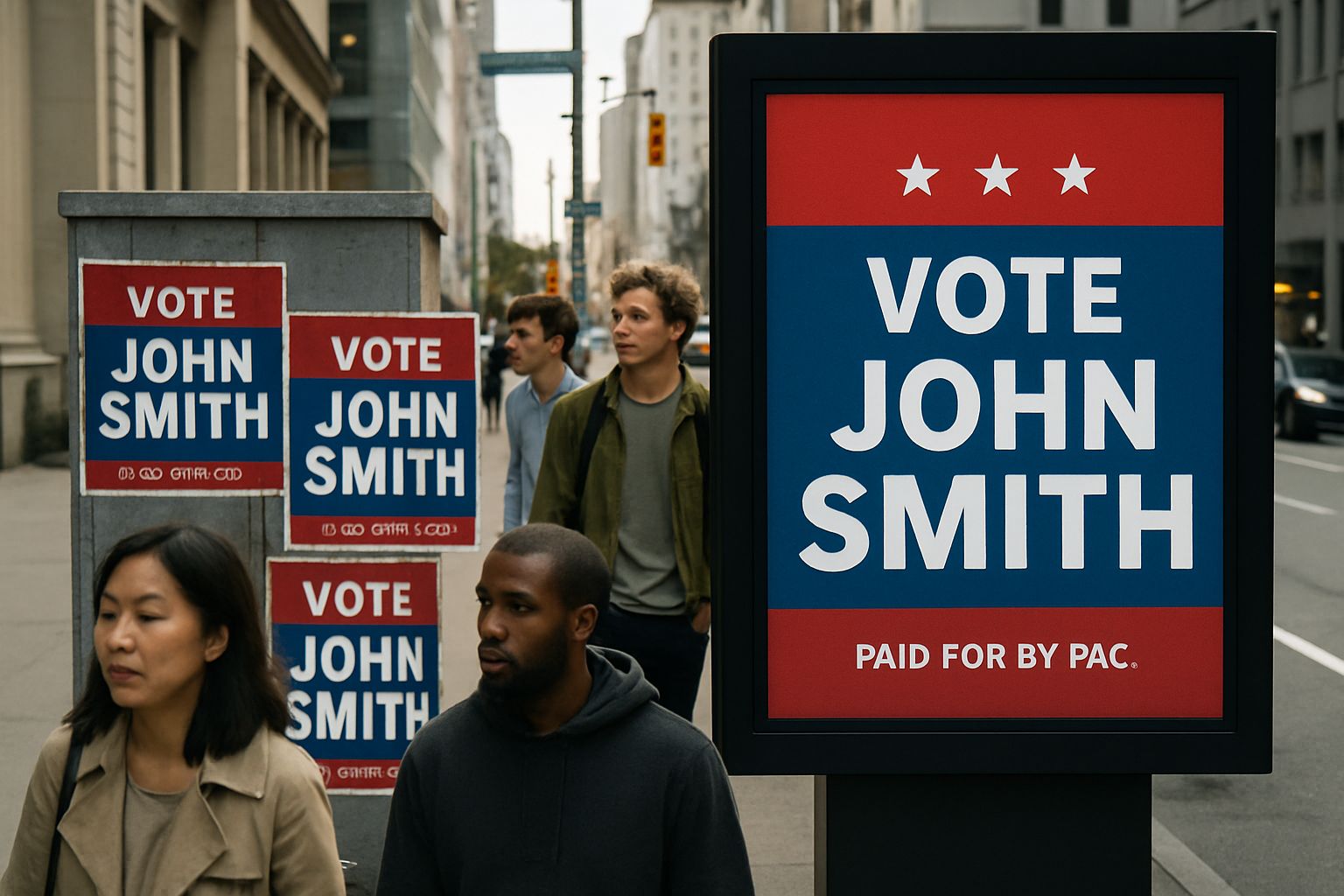
Think Big, the network’s Democratic affiliate, purchased $1.1 million in PAC Ads across New York screens. Additionally, digital placements, mailers, and text blasts echoed identical talking points. Ads linked Bores to Palantir’s controversial ICE contracts despite his 2019 departure. Meanwhile, the spots framed his state legislation as anti-innovation and job-killing.
Campaign veterans describe the playbook as deterrence by example. Josh Vlasto, Leading the Future co-head, confirmed that Bores “just happened to be first.” Consequently, legislators nationwide interpreted the blitz as a warning against pushing Tech Regulation bills. PAC planners hope early strikes shape the candidate pool before autumn fundraising peaks. The ad wave shows how targeted spending magnifies narrative control. However, messaging success still hinges on local credibility. That credibility question becomes sharper when examining Bores himself.
Alex Bores Test Case
Alex Bores left Palantir in 2019 citing moral opposition to ICE work. He later authored the RAISE/NY bill, demanding algorithmic audits and transparency. Therefore, many progressives view him as a pragmatic reformer rather than a radical. Nevertheless, attack clips spliced archive photos to imply ongoing profit from deportations.
Bores fired back, stating, “I quit Palantir specifically over its work with ICE in 2019.” Local outlets amplified the quote, producing counter-narratives on nightly news. Subsequently, volunteers leveraged social platforms to fact-check claims in real time. Political AI Campaigning faced its first authenticity test under bright Manhattan lights. Bores’ experience highlights reputational risks when narratives collide with documented timelines. Consequently, donor motives moved into the spotlight. Understanding those motives requires examining the regulatory stakes.
High Regulatory Stakes Explained
Industry donors demand a single federal framework pre-empting varied state standards. They argue inconsistent rules would fragment markets and hinder national competitiveness against China. Meanwhile, safety advocates insist state experimentation pressures Congress toward stronger guardrails. The clash places Tech Regulation at the center of every primary conversation.
Leading the Future claims its vision supports innovation and jobs. In contrast, critics warn that concentrated spending invites regulatory capture. Consequently, voters must judge whether campaign cash buys balanced policy debate. Political AI Campaigning will likely influence which bills even reach committee agendas. The framework fight extends beyond one district. Therefore, Manhattan serves as a proxy field for national rulemaking. Rival funding channels are already preparing for that extended contest.
Safety Counter Funding Emerges
Anthropic signaled resistance by donating $20 million to Public First Action in February 2026. Additionally, former lawmakers Brad Carson and Chris Stewart lead the group’s outreach. Their ads praise caution and emphasize independent oversight rather than blanket pre-emption. Consequently, the network hopes to protect candidates supporting stricter Tech Regulation without matching every dollar.
Employee advocacy has reinforced this counter-push inside several labs. Moreover, Palantir staff reportedly asked leadership to distance itself from negative spots. Such pressure demonstrates how Political AI Campaigning can create corporate culture flashpoints. Investors now track reputational metrics alongside electoral returns. Counter funding ensures debate rather than unilateral domination. However, parity remains unlikely given current cash gaps. Ethical questions thus take center stage for public audiences.
Ethical Debate Intensifies Over
Observers note irony in a Palantir co-founder backing ads attacking a Palantir alumnus. Critics label the approach hypocritical and cynically exploitative of immigration fears. Meanwhile, donors defend the tactics as standard hardball politics. Nevertheless, polling suggests negative ads may backfire among progressive urban voters.
Scholars caution that unchecked Political AI Campaigning could narrow policy discourse before laws mature. Furthermore, independent watchdogs advocate stricter disclosure rules for algorithmically micro-targeted PAC Ads. Professionals seeking deeper context can pursue industry credentials. They can consider the AI Marketing Strategist™ certification for informed decision making. Consequently, education becomes a frontline defense against manipulation. Debate over ethics will intensify as spending escalates. Therefore, transparent governance remains essential for public trust. Stakeholders now look ahead to the next spending reports.
Predicting What Comes Next
Spring filings will reveal fresh donors and updated burn rates. Moreover, campaign strategists expect nationwide copycat efforts targeting state legislators. Subsequently, Political AI Campaigning may expand into Senate battlegrounds and competitive gubernatorial races. Data from Kantar and AdImpact will clarify whether attack ads still sway micro-segments.
Analysts forecast total industry political spending could surpass $300 million before November. In contrast, safety coalitions will rely on viral organizing and earned media to stretch budgets. Consequently, outcomes in Manhattan will serve as an early barometer for national sentiment. Upcoming disclosures will test the durability of each narrative. Nevertheless, voter education may blunt pure spending advantages.
The Manhattan primary offers a vivid showcase of Political AI Campaigning power. Industry cash, sophisticated PAC Ads, and data tools are rewriting traditional playbooks. However, safety-minded donors and engaged constituents demonstrate that counterweights still exist. Consequently, forthcoming primaries will decide whether Political AI Campaigning can consistently overpower local narratives. Stakeholders across venture capital, academia, and civil society should monitor finance reports and ad archives. Meanwhile, professionals can mitigate confusion by studying governance models and earning trusted credentials. Therefore, readers may pursue the linked AI Marketing Strategist credential to stay informed and competitive. Transparent debate, not unchecked spending, must guide the next era of Political AI Campaigning.
Disclaimer: Some content may be AI-generated or assisted and is provided ‘as is’ for informational purposes only, without warranties of accuracy or completeness, and does not imply endorsement or affiliation.


