

AI CERTs
3 months ago
Condé Nast Warns Search Traffic Collapse Ahead
Condé Nast just issued a sobering forecast for digital media.
Consequently, media executives are rethinking how audiences will arrive on their sites.
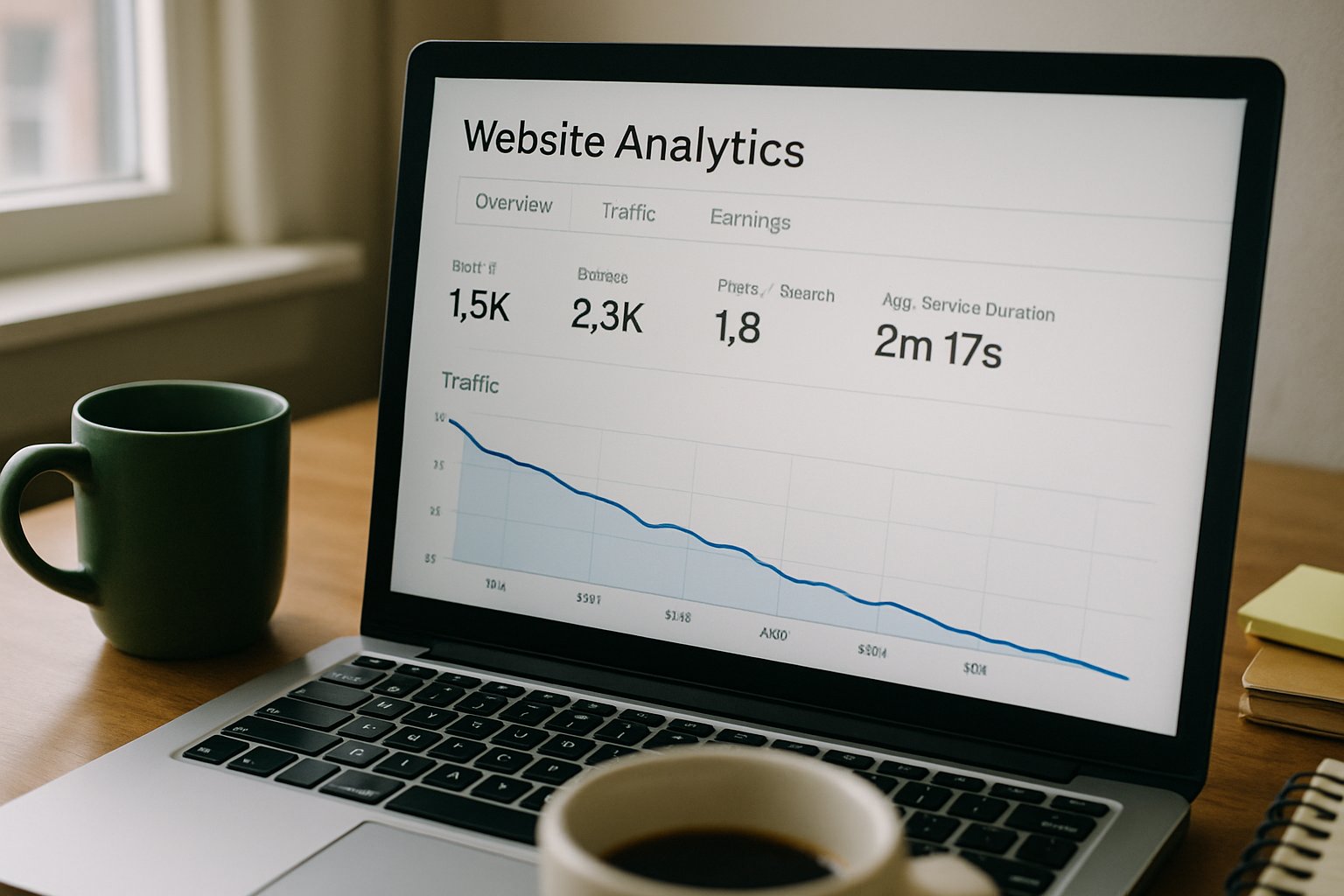
CEO Roger Lynch told the Financial Times that Search Traffic from Google now supplies only a quarter of visits.
Moreover, he warned that AI summaries are a 'death blow' that will shrink clicks to near zero.
The statement signals a profound shift for every publisher dependent on open web discovery.
Therefore, understanding the forces behind the decline and the emerging responses is vital for strategy teams.
This article unpacks the numbers, strategic pivots, and regulatory currents reshaping search economics.
Along the way, we examine what comes after Search Traffic fades from the revenue mix.
Finally, we share practical steps professionals can take to future-proof audience pipelines.
Condé Nast Wake-Up
Lynch revealed that Google Search referrals comprised about 55% of visits in 2023.
However, by 2025 the share dropped to roughly 25%, confirming internal Chartbeat trendlines.
Meanwhile, Condé Nast recorded revenue and profit growth, driven by subscriptions and licensing deals with OpenAI and Amazon.
Nevertheless, Lynch described Google's AI Overviews as the next cliff for Search Traffic, predicting irrelevance within two years.
These figures illustrate the urgency of diversification.
Consequently, other premium publishers are benchmarking against Condé Nast's timeline.
The historic drop underscores a systemic shift away from referral dependence.
However, broader market data reveals the pattern is hardly isolated.
Industry Data Downtrend
Multiple analytics vendors confirm the cascading collapse.
Trade journals report lifestyle Publishing verticals experiencing even steeper declines.
NewzDash shows aggregate Google Search referrals for news publishers falling from 51% in 2023 to 27% in 2025.
Additionally, Chartbeat recorded a 33% global year-on-year decline and 38% in the United States.
Ahrefs analysed 300,000 keywords and found AI Overviews cut top link clicks by 58% when present.
In contrast, open web sessions without AI Overviews still delivered stable organic visits.
- 51% to 27% share, NewzDash
- 33% global organic drop, Chartbeat
- 58% lower CTR, Ahrefs
Collectively, the metrics portray a structural realignment of audience flows.
Consequently, reliance on Search Traffic now resembles a risky single-channel bet.
Next, we examine the technology driving the shift.
AI Overviews Impact
AI Overviews, also called answer engines, assemble snippets into conversational responses that satisfy queries instantly.
Therefore, users leave without clicking through, creating zero-click sessions.
Google Search integrated AI Overviews across most English queries by mid-2025.
Generative AI drives these summaries by training on publisher content and live indexing.
Additionally, rival assistants from OpenAI and Perplexity rely on Generative AI, intensifying competitive pressure.
Nevertheless, publishers highlight the uncompensated extraction of attention, advertising value, and eventual subscription prospects.
Ahrefs researchers call AI Overviews a new 'position zero' that sidelines traditional ranking strategies.
Meanwhile, SEO teams experiment with Answer Engine Optimisation techniques such as concise takeaways, structured data, and schema citations.
The technology realigns information seekers away from outbound clicks.
Consequently, diminishing Search Traffic becomes an almost unavoidable by-product of better answers.
With traffic receding, revenue models must evolve.
Strategic Revenue Pivots
Condé Nast is doubling down on paid subscriptions, reporting growth despite collapsing referrals.
Moreover, it inked multi-year licensing deals with OpenAI and Amazon to monetize archives for assistants.
Licensing to Generative AI vendors delivers fresh income without cannibalising subscription pricing.
Smaller publishers are pursuing similar agreements, although bargaining power remains uneven.
Additionally, direct commerce, events, and podcast revenue streams now receive heightened investment.
Professionals can enhance commercial skill sets with the AI Sales Strategist™ certification.
In contrast, some outlets still chase incremental ad impressions through ever-longer articles optimized for dwindling Search Traffic.
Diversification offers hedges against algorithmic volatility.
However, execution speed determines who captures replacement revenue first.
That urgency now intersects with mounting policy scrutiny.
Regulatory Pressure Mounts
European regulators opened inquiries into Google's use of publisher content for AI in December 2025.
Meanwhile, the UK Competition and Markets Authority proposed binding conduct rules, including granular opt-out rights.
Google executives acknowledged that excluding content from AI Overviews while preserving Google Search ranking is a 'huge engineering project'.
Publishers argue the current all-or-nothing toggle effectively coerces participation.
Consequently, trade groups lobby for non-discriminatory licensing rates and technical transparency.
Policy momentum signals potential mandatory remedies within two years.
Therefore, business planning should account for a regulated answer ecosystem.
Optimisation tactics must also evolve alongside policy.
Optimising Beyond Search
Generative AI assistants, social discovery, newsletters, and direct app loyalty now matter more than blue links.
Nic Newman from the Reuters Institute notes that compelling human storytelling remains hard for algorithms to replicate.
Furthermore, audience development teams are experimenting with AEO strategies, aiming to get cited inside answer boxes.
Publishing veterans recommend focusing on first-party data, distinctive voice, and productized communities.
Consequently, editorial investment is shifting from keyword stuffing toward differentiated expertise that frontier models respect.
When executed well, these moves mitigate shrinking Search Traffic and create margin through loyal members.
Alternative channels cannot fully replace legacy volumes today.
Nevertheless, multi-channel resilience offers the clearest survival path.
Finally, leaders must track metrics relentlessly.
Essential Metrics Snapshot
Executives should monitor five indicators weekly.
- Search Traffic share versus total visits
- Referral mix by Google Search, social, direct
- AI Overview citation frequency
- Subscription conversion rate by channel
- Licensing revenue growth cadence
Tracking these metrics surfaces inflection points early.
Subsequently, data-informed pivots outpace reactive patchwork.
Let us recap the overarching narrative.
Final Strategic Takeaways
Media dynamics are entering a post-search era faster than analysts predicted.
Consequently, Search Traffic now looks like a legacy metric rather than a stable pipeline.
Condé Nast's disclosure and broader industry data show the trajectory is steep and consistent.
Therefore, leadership teams must pursue subscription depth, licensing breadth, and distinctive Publishing propositions immediately.
Moreover, experiments with AEO and assistant citations will complement reduced Google Search visibility.
Professionals can seize emerging revenue by mastering AI-led sales approaches.
Subsequently, the AI Sales Strategist™ certification offers structured guidance.
Nevertheless, continual measurement will decide who survives when Search Traffic finally flatlines.
Act now, recalibrate often, and meet audiences where algorithms cannot block the path.
Disclaimer: Some content may be AI-generated or assisted and is provided ‘as is’ for informational purposes only, without warranties of accuracy or completeness, and does not imply endorsement or affiliation.


