

AI CERTs
5 months ago
DeepMind AGI Economist Role Signals Post-Scarcity Planning
When an AI lab hires an economist, markets pay attention. Consequently, Google’s latest vacancy has drawn intense scrutiny across policy and finance circles. The posting seeks a Chief AGI Economist inside DeepMind, Alphabet’s flagship AI research arm. Shane Legg publicised the role on X, declaring that AGI now sits "on the horizon". However, the small job description hints at an expansive agenda touching global scarcity, labour, and power distribution. Meanwhile, investors wonder how DeepMind AGI breakthroughs might rewrite economic fundamentals. This article unpacks the hire, the motivations, and the potential ripple effects for technology professionals. Moreover, it compares DeepMind’s move with parallel strategies at peer labs like OpenAI. By reading, you will grasp why corporate economists could shape post-AGI governance as much as engineers. Let us explore the emerging discipline and its strategic stakes.
DeepMind Seeks AGI Economist
Legg posted the vacancy on 22 January, sharing the direct Greenhouse link. He wrote that DeepMind AGI progress demands rigorous economic foresight. Therefore, the economist will report to him and lead a boutique internal team.
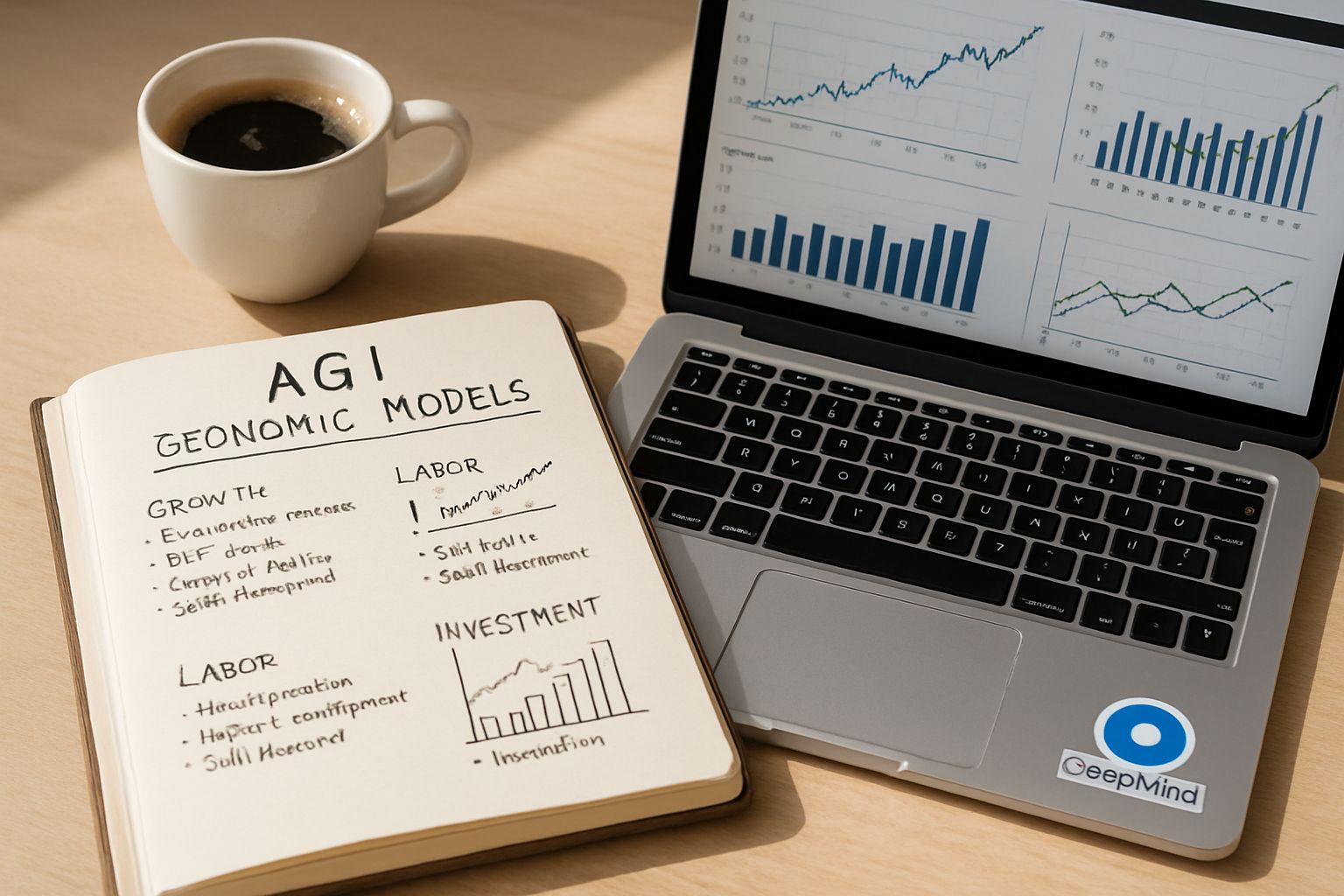
The listing situates the role in London and requires a PhD or equivalent experience. Additionally, candidates must handle agent-based simulations, macro forecasting, and institutional analysis. DeepMind specifies deliverables, including scholarly papers and policy outreach.
Consequently, the hire resembles chief economist roles at central banks more than academic posts. Nevertheless, remuneration remains undisclosed, though previous senior research positions crossed seven figures. Such numbers illustrate escalating competition for scarce AGI Economics talent. These details frame the strategic significance of the opening.
In short, DeepMind seeks applied economic firepower, not abstract theory. This unusual posting signals internal urgency. Consequently, we must examine why the company acts now.
Drivers Behind New Role
Several forces converge to make the hire timely. Firstly, CEO Demis Hassabis assigns a 50% chance of achieving AGI by 2030. Therefore, the planning window has narrowed. DeepMind AGI researchers anticipate transformative productivity gains and possible "radical abundance". Secondly, rival labs have already hired internal economists, notably OpenAI in 2024. Moreover, policymakers at Davos increasingly query firms about distributional impacts.
External pressure also plays a role. In contrast, public institutions lag on scenario research, creating a governance vacuum. Consequently, DeepMind AGI leadership prefers building evidence before regulators impose frameworks. AGI Economics insights could strengthen negotiation positions with governments and multilateral bodies.
Economic timelines, competitive dynamics, and policy expectations jointly explain the hiring decision. Understanding these drivers clarifies the broader strategy. Next, we explore what the economist will actually study.
Responsibilities And Modelling Methods
The job specification outlines an ambitious research agenda. Firstly, the economist will design agent-based simulations featuring consumers, firms, and autonomous AIs. Moreover, they must test how classic assumptions like scarcity, competition, and price signals behave under superhuman production.
Secondly, the role demands collaboration with policy teams to translate findings into deployment guidelines. Therefore, communication skills carry equal weight with quantitative dexterity. AGI Economics questions will surface in white papers, regulatory consultations, and leadership briefings.
DeepMind summarizes core tasks as follows:
- Develop post-AGI economic frameworks
- Run large-scale agent simulations
- Publish peer-reviewed research
- Advise product and policy teams
- Engage global academic networks
Collectively, these duties place the economist at the crossroads of science, strategy, and diplomacy. Such breadth underscores the seniority of the position. Industry context offers further perspective.
Industry Context And Comparisons
DeepMind is not alone in staffing internal economists. OpenAI appointed its Chief Economist, Dr. Ronnie Chatterji, in 2024. Anthropic and Cohere advertise similar roles focused on labour displacement metrics. However, the DeepMind AGI economist holds a unique post-scarcity mandate.
In contrast, OpenAI’s team emphasises near-term labour market shocks. Furthermore, academic bodies like NBER partner with governments rather than corporations. DeepMind AGI hiring therefore raises questions about private influence over future policy baselines.
Labs are racing to own the economic narrative around transformative AI. That race shapes talent flows and research agendas. Next, we examine scenarios the new hire might model.
Potential Post-AGI Economic Scenarios
The term "post-AGI" covers multiple hypothetical futures. One scenario involves radical abundance where goods become nearly free. Consequently, traditional price mechanisms could erode, challenging monetary policy foundations. DeepMind AGI simulations might test whether alternative allocation systems emerge.
A second outcome envisions extreme productivity with persistent inequality. Moreover, automation could displace labour faster than institutions adapt. AGI Economics research would quantify redistribution levers under such asymmetric gains.
Third, some experts foresee a mixed system where AI handles production, while humans specialise in governance and creativity. Nevertheless, questions about power concentration remain pervasive.
These scenarios illustrate why robust modelling tools are essential. Therefore, agent-based simulations offer a flexible framework for sensitivity analyses. However, every model carries inherent risk, as the next section explores.
Risks Debate And Governance
Critics worry that in-house research may reinforce corporate narratives. In contrast, public universities publish openly and invite peer review. Moreover, economic forecasts about unprecedented technologies carry vast uncertainty. Methodological errors could mislead policymakers, investors, and employees.
DeepMind AGI leaders acknowledge these pitfalls and request applicants to identify broken assumptions. Nevertheless, external oversight remains limited until publication or collaboration agreements emerge. Consequently, multilateral bodies like the OECD urge transparent data sharing.
Balancing proprietary advantage and societal trust presents a governance challenge. The next section turns to practical implications for professionals.
Implications For Tech Professionals
Economists are not the only specialists affected by the new role. Product managers, data scientists, and HR leaders will soon integrate post-AGI metrics into roadmaps. Furthermore, scenario literacy could become a core hiring criterion for many teams.
Professionals can enhance their expertise with the AI Human Resources™ certification. The program covers strategic workforce planning in high-automation contexts. Moreover, completing such coursework signals readiness for upcoming organisational shifts.
DeepMind AGI developments could catalyse new interdisciplinary jobs blending economics, policy, and engineering. Therefore, continuous learning remains the safest career hedge.
In essence, early awareness offers competitive advantage. Consequently, proactive upskilling now positions professionals for the post-AGI economy.
Google’s decision to recruit a Chief AGI Economist marks a pivotal moment in technology governance. Moreover, the move aligns with an industry trend toward in-house economic modelling. DeepMind AGI research will now extend beyond algorithms into resource allocation, institutional design, and social welfare. Nevertheless, transparent collaboration with public bodies remains essential to avoid misaligned incentives. Professionals who track these developments and pursue relevant certifications can navigate a rapidly changing landscape. Explore available learning paths today and prepare for tomorrow’s economic frontier.
Disclaimer: Some content may be AI-generated or assisted and is provided ‘as is’ for informational purposes only, without warranties of accuracy or completeness, and does not imply endorsement or affiliation.


