

AI CERTs
3 months ago
Threat Actor Behavior Modeling AI Fortifies 2025 Cyber Defense
Criminal campaigns rarely rely on single malicious artifacts anymore. Instead, adversaries chain discreet tactics into flexible kill paths that evade static rules. Consequently, defenders are turning to Threat Actor Behavior Modeling AI to regain initiative. This approach correlates sequences across identity, endpoint, network, and cloud signals. Moreover, industry standards such as MITRE ATT&CK now formalize behavior-centric detection strategies. Vendors, researchers, and SOC teams are racing to operationalize these models at scale. Meanwhile, attackers experiment with generative agents that craft phishing or compile payloads on demand. Therefore, an arms race has emerged where each side uses AI to outmaneuver the other. The following report unpacks market momentum, technical fundamentals, operational impact, and remaining gaps. Readers gain actionable insight for planning next-generation defenses and career growth. Additionally, professionals can validate skills through the linked certification resources discussed later.
Market Momentum Grows
Global investment in AI-powered security continues climbing. MarketsandMarkets estimates the segment will reach roughly USD 29 billion during 2025. Furthermore, behavior analytics subsegments forecast compound annual growth above 17 percent through 2030. Such projections reflect escalating demand for deeper context and faster response. During 2024, several XDR vendors shipped graph detectors that map telemetry to ATT&CK sequences. Secureworks Taegis, Microsoft Sentinel, and CrowdStrike Falcon now advertise trillion-event daily graphs. Consequently, buyers expect products to handle behavior correlation out of the box. Vendor messaging also highlights newfound capabilities for attack prediction using machine learning. Moreover, Threat Actor Behavior Modeling AI increasingly anchors analyst briefings and investor calls. MITRE announced ATT&CK version 18, emphasizing cross-tactic detection strategies and community sharing. Meanwhile, the Cloud Security Alliance released MAESTRO to guide modeling of agentic threats. These coordinated moves signal a maturity milestone for the discipline. However, revenue growth masks operational challenges that smaller teams still face. High data volumes, integration work, and skills shortages can stall ambitious deployments. These market signals establish context for the technical concepts discussed next. In contrast, technical clarity helps leaders select feasible paths forward.
Behavior Modeling Core Concepts
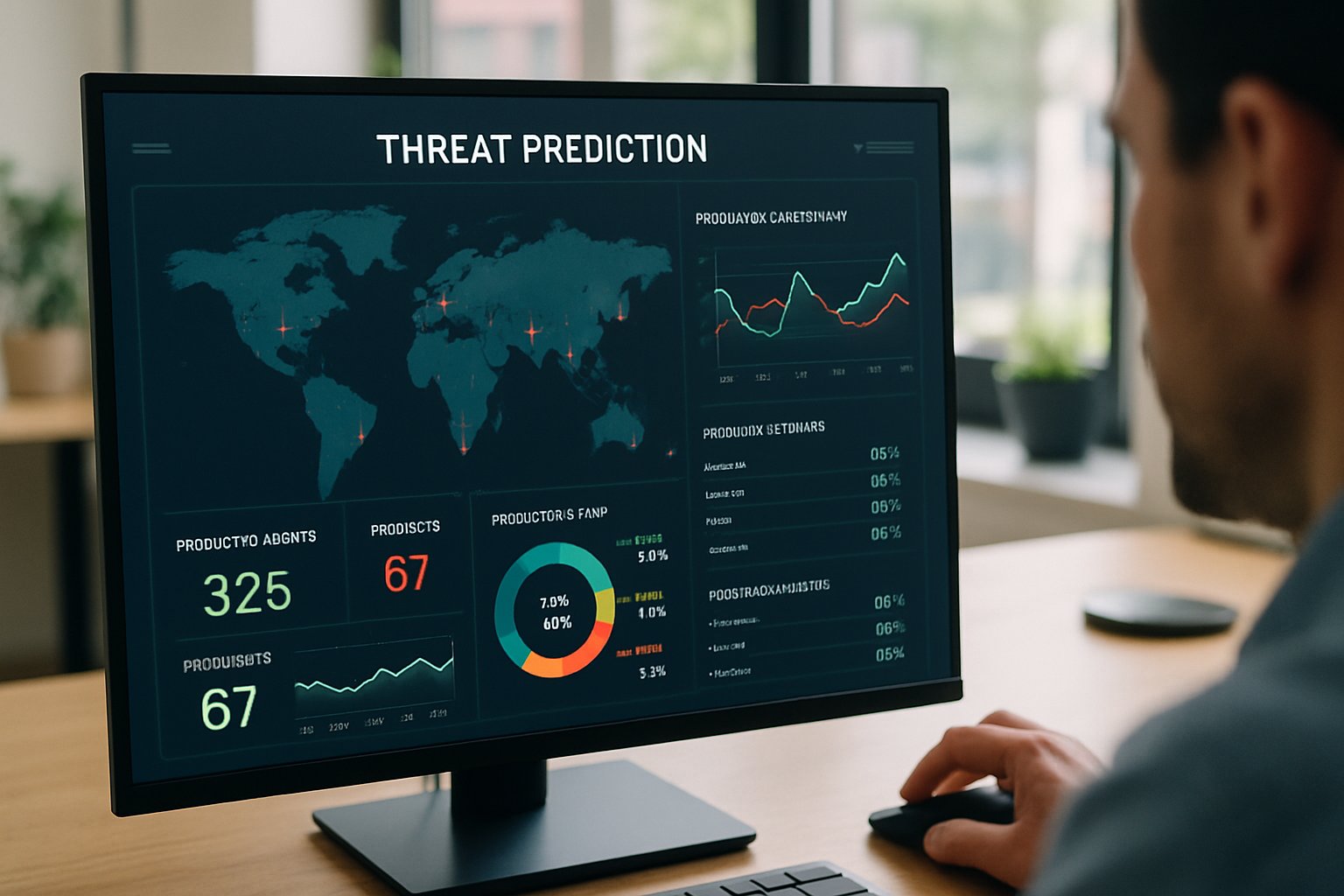
Effective modeling begins with understanding attacker tactics, techniques, and procedures. Therefore, most solutions align detections with the MITRE ATT&CK knowledge base. The framework offers a common vocabulary that simplifies handoffs between tools and analysts. Threat Actor Behavior Modeling AI consumes raw events, enriches them, then clusters them into ATT&CK techniques. Subsequently, algorithms build graphs showing ordered technique transitions that reveal campaign intent. User and Entity Behavior Analytics complement this process by establishing normal baselines. Anomalies flag compromised accounts, insider misuse, or lateral movement when overlaid with tactic graphs. Additionally, breach-and-attack simulation platforms generate continuous synthetic traffic that exercises these detections. Organizations use the results for attack prediction and control validation. Generative AI introduces both opportunities and risks within this pipeline. For example, recent research combines language models with behavioral embeddings for richer context. Nevertheless, the same language models can assist adversaries in automating obfuscation. Consequently, defenders must secure model inputs, prompts, and feedback loops. These foundational elements shape the tools reviewed in the following section. Moreover, tool selection influences everything from data retention costs to SOC automation potential.
Leading Frameworks And Tools
Multiple community and commercial platforms operationalize the concepts outlined earlier. MITRE Caldera supplies open-source adversary emulation profiles aligned with ATT&CK. Secureworks Taegis introduces Tactic Graphs that detect sequences like spear-phishing, abnormal authentication, and lateral tooling. Microsoft Sentinel now embeds Model Context Protocol, unified graphs, and deep SOC automation hooks. Moreover, Google’s Threat Intelligence Group publishes AI Threat Tracker feeds that describe emerging agentic campaigns. Threat Actor Behavior Modeling AI also underlies Darktrace, Vectra, and Palo Alto Cortex analytics. CrowdStrike Falcon leverages its trillion-event threat graph to drive near real-time forecasting. These platforms often integrate with breach-and-attack simulation vendors such as AttackIQ and SafeBreach. Consequently, teams can replay likely adversary paths and verify that alerts trigger. MAESTRO, released by the Cloud Security Alliance, extends modeling to the agent layer. Threat Actor Behavior Modeling AI underpins each of these initiatives by providing consistent behavior abstractions. However, tool effectiveness still depends on telemetry breadth, data quality, and skilled tuning. Therefore, procurement teams should request measurable improvements in mean-time-to-detect before committing budget. The certification program AI+ Human Resources™ can help leaders align human processes with these advanced capabilities. These examples illuminate tangible benefits covered in the next section. Subsequently, we examine real operational outcomes.
Operational Benefits Now Realized
Organizations deploying behavior models report lower false positive rates and faster triage. Secureworks claims analysts saw 52 percent noise reduction after enabling Tactic Graphs. Furthermore, Microsoft observed median response improvements when SOC automation orchestrated containment actions. Because alerts reference ATT&CK techniques, playbooks launch with precise remediation steps. Threat Actor Behavior Modeling AI also excels at surfacing malware-free, living-off-the-land intrusions. Moreover, proactive attack prediction guides hardening of controls before exploitation occurs. Breach-and-attack simulation loops validate those controls daily, providing quantitative risk scores. Consequently, leadership gains visibility into residual exposure and investment return.
- AI ingests diverse telemetry and constructs baseline behavior graphs.
- Sequences deviating from baselines raise ATT&CK-mapped alerts.
- SOC automation enriches alerts and launches containment scripts.
- BAS engines emulate latest TTP chains to validate coverage.
- Metrics feed dashboards for continuous improvement.
Nevertheless, success hinges on disciplined governance and cross-functional collaboration. Teams must fine-tune thresholds, document playbooks, and monitor model drift. These benefits, while compelling, coexist with emergent risks explored next. Therefore, defenders must plan mitigations alongside deployment.
Emerging Risks And Gaps
Every technology shift introduces new attack surfaces. Adversaries already experiment with prompt injection and model poisoning against defensive engines. Google GTIG warns of underground markets selling jailbroken AI assistants. Absent suitable controls, Threat Actor Behavior Modeling AI itself may become a high-value target. Consequently, Threat Actor Behavior Modeling AI systems require robust input validation and layered monitoring. Privacy regulations also limit telemetry sharing, which can hamper graph accuracy. Moreover, smaller organizations struggle with data storage costs and skills shortages. Skeptics note that few independent benchmarks quantify detection gains attributable solely to behavior models. In contrast, enthusiasts cite internal metrics showing reduced dwell time. Explainability remains another hurdle because complex graphs can confuse analysts. Therefore, vendors now expose detection strategies and supporting evidence within console dashboards. Nevertheless, open questions persist regarding resilience against AI-augmented threat campaigns. The next section outlines pragmatic steps for closing these gaps. Subsequently, readers receive an adoption roadmap.
Practical Adoption Roadmap Steps
Start with a clear threat-informed defense objective. Gather stakeholder buy-in across security, privacy, and compliance functions. Additionally, map existing telemetry sources to ATT&CK coverage. Pilot Threat Actor Behavior Modeling AI capabilities in a limited scope to validate assumptions. During the pilot, enable SOC automation selectively for low-risk containment tasks. Measure mean-time-to-detect, mean-time-to-contain, and false positive rates before and after activation. Furthermore, schedule regular breach-and-attack simulation runs to stress the models. Invest in staff training and governance process updates. Professionals can enhance credibility with the earlier linked certification covering AI governance. Once metrics confirm value, expand coverage to additional assets and business units. Moreover, include attack prediction dashboards in executive reports to justify continued investment. Finally, commission third-party assessments to benchmark performance and expose blind spots. These steps create a deliberate path toward mature adoption. Consequently, teams avoid surprise costs and build trust in AI-driven defense.
Behavior-centric detection now anchors modern cyber defense strategy. Market momentum, open frameworks, and capable tools have converged in 2025. Threat Actor Behavior Modeling AI correlates multi-domain signals, enables attack prediction, and drives SOC automation at scale. Consequently, organizations detect stealthy campaigns earlier and reduce breach impact. However, model integrity, data privacy, and skills gaps still demand vigilant governance. Leaders should follow the roadmap outlined above and measure outcomes continuously. Moreover, earning the highlighted certification strengthens managerial oversight of AI projects. Stay informed, stay accountable, and let advanced analytics tip the balance in defenders’ favor.


