

AI CERTs
3 months ago
Radiology Workload Automation Systems Deliver Burnout Relief
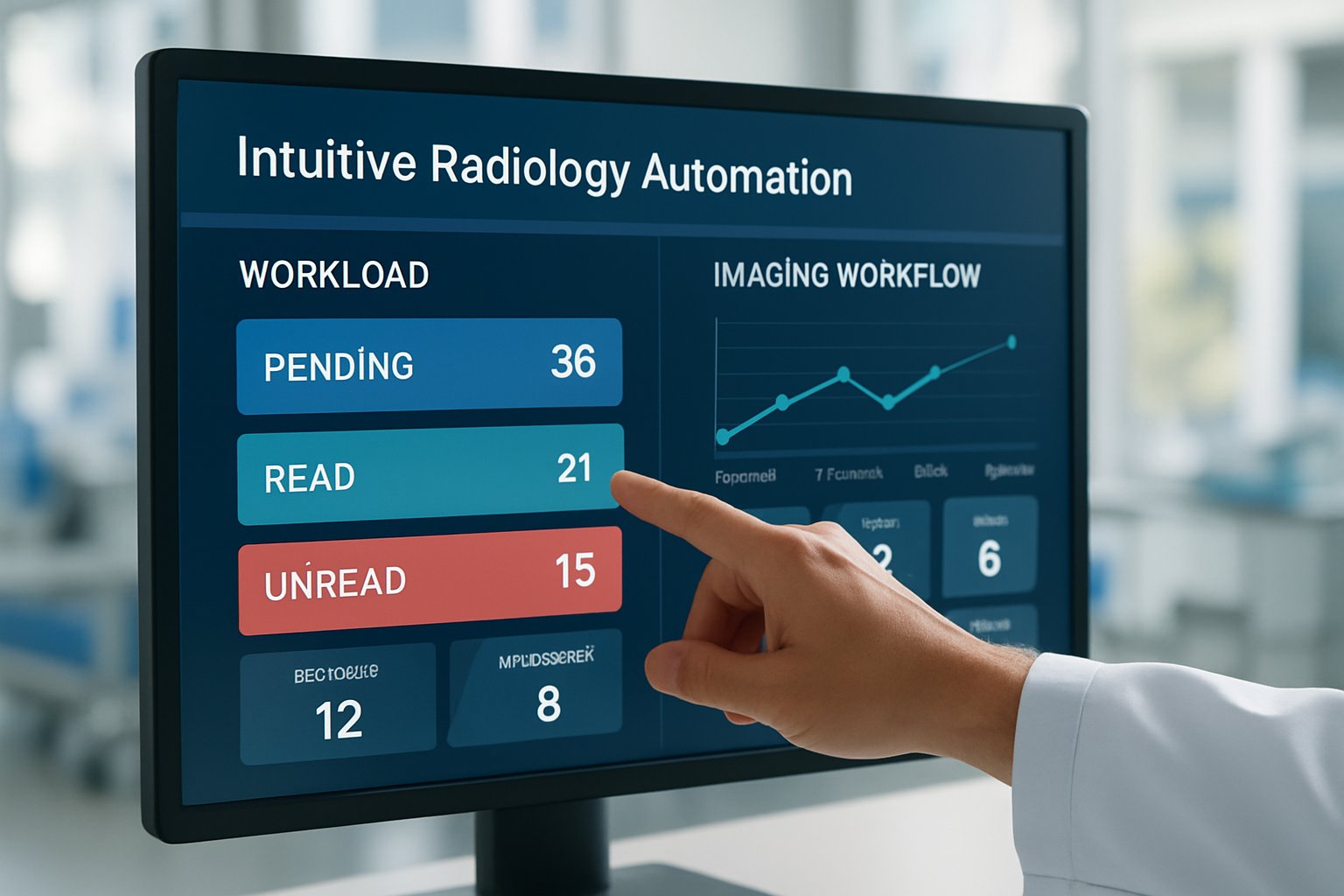
Radiology departments are drowning in scans and staffing gaps. Therefore, leaders seek technology that balances safety and speed. Radiology Workload Automation Systems promise that equilibrium by orchestrating triage, reporting, and documentation tasks. Moreover, recent adoption trends reveal tangible gains for time-pressed clinicians.
Vendor data show nearly 2,000 US hospitals running these platforms. Peer-reviewed studies record double digit turnaround reductions. However, benefits are not universal. Implementation style and cultural acceptance determine success or frustration. Consequently, executives evaluating investments must weigh evidence, risks, and governance plans. This article synthesizes the latest market signals, clinical evidence, and practical lessons. Professionals can finally judge whether Radiology Workload Automation Systems merit frontline deployment or further pilot testing.
Current Market Momentum Signals
Firstly, market momentum surged across 2024 and 2025. Viz.ai reported nearly 2,000 hospital deployments and profitability in January 2026. Additionally, Aidoc expanded foundation-model triage capabilities and signed large system agreements such as Sutter Health. Major imaging vendors integrated medical imaging AI marketplaces directly into PACS and EHR workflows.
Consequently, analysts view Radiology Workload Automation Systems as the fastest scaling imaging software category since cloud PACS. GE HealthCare, Philips, and Siemens Healthineers all launched orchestration suites emphasizing fewer clicks and unified alerts. Meanwhile, investors funneled fresh capital into niche algorithms that feed these enterprise backbones.
Adoption metrics underscore commercial traction. However, momentum alone does not guarantee clinical value. Therefore, evidence behind hard benefits deserves careful examination.
Evidence Behind Hard Benefits
Peer-reviewed studies quantify time gains from triage and draft reporting. The 2025 University of Chicago analysis showed 22-minute mean turnaround reductions for PE positive CTPA during work hours. In contrast, off-hour improvements were negligible, highlighting workflow dependence.
Moreover, a 2024 pilot using GPT-based draft reports cut per-case reporting time by 24% without raising major error rates. Additional chest X-ray simulations echoed similar savings when automated text populated structured templates. Researchers caution that Radiology Workload Automation Systems without worklist reprioritization may show negligible benefit.
Collectively, these data confirm that well-tuned medical imaging AI can accelerate critical pathways and documentation. Nevertheless, benefits materialize only when algorithms reorder the worklist and integrate tightly with reading stations.
Time savings appear real but conditional. Consequently, burnout impact hinges on broader factors. Those determinants surface in the next section.
Key Burnout Impact Factors
Radiologist burnout remains stubbornly near 50%, according to 2023 national surveys. Clerical overload, overtime, and moral distress from delayed diagnoses drive that fatigue.
Radiology Workload Automation Systems target each driver through triage speed, documentation automation, and reduced context switching. Furthermore, enterprise dashboards route flagged studies to downstream teams, lessening communication burden.
Yet the 2024 JAMA survey warned that poorly accepted tools can worsen stress. Training, governance, and false-positive tuning strongly mediate perceived workflow relief.
Burnout relief demands human factors alignment. Therefore, implementation strategy becomes paramount. The following section details execution guidance.
Workflow Relief Implementation Guide
Successful programs start with multidisciplinary governance and clear success metrics. Stakeholders define acceptable alert frequency, turnaround goals, and documentation quality thresholds.
Moreover, teams pilot Radiology Workload Automation Systems in busiest shifts to maximize measurable impact. They monitor false-positive rates and adjust model sensitivity regularly.
- Integrate AI outputs directly into RIS or PACS worklists.
- Enable automatic reordering for flagged critical studies.
- Provide mandatory user training before full launch.
- Collect turnaround and satisfaction metrics weekly.
- Iterate alert thresholds based on clinician feedback.
- Select Radiology Workload Automation Systems with proven audit trails.
Additionally, professionals can enhance governance skills through the AI Security Specialist™ certification. Consequently, structured rollouts shorten learning curves and build trust, unlocking sustained workflow relief.
Best practices convert promise into repeatable results. However, ignoring risks can derail gains. Major risks are outlined next.
Major Risks And Caveats
Alert fatigue tops clinician concerns, particularly when specificity dips. False alarms force extra clicks and widen cognitive load. In poorly tuned Radiology Workload Automation Systems, excessive alerts can overshadow any efficiency gains.
Furthermore, liability remains ambiguous because radiologists retain final responsibility for automated suggestions. Legal uncertainty can dilute any perceived workflow relief.
Deskilling fears also emerge as AI drafts more report text. Nevertheless, regular double-reading audits preserve skills and uphold quality.
Risk mitigation requires continuous monitoring. Consequently, leadership must allocate support resources. After managing risks, organizations can plan future growth.
Key Vendors Landscape Overview
Vendor choice influences integration complexity and support maturity. Viz.ai focuses on stroke, PE, and oncology coordination across enterprise teams. Selecting Radiology Workload Automation Systems that align with existing PACS reduces integration friction.
Aidoc positions a foundation-model platform spanning multiple acute pathologies, promising seamless medical imaging AI expansion. Meanwhile, GE, Philips, and Siemens bundle marketplaces into cloud PACS offerings for unified deployment.
Emerging niche vendors chase specialized detectors that plug into those ecosystems.
Landscape diversity allows tailored solutions. However, interoperability evaluation becomes essential. Finally, we examine future trajectories.
Future Outlook And Trends
Analysts predict continued double-digit adoption growth through 2027. Consequently, Radiology Workload Automation Systems will likely become table stakes for competitive imaging services.
Foundation models that handle cross-modalities may collapse multiple niche algorithms into single platforms. Additionally, ambient documentation could extend automation benefits beyond radiology into wider clinical practice.
Nevertheless, regulatory frameworks must mature to balance innovation and accountability. Professional societies already draft standards for auditing medical imaging AI performance and governance.
Future growth appears strong yet conditioned. Therefore, proactive governance remains non-negotiable.
Radiology automation now shifts from experimental hype to measurable operational strategy. Peer-reviewed data demonstrate faster triage, shorter reports, and fewer clicks when governance is tight. Moreover, burnout rates may finally fall as workflow relief replaces repetitive clerical burdens. Nevertheless, organizations must invest in training, audit frameworks, and liability planning. Consequently, leaders who align culture, metrics, and technology capture medical imaging AI gains while protecting clinician well-being. Explore the certification link to strengthen governance skills and guide upcoming deployments.


