Which AI Certification Providers Support Team-Wide Implementation and Tracking?


Executive Summary
Deploying AI across modern enterprises fails without clear visibility and skill benchmarking. This blog uncovers how top-tier certification providers solve the adoption bottleneck. By exploring automated cohort analytics, role-based governance frameworks, and decentralized skill verification, training entrepreneurs can launch highly profitable B2B education ventures that match current market demands.
Table of Contents
- The Corporate Hurdles of Disorganized AI Learning
- Automated Cohort Analytics: Real-Time Performance Auditing
- Role-Based Governance Tracking: Aligning Skills with Policy
- Decentralized Skill Verification: Continuous Proof of Team Competence
- Capitalize on the Enterprise AI Training Market
- Frequently Asked Questions (FAQs)
The Corporate Hurdles of Disorganized AI Learning
Corporate leaders are buying thousands of software licenses, but most employees are not using them. Providing generic tutorials or passing around software accounts does not build actual workplace capability. Without a centralized tracking framework, corporate buyers cannot see who is developing skills, where security risks exist, or if their training budget is yielding results.
The scope of this corporate visibility issue is highlighted in recent workplace data. According to an industry study published, 62% of corporate chief executives state that AI will require most of their staff to learn completely new skills within the next three years. However, a major utilization gap persists. While up to 85% of workers have access to digital tools, only 25% use them regularly. This leaves massive productivity gains untouched and creates a severe skill divide within departments.
For entrepreneurs looking to launch a sustainable business, this operational gap represents a significant B2B market opportunity. Enterprise clients do not want simple video catalogs. They need robust corporate AI training programs that include clear, dashboard-driven visibility. By offering a platform that tracks learning metrics in real time, you solve an urgent corporate problem.
Automated Cohort Analytics: Real-Time Performance Auditing
The first unique feature that corporate buyers look for is automated cohort analytics. Traditional training platforms only show simple completion rates. They tell managers if an employee finished a video, but not if they can apply the knowledge. Modern enterprises need deeper insights. They require data that shows how effectively teams are solving practical problems, writing code, or optimizing internal workflows.
The commercial impact of large-scale, structured technical training was demonstrated when Tata Consultancy Services (TCS) announced an expansive enterprise partnership with Anthropic. Through this global initiative, TCS is training and certifying an initial cohort of 50,000 employees on advanced Claude models and cloud systems. A massive workforce deployment of this scale cannot rely on manually graded tests or self-reported progress updates. It requires automated, platform-wide metrics to evaluate skill readiness across entire departments simultaneously.
Entrepreneurs can capture this enterprise demand without building their own tracking technology from scratch. By participating in an established network like the AI CERTs Authorized Training Partner (ATP) Program, you can instantly offer enterprise clients built-in manager dashboards. These tools allow companies to view group performance analytics in real time, making your training services highly attractive to corporate buyers.
Role-Based Governance Tracking: Aligning Skills with Policy
The second critical requirement for enterprise-grade training is role-based governance tracking. Many employees experiment with public digital platforms without understanding corporate security, data privacy, or intellectual property rules. This unsupervised usage creates significant liability risks. Enterprise leaders need a training framework that teaches technical skills while enforcing compliance rules based on an employee’s specific job role.
The public’s anxiety around technology safety makes structured corporate training essential. An Anthropic Public Record survey published, which gathered perspectives from nearly 52,000 people, revealed a profound trust gap. While 48% of respondents hope advanced technologies can cure complex human diseases, 64% express intense worry over job security, and 48% fear data privacy violations. To manage these operational risks, corporate leaders must ensure their teams are properly trained.
Furthermore, this demand for structured training extends directly into the public sector. Moreover, the City of Alexandria, Virginia, launched a comprehensive partnership with InnovateUS to provide structured, ethical digital training to its entire workforce of 2,000 municipal employees. The initiative focuses on ensuring that public servants use digital tools responsibly, securely, and in full compliance with public interest standards.
For educational business owners, providing certified role-based training is an excellent way to stand out. When you choose to become a partner with an established certification body, you gain access to ready-made, compliant learning paths. This allows you to sell verified, secure training programs directly to corporate and government buyers.
Decentralized Skill Verification: Continuous Proof of Team Competence
The final element of a successful enterprise implementation is decentralized, secure skill verification. In a fast-moving corporate environment, traditional paper certificates or unverified digital badges are no longer sufficient. If a company cannot easily verify an employee’s credentials during a project audit, the training loses its value. Enterprise buyers need immutable, instantly verifiable proof of workforce capabilities.
This need for verifiable capability is reshaping the broader employment market. Data from the PwC AI Jobs Barometer published, indicates that the specific skills required for tech-exposed positions are changing more than twice as fast as roles with lower technology exposure. Crucially, the top fifth of highly adapted companies are experiencing 163% higher productivity growth compared to their competitors. To maintain this competitive advantage, businesses must continuously verify and update their teams’ credentials.
Instead of devoting valuable time and capital to engineering a proprietary, secure verification database, business owners can leverage a pre-built global network. Operating as an authorized training partner gives you access to a secure, internationally recognized credentialing system. Your clients receive trusted, tamper-proof proof of their skills, allowing your training business to secure highly profitable, multi-year corporate contracts.
Capitalize on the Enterprise AI Training Market
Building an enterprise-grade training infrastructure from scratch requires years of development, significant capital, and complex legal validations. The most efficient way to enter the corporate education market is to leverage a trusted, globally recognized training network.
Partnering with AI CERTs allows you to bypass early-stage operational hurdles. You can instantly leverage an established global ecosystem that supports over 115,000 learners, 200 certified trainers, 72 distinct professional certifications, and 300 partners across more than 90 countries. This gives your business immediate market credibility.
Whether your goal is to operate a specialized training facility, integrate certifications into a college curriculum, or build a corporate training firm, there is an optimized partnership track available for your business model:
- Launch and grow your corporate training enterprise via the Authorized Training Partner Program.
- Embed high-demand professional credentials into higher education through the Authorized Academic Partner Program.
- Spearhead regional upskilling initiatives by joining as an Association Partner.
- Drive corporate lead generation and digital revenue as an Affiliate Partner.
Frequently Asked Questions (FAQs)
1. How can our training business help corporate clients track employee certification progress?
By utilizing an authorized partner framework, you provide corporate clients with access to a centralized management dashboard. This tool allows managers to track real-time exam completion, monitor test scores, and review active credentials across different departments from a single interface.
2. Why do corporate buyers prefer third-party certifications over internal training programs?
Internal corporate training courses are expensive to build and update as technology evolves. Third-party certifications give corporate buyers independent, industry-validated proof of skills that aligns with global compliance and security standards.
3. What steps are required to launch a certified corporate training business?
The fastest route is to join an established network as an authorized training partner. This program provides your business with ready-to-use curricula, official study guides, and access to a secure examination system, allowing you to begin selling to enterprise clients immediately.
4. Can our business offer customized role-based training paths for different departments?
Yes. The certification portfolio features 72 distinct tracks tailored for various business functions, including human resources, legal, operations, and technical development. This diversity allows you to provide comprehensive, company-wide education solutions.
5. How do globally recognized credentials protect companies from data governance risks?
Enterprise certifications teach employees how to handle data securely, maintain operational privacy, and follow ethical technology standards. This structured education helps corporate clients minimize legal risks and protect their proprietary business information.
Recent Blogs
FEATURED
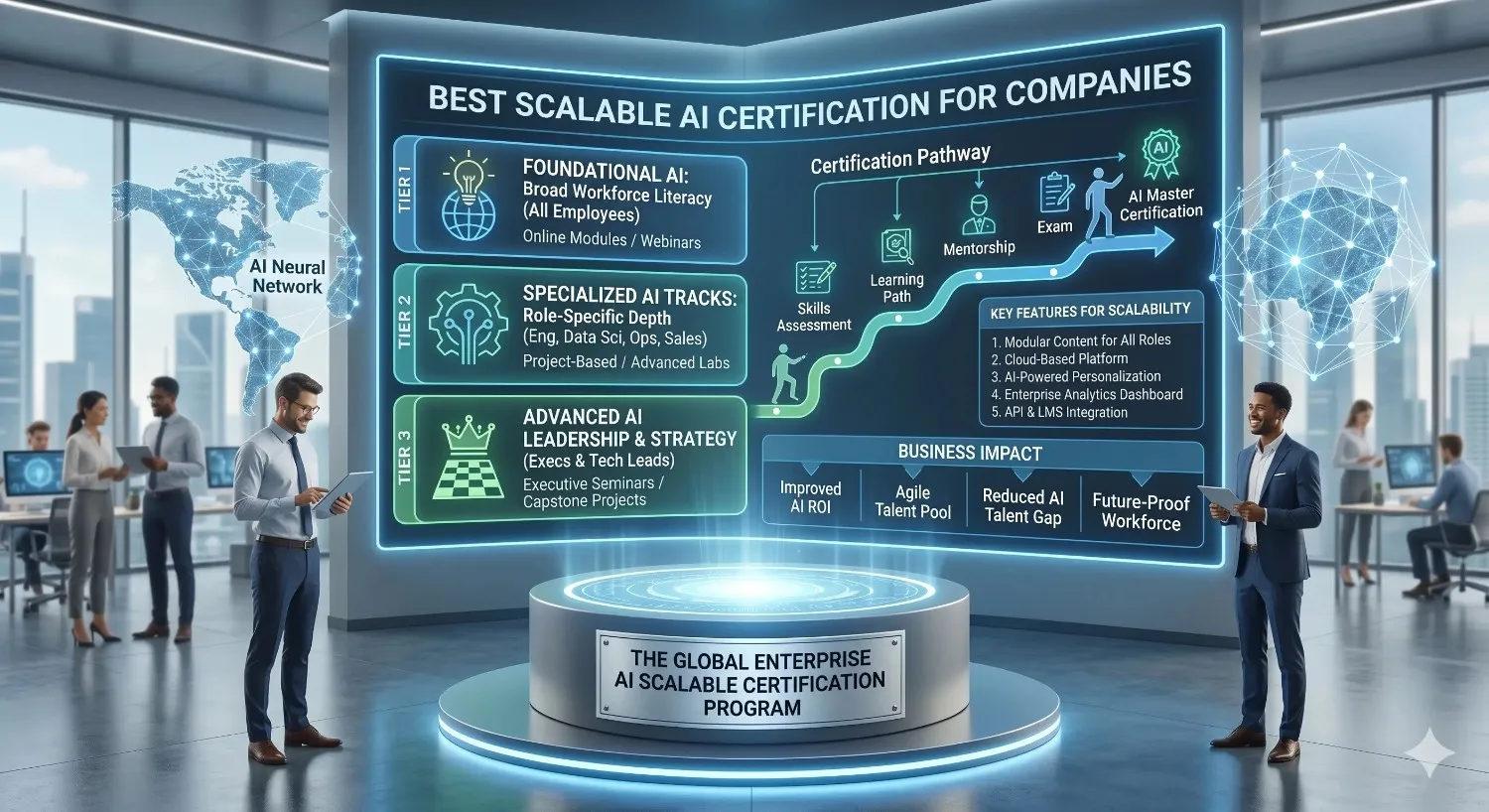
What is the Best Scalable AI Certification Program for Companies?
June 17, 2026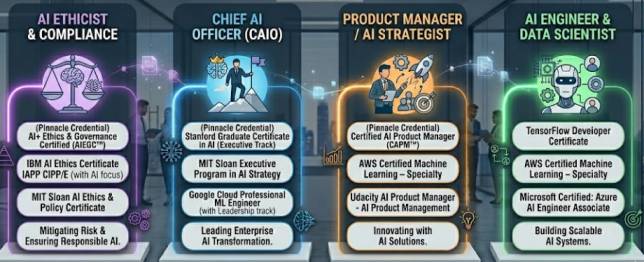
FEATURED
What Are Leading Role-Based AI Certification Options for Enterprises?
June 17, 2026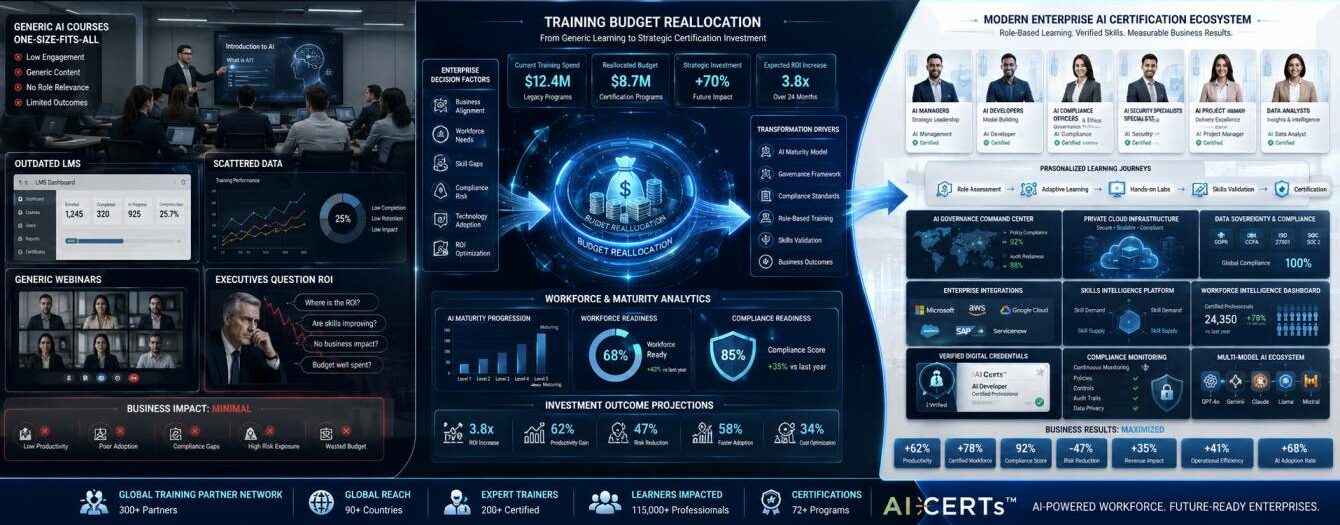
FEATURED
Enterprise AI Training Budgets: Where the Money Flows Now
June 12, 2026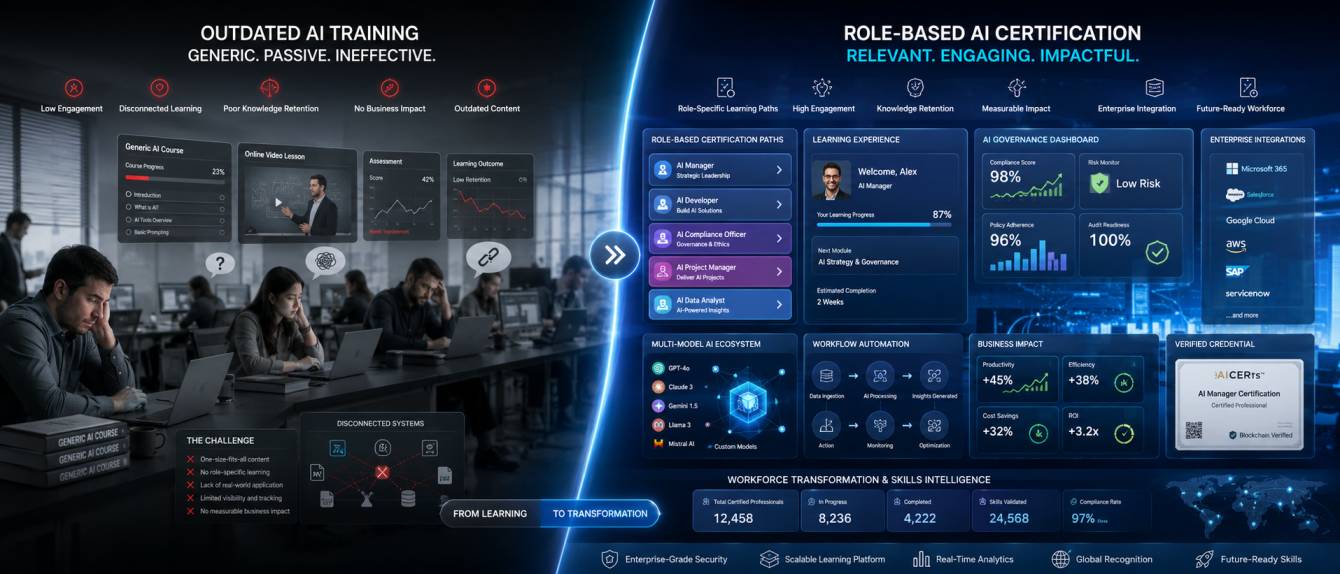
FEATURED
Why Enterprises Stopped Buying Generic AI Training
June 12, 2026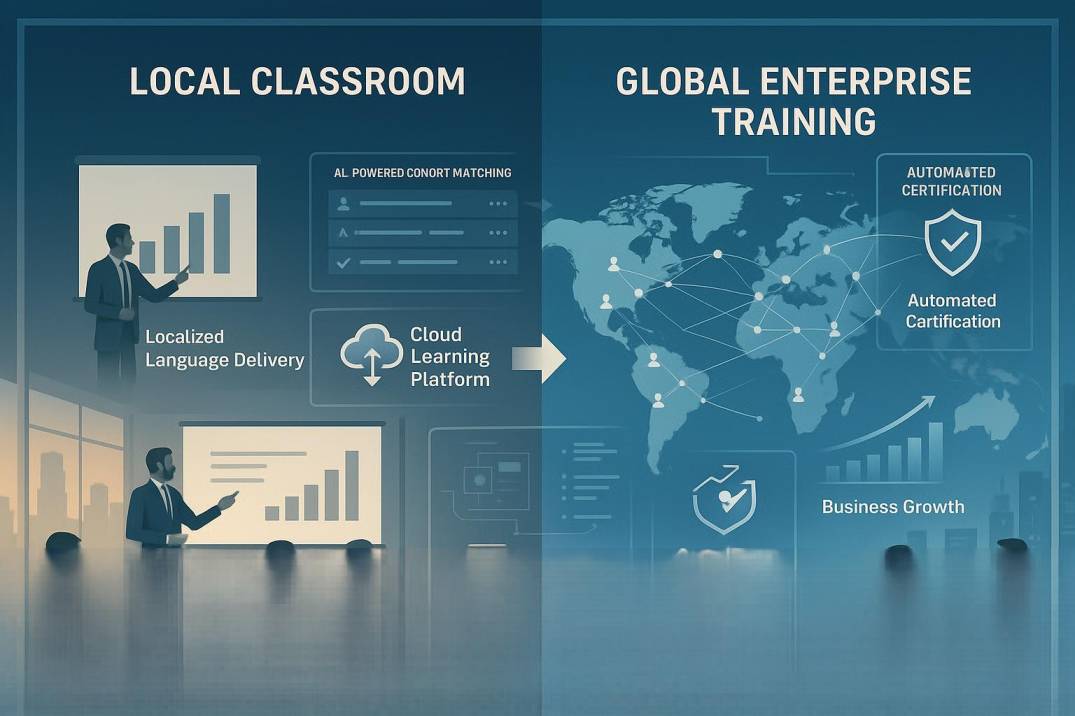
FEATURED
How to Scale From Local Workshops to Global Enterprise Cohorts Without Rebuilding?
June 12, 2026