Why Enterprises Stopped Buying Generic AI Training


Enterprises are abandoning generic AI training programs because mass-market courses fail to address specialized system integrations, regulatory compliance, and role-specific workflows. This blog explores why corporate buyers are shifting away from general overviews toward deeply integrated, verified, and certified education networks that deliver actual operational return on investment (ROI).
The Great Rejection of Surface-Level AI Courses
For the past few years, businesses rushed to buy any training course with “AI” in the title. Corporate leaders feared falling behind, so they bought massive, generic video libraries for their teams. These introductory courses taught employees how to write basic prompts or generate simple text. However, as the initial excitement wore off, corporate leaders noticed a major problem: these basic tutorials did not improve actual business operations.
This shift in corporate strategy became clearly visible in mid-2026. Corporate spending on unverified, mass-market tech courses dropped significantly. Businesses realized that teaching employees general facts about artificial intelligence does not translate to secure system operations or better decision-making.
Instead of broad overviews, enterprises now demand targeted education that aligns with complex data setups, strict security rules, and specific corporate roles. Corporate buyers no longer look for generic completion badges. They want rigorous, validated training frameworks that guarantee an employee can safely handle corporate data and manage automated processes.
The Apple-Google Paradigm: Why Integration Trumps General Knowledge
The biggest flaw of generic training is that it treats technology as an isolated tool. In the real corporate world, technology is only useful when it connects directly with internal files, daily communications, and active workflows.
This technical reality was highlighted on a massive global scale at Apple’s Worldwide Developers Conference (WWDC). During the keynote event, Apple unveiled its completely rebuilt Siri AI assistant, which is powered by a custom 1.2-trillion-parameter Google Gemini model. This major release represents a critical evolution in how digital tools function.
Instead of acting as a standalone web chatbot, this new system is built directly into the operating core. It uses an advanced system orchestrator to connect the dots across personal context, private emails, local files, calendars, and multiple applications simultaneously.
This milestone event offers three unique lessons that explain why enterprises are changing their educational purchases:
- Context-Driven System Orchestration: Employees do not need to learn how to interact with a blank text box. They must be trained to manage systems that read data across multiple enterprise applications at once.
- The Multi-Model Environment: Apple announced that users can choose different underlying engines—such as Gemini, ChatGPT, or Claude to run distinct features. Training programs must teach professionals how to navigate fluid, multi-model workplaces rather than focusing on a single brand.
- The Rise of Agentic Shortcuts: The update introduced natural language tools that turn multi-step tasks into automated habits. Workforce education must shift away from basic text writing and focus heavily on automated workflow design.
Because tools are becoming deeply woven into enterprise infrastructure, basic introductory courses are obsolete. To deliver value, modern education must be delivered through an elite network. Training organizations must upgrade their offerings and become a partner with an international network that provides deep, system-level learning.
The Engineering of AI Maturity: Moving from Experimentation to Scale
The second reason enterprises stopped buying generic courses is the lack of measurable, predictable outcomes. Basic courses focus entirely on individual users, ignoring how a whole company matures structurally.
To fix this widespread issue, Accenture and the Carnegie Mellon University Software Engineering Institute launched their AI Adoption Maturity Model. This research-backed framework helps companies move past basic experimentation and achieve repeatable, long-term scale.
The data supporting this launch reveals a major disconnect in corporate training. Accenture’s research shows that while 86% of C-suite leaders plan to increase tech spending in 2026, only 21% of organizations are successfully rebuilding their end-to-end processes. Nearly half of those executives state that their digital investments have had little to no impact on overall company profits.
The primary barrier is not the technology itself. Instead, it is caused by mismatched expectations, poorly executed implementations, and a lack of organized training practices.
This maturity model divides company readiness into eight crucial areas, emphasizing that true organizational readiness requires deep workforce culture shifts, workflow re-engineering, and strict risk governance. Generic training cannot address these complex corporate needs.
This operational gap explains why savvy training providers are moving toward structured, authorized programs. By participating in the AI CERTs Authorized Training Partner (ATP) Program, educational companies can deliver high-quality, pre-validated AI training programs that match the exact corporate standards demanded by global consulting frameworks.
The Role-Based Skill Fest: Transforming Workforces Through Structure
The final factor driving the rejection of generic training is the need for strict, role-specific certifications. Enterprise buyers are realizing that generic attendance badges do not prove an employee can safely perform their duties.
This demand for highly structured, role-focused learning paths was on full display during Microsoft’s AI Skills Fest, which launched its global virtual tracks. This global initiative deliberately moved away from general overviews, focusing instead on curated learning playlists tailored to specific professional roles, such as business leaders, technical developers, and operational managers.
This major event highlights a clear corporate reality: successful workforce development requires clear, role-based skilling paths combined with official credential verification. The program incentivized learners by offering verified digital badges and exam vouchers for professional certifications. This reflects a broader corporate shift occurring throughout the season.
For instance, a comprehensive digital talent study confirmed that enterprise return on investment does not come from using more applications. It comes from embedding structured technology skills directly into specific corporate departments.
When training firms act as an authorized training partner, they can easily provide these highly sought-after, structured pathways. This allows training companies to offer clear, professional paths that prove real workplace competence, helping enterprise clients protect their data systems and minimize compliance risks.
The Global Ecosystem Solution
To win valuable enterprise contracts today, educational providers must stop selling isolated, generic courses. The most effective strategy is to align your business with a trusted, globally recognized training brand.
By collaborating with AI CERTs, you instantly connect your business to an elite global network. This infrastructure includes over 115,000 successful learners, 200 expert trainers, 72 specialized professional certifications, and 300 established corporate partners spanning more than 90 countries. This market credibility gives your training company an immediate competitive advantage.
You can select the exact partnership model that fits your company’s growth plans and start offering industry-validated certifications immediately:
- Expand your corporate business reach through the Authorized Training Partner Program.
- Build advanced career paths for students by becoming an Authorized Academic Partner.
- Support widespread industry upskilling by joining as an Association Partner.
- Grow your digital marketing revenue by signing up as an Affiliate Partner.
Frequently Asked Questions (FAQs)
1. Why do generic AI courses fail to deliver real financial results for businesses?
Generic courses usually focus on basic, standalone tools and simple prompt writing. They fail to teach employees how to connect tech tools to internal enterprise data networks, manage multi-model platforms, or handle complex corporate compliance rules, resulting in zero operational impact.
2. What did Apple’s WWDC event reveal about future workplace training needs?
Apple’s keynote showed that modern digital tools are no longer separate web applications. They are deeply embedded into system architectures that read emails, files, and calendars simultaneously. Training must focus on managing these unified system workflows rather than using basic, isolated chatbots.
3. How does the Accenture and Carnegie Mellon maturity model change corporate learning?
The model proves that successful corporate adoption requires structured lifecycle engineering, risk governance, and workflow re-engineering. It shows businesses that training must be an organized corporate initiative tied directly to clear business outcomes, rather than random educational workshops.
4. Why are role-based learning tracks superior to general training libraries?
Every department uses technology differently. A human resources professional needs different technical skills and compliance guidelines than a finance manager or a systems engineer. Role-based paths ensure that employees learn the exact skills required for their daily tasks.
5. How can an independent training provider start offering verified, enterprise-grade certifications?
The fastest path is to join an established global credentialing network. By becoming an authorized partner, an independent provider can instantly offer a diverse catalog of internationally recognized certifications, bypassing the immense costs of building a validation platform from scratch.
Recent Blogs
FEATURED
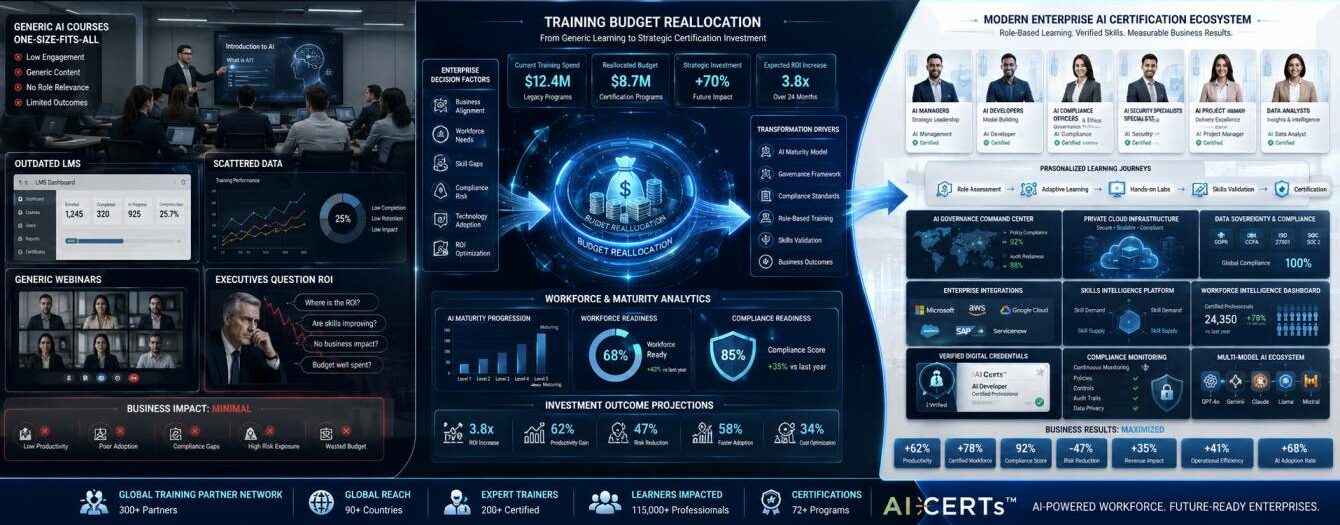
Enterprise AI Training Budgets: Where the Money Flows Now
June 12, 2026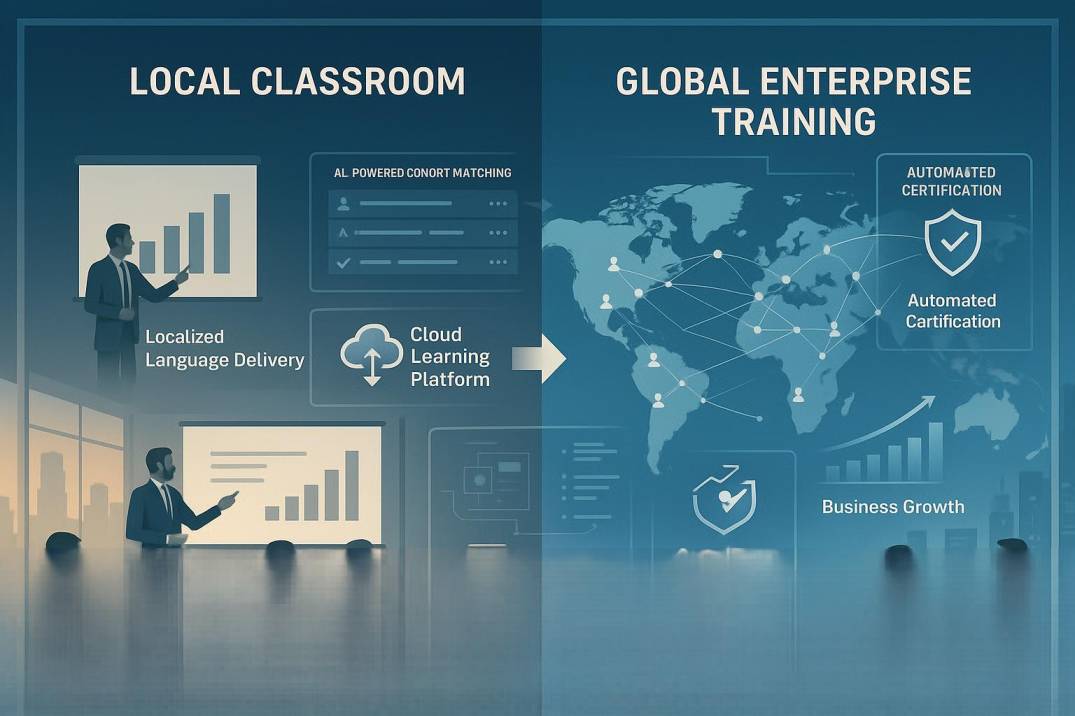
FEATURED
How to Scale From Local Workshops to Global Enterprise Cohorts Without Rebuilding?
June 12, 2026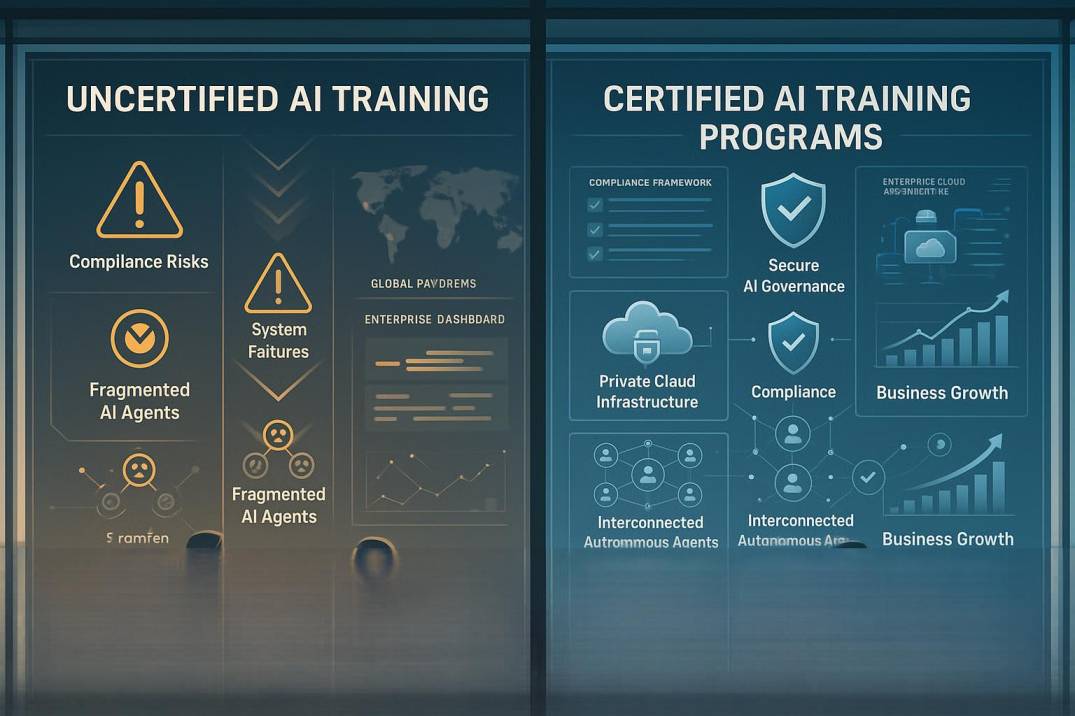
FEATURED
Why Enterprises Pay a Premium Fee for Uncertified AI Programs
June 12, 2026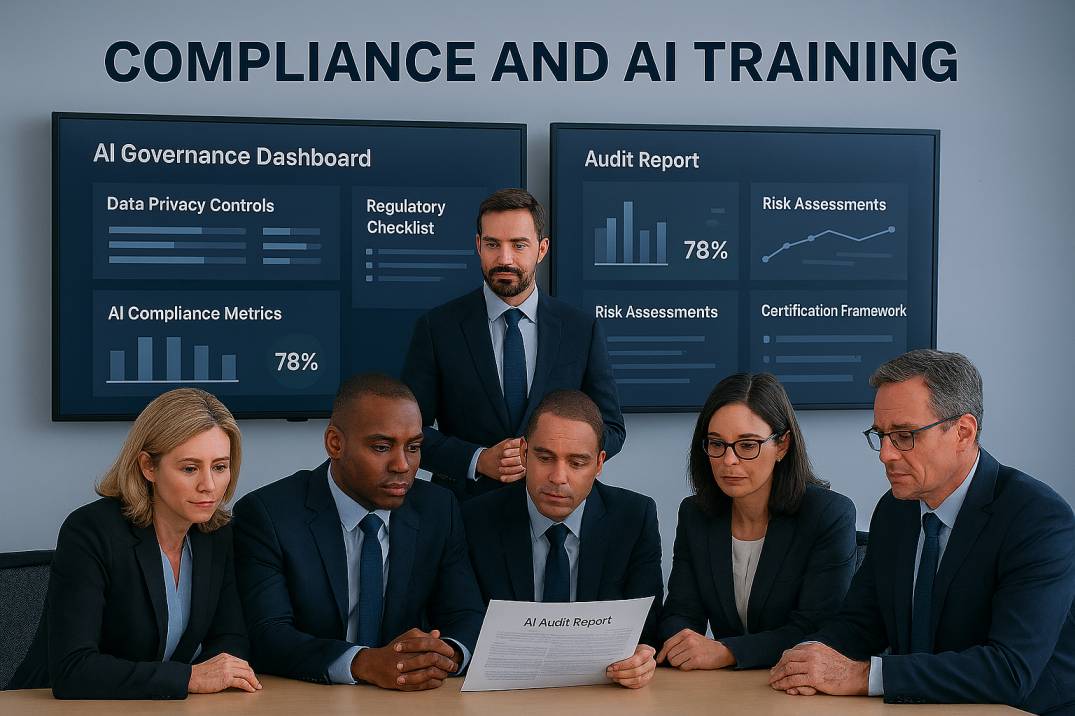
FEATURED
How Compliance Requirements Are Reshaping Enterprise Training Vendor Selection
June 10, 2026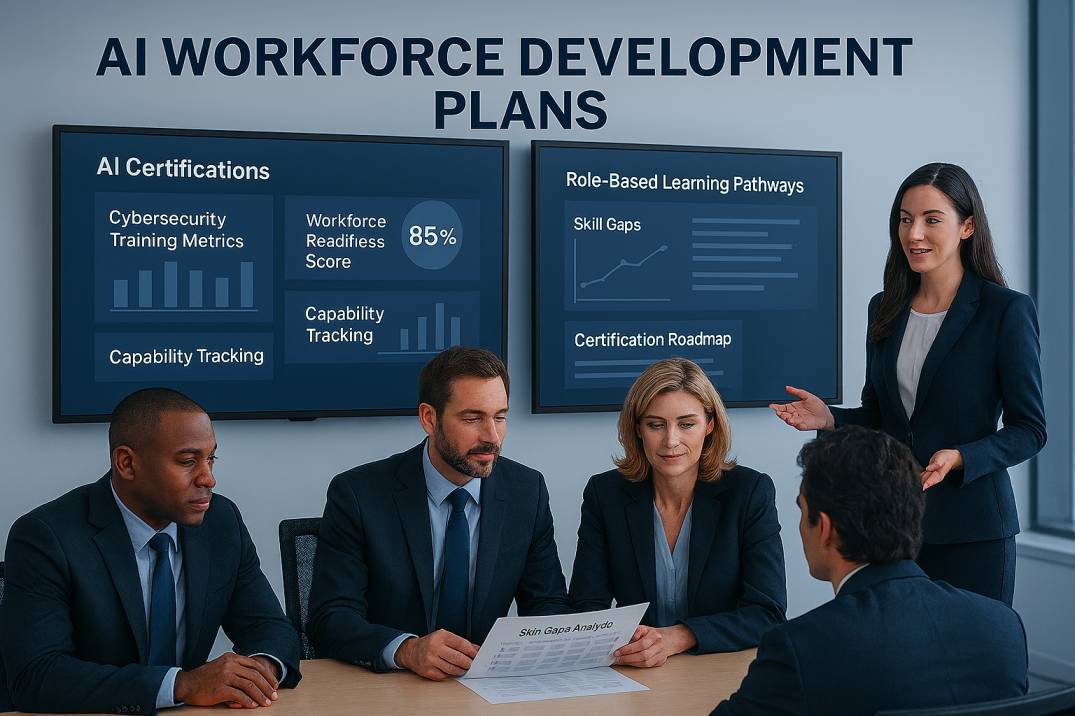
FEATURED
What CIOs and L&D Leaders Demand from AI Training Partners Today
June 10, 2026