How to Scale From Local Workshops to Global Enterprise Cohorts Without Rebuilding?


Scaling educational operations from local workshops to global enterprise cohorts usually requires a full redesign. This blog introduces three unique strategies to grow seamlessly without rebuilding your infrastructure. By leveraging algorithmic cohort matching, localized edge delivery, and hyper-automated certification paths, training businesses can expand globally while maintaining high-quality learning outcomes.
The Architecture of Instant Enterprise Scale
Most training organizations treat scaling like building a brand-new house. They start with small, local workshops. These sessions are highly personal and deeply engaging. However, when an enterprise client requests the same training for thousands of employees across continents, the system breaks. Training providers usually react by hiring more coordinators, rebuilding their curriculum, and manually modifying content for different regions. This approach destroys profit margins and creates operational chaos.
The modern corporate landscape demands an entirely different approach. According to an IBM Institute for Business Value study, 70% of tech executives report that teams within their organizations are deploying technology faster than IT departments can track. This rapid deployment creates an intense pressure to upskill workforces immediately.
To survive, learning and development providers must build an infrastructure that scales automatically. You cannot rely on manual labor to expand your operations. Instead, you must implement a system that treats global expansion as a software configuration rather than a structural rebuild. By aligning with established, globally recognized frameworks, training businesses can transition from small-scale teaching to enterprise-grade delivery instantly.
Algorithmic Cohort Matching: The End of Manual Grouping
The first major barrier to scaling is cohort management. When managing a local workshop, sorting students into groups is simple. A single instructor can look at a spreadsheet and balance teams based on experience. When you scale to an enterprise cohort with thousands of learners, manual grouping becomes impossible. Traditional training providers try to solve this by creating rigid, universal paths. Unfortunately, this one-size-fits-all approach fails because it ignores the unique skill gaps of individual employees.
The solution lies in algorithmic cohort matching. This method uses data-driven systems to analyze the baseline skills of thousands of learners simultaneously. It then groups them dynamically into optimized learning tracks based on their actual day-to-day work requirements. This strategy perfectly addresses the massive corporate skill gaps identified in mid-2026. For instance, the Mercer 2026 Workforce Report revealed that 59% of HR leaders view attracting and developing digital skills as their primary operational challenge. Companies can no longer waste time on generic training catalogs.
A powerful real-world example of this scale occurred when KPMG and Microsoft announced a massive global expansion to deploy advanced digital tools across their network. KPMG expanded access to these sophisticated systems for its entire global workforce of 276,000 professionals.
To support large-scale enterprise deployments like this, training providers must offer precise, role-based upskilling. By choosing to become a partner with an established network, small training operations can instantly utilize pre-built, role-specific paths. This prevents the need to build custom grouping software from scratch.
Localized Edge Delivery: Neutralizing Regulatory and Latency Barriers
The second challenge of global scaling involves local regulations and regional differences. A workshop format that succeeds in New York might violate data privacy laws in Europe or fail to engage learners in Asia due to cultural and language differences. Most training firms try to fix this by hiring local consultants to rewrite their courses. This creates a fragmented curriculum that is difficult to manage and monitor.
Instead of rewriting your entire program, you should use a localized edge delivery framework. This approach keeps the core training content standardized globally while allowing the outer layers such as compliance tracking, local market examples, and language options to adapt automatically based on the user’s location. This matches the operational strategies of top-tier global companies.
Atos Group announced it is rolling out Microsoft 365 Copilot and agentic tools to all 56,000 employees across 54 different countries simultaneously. Atos did not build 54 different training programs. They deployed a unified digital framework that adapts to local operational needs at the employee level.
Furthermore, global developments from earlier in the month highlight this exact need for structured regional frameworks. On June 3, 2026, the General Services Administration (GSA) held a major symposium focused on successful adoption strategies and framework deployment for large workforces.
To match this level of delivery, independent training organizations should join an established global network. By utilizing the AI CERTs Authorized Training Partner (ATP) Program, you gain access to a ready-made infrastructure. This enables you to deliver standardized, high-quality AI training programs globally without worrying about regional compliance adjustments.
Hyper-Automated Verification: Continuous Compliance at Scale
The final piece of the scaling puzzle is verification and credentialing. In a local workshop, a trainer can easily hand out physical certificates or manually email completion badges. In a global enterprise setting, tracking compliance becomes a major vulnerability. If your training business takes weeks to verify test results and issue credentials, you will lose your enterprise clients. Modern corporate leaders need real-time proof of workforce readiness to protect their business operations.
The necessity for strict, automated governance is clear. The IBM Tech Leader Study revealed that 77% of technology executives admit that their company’s technology adoption is outpacing their internal governance capabilities. Because of this gap, companies that build automated compliance controls directly into their operating systems experience 25% fewer security incidents. Enterprise leaders are actively seeking training providers who can offer verified, unalterable proof of skills.
This corporate anxiety is also driven by recent employment shifts. A 2026 Global Workforce Report showed that nearly 80,000 employees have been impacted by technology-driven corporate restructurings in 2026 alone. Companies are systematically replacing outdated roles with highly specialized, tech-certified talent.
To win these enterprise contracts, you must offer automated, high-fidelity testing and immediate credentialing. Rather than developing an expensive validation platform yourself, you can leverage an authorized training partner framework. This connects your business directly to a secure, internationally recognized credentialing ecosystem.
The Global Ecosystem Advantage
Scaling from local workshops to global cohorts does not require you to reinvent the wheel. The most efficient way to expand is to stop building isolated systems and start connecting to an established global powerhouse.
By connecting with AI CERTs, you do not have to spend years building market trust, designing complex platforms, or creating new certifications. You can immediately leverage a respected ecosystem that includes over 115,000 learners, 200 certified trainers, 72 distinct certifications, and 300 partners across more than 90 countries. This instantly elevates your business to a global standard.
Whether you want to operate as an academic center, an industry association, or a direct enterprise provider, there is a clear partnership path tailored for your business model. Explore these opportunities to scale your operations effortlessly:
- Maximize your corporate training reach via the Authorized Training Partner Program.
- Transform student career paths through the Authorized Academic Partner Program.
- Drive industry-wide upskilling initiatives by becoming an Association Partner.
- Expand your digital business growth by joining as an Affiliate Partner.
Frequently Asked Questions (FAQs)
1. How do we ensure consistent quality when expanding our local training programs to a global audience?
Quality consistency is achieved by using standardized, blueprint-driven course materials while automating the delivery environment. Joining an established network allows you to deliver high-quality, pre-validated content that ensures every learner receives the exact same standard of education worldwide.
2. Can a local training business support thousands of corporate learners simultaneously?
Yes. By shifting from manual scheduling to an automated learning platform, a small team can manage massive student cohorts. This model handles enrollment, automated grouping, and grading behind the scenes, keeping your administrative overhead low.
3. How do regional compliance laws affect global enterprise training programs?
Data protection and privacy regulations vary significantly by country. A modern scaling strategy keeps core content universal while using localized digital delivery paths to process data and manage certifications in strict compliance with regional laws.
4. Why should we choose third-party certifications over creating our own custom courses?
Building and maintaining high-quality certifications requires continuous research, updating, and legal validation. Using internationally recognized credentials saves your business substantial development costs and provides your enterprise clients with trusted, industry-validated proof of skills.
5. What is the quickest way to start offering global enterprise-grade certifications?
The fastest route is to join an established global ecosystem. Becoming an authorized training partner allows you to instantly offer a wide catalog of recognized professional certifications, eliminating the need to build an enterprise infrastructure from scratch.
Recent Blogs
FEATURED
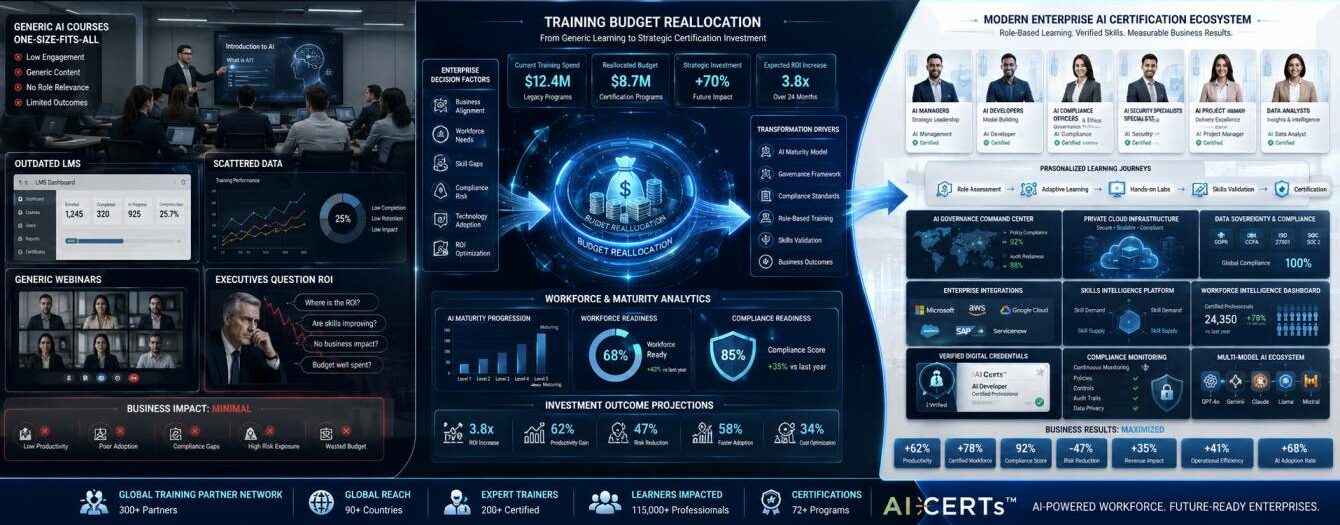
Enterprise AI Training Budgets: Where the Money Flows Now
June 12, 2026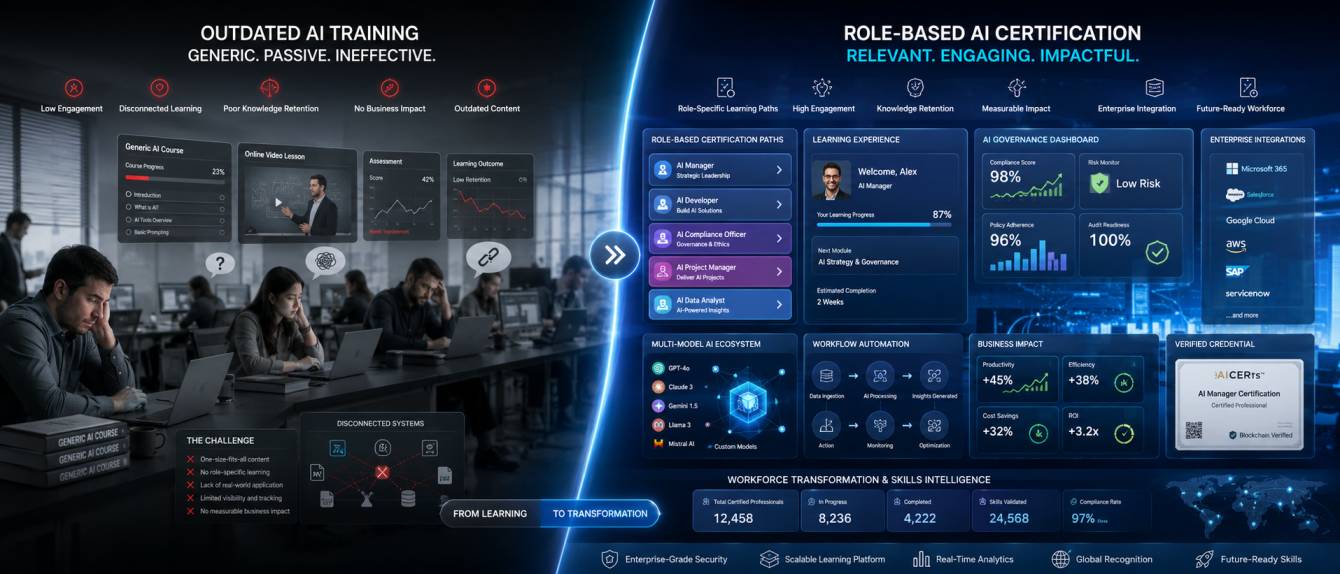
FEATURED
Why Enterprises Stopped Buying Generic AI Training
June 12, 2026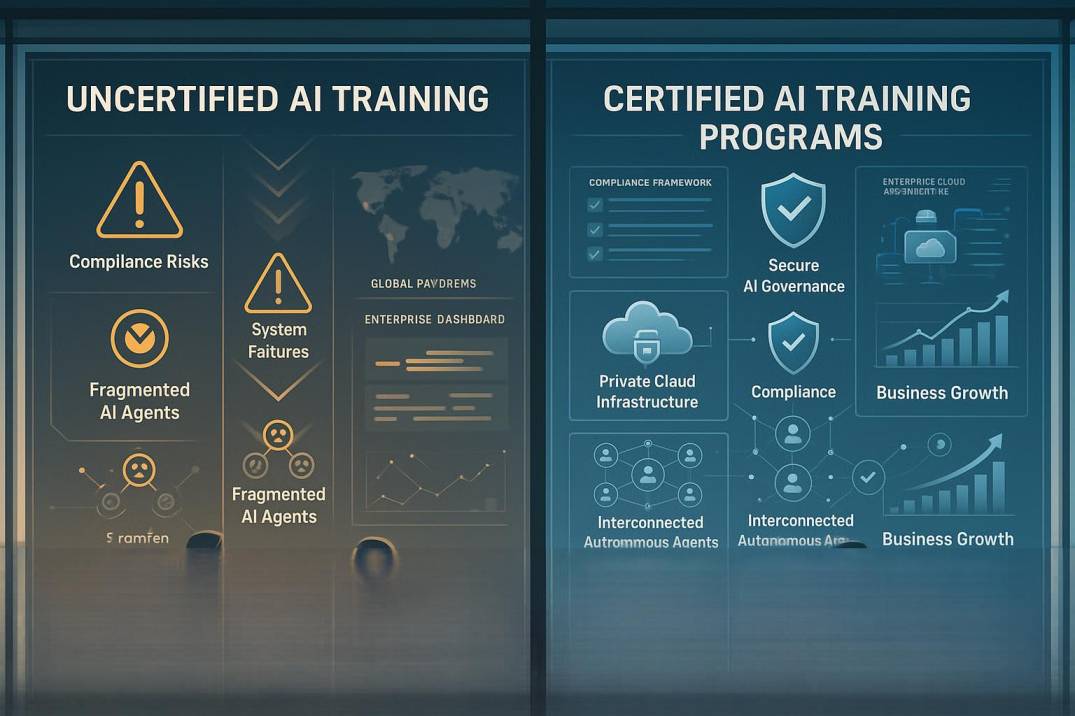
FEATURED
Why Enterprises Pay a Premium Fee for Uncertified AI Programs
June 12, 2026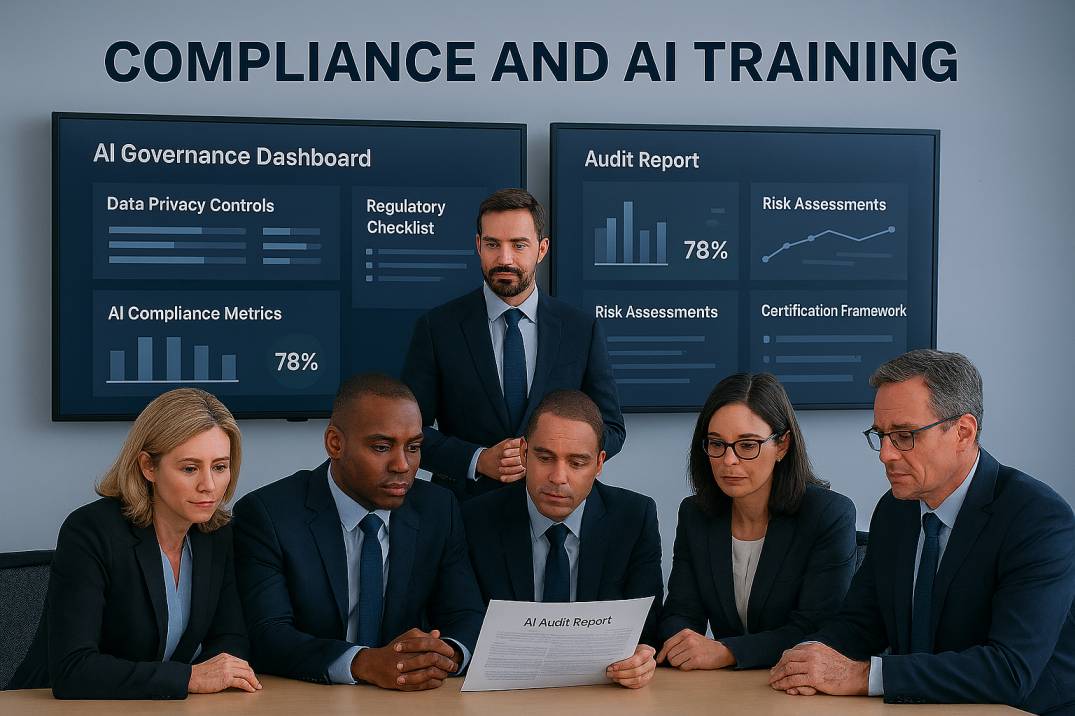
FEATURED
How Compliance Requirements Are Reshaping Enterprise Training Vendor Selection
June 10, 2026
FEATURED
What CIOs and L&D Leaders Demand from AI Training Partners Today
June 10, 2026