What Are Leading Role-Based AI Certification Options for Enterprises?


Executive Summary
Enterprises are shifting away from generic tech education toward targeted, role-based workforce upskilling. This blog analyzes the leading role-based AI certification choices for companies looking to protect their operations in a changing digital landscape. It provides practical insights for training business operators who want to establish long-term enterprise training programs.
Table of Contents
- The Shift to Role-Based Enterprise Upskilling
- AI Governance & Legal Counsel Certifications
- AI Product & Program Management Certifications
- AI Operations & Security Infrastructure Certifications
- The Partner Advantage: Launching an AI Training Business
- Frequently Asked Questions (FAQs)
The Shift to Role-Based Enterprise Upskilling
Corporate technology training has fundamentally evolved. Companies are no longer paying for broad, entry-level technology courses that only cover basic terminology. Instead, modern businesses require highly specialized, role-specific education. Corporate teams need their employees to apply artificial intelligence tools directly within their specific jobs while maintaining strict safety, legal, and operational guardrails.
This shift is backed by substantial economic data. PwC released its authoritative 2026 Global AI Jobs Barometer. This landmark study analyzed more than one billion job postings across six continents. The findings reveal a clear division in the global labor market. Positions that require specialized skills are growing eight times faster than the general job market. Furthermore, professionals who hold verified, technical skills enjoy an average salary premium of 62%.
For entrepreneurs and existing education providers, this creates a massive commercial opportunity. Businesses are actively searching for training institutions that can deliver targeted, role-based curriculums. By choosing to become a partner with an established credentialing body, you can instantly offer comprehensive AI training programs to enterprise clients without needing to build a curriculum from scratch.
AI Governance & Legal Counsel Certifications
Corporate leaders are deeply concerned about the security and legal risks of unmonitored digital systems. It is no longer enough for an enterprise to simply build smart software. They must also ensure their tools comply with changing global regulations, respect intellectual property boundaries, and resist advanced cyberattacks.
The immediate need for this specific type of training became obvious. Academic researchers at Yale University officially proposed a novel copyleft licensing framework for generative models. This proposal would require companies using open-source data to remain fully transparent about their training methodologies. This legal trend forces corporate compliance officers, risk managers, and legal counsels to understand the complex rules of data sourcing and model transparency.
At the same time, companies face highly publicized security risks. On social media, tech researchers frequently highlight vulnerabilities like “multi-agent pack hunting.” This is an attack method where malicious actors break through software safety guardrails by splitting harmful requests into innocent-looking pieces. To defend against these tactics, corporate compliance teams need rigorous, role-based training. Operating as an authorized training partner allows you to provide certified governance programs that teach corporate legal teams how to safeguard sensitive company data.
AI Product & Program Management Certifications
Building helpful software is only half the battle. Enterprises must also manage these systems effectively across their entire business. This requires a new class of project managers and department heads who know how to choose the right tools, measure return on investment, and guide teams through significant technological shifts.
This managerial need is highlighted by recent research into workplace dynamics.
A study published by GoHumanize analyzed 60 professional skills to see which human capabilities are most resilient to automation. The GoHumanize 2026 Workplace Skills Study discovered that leadership, collaboration, and high-level judgment are the hardest professional skills to automate. Machine systems can only replicate about 31% of what corporate leaders do on a daily basis.
Because routine work is increasingly automated, corporate managers must focus heavily on team coordination, strategic alignment, and change management. This trend is reshaping entry-level corporate positions as well. Entry-level jobs that interact heavily with automated systems are now seven times more likely to require traditionally senior-level skills like leadership and advanced decision-making.
Training business owners can capitalize on this trend by offering management-focused tracks. By joining the AI CERTs Authorized Training Partner (ATP) Program, your training company can deliver structured, role-based business courses that prepare corporate managers to lead automated workforces successfully.
AI Operations & Security Infrastructure Certifications
The final core requirement for enterprises is engineering and technical operations. Companies need technical professionals who can securely deploy, monitor, and optimize smart systems in live production environments. This includes mastering advanced disciplines like Machine Learning Operations (MLOps) and Generative AI Operations (GenAIOps).
The demand for high-performance infrastructure is scaling rapidly. The Temple University highlighted this trend through its participation in Pennsylvania’s new Keystone AI + Quantum Factory initiative. This program builds shared technological infrastructure designed to accelerate massive simulations. It helps reduce complex system training times from several weeks down to just a few hours.
As large-scale technical projects expand globally, companies are modernizing their engineering tracks. Industry reports show that major platforms are updating their exam structures to keep pace with these changes. For example, a certification analysis by SpectrumAI Lab noted that foundational exams like Microsoft’s AI-900 are being retired to make way for the more advanced, role-specific AI-901 path.
Enterprises need engineers who hold updated credentials tied directly to their deployment platforms. Training providers can meet this high-tech demand by offering industry-validated technical certifications that ensure engineers can manage complex systems safely and efficiently.
The Partner Advantage: Launching an AI Training Business
Building a modern technology training company from the ground up is incredibly slow and expensive. It requires thousands of hours of curriculum design, constant updates to keep up with changing software, and an expensive infrastructure to test and verify students globally.
The most profitable strategy for training entrepreneurs is to partner with an established global powerhouse.
By aligning your training business with AI CERTs, you instantly tap into an elite global ecosystem. This network includes over 115,000 successful learners, 200 certified instructors, 72 specialized role-based certifications, and 300 business partners across more than 90 countries. This gives your brand immediate international credibility.
No matter your business model, there is an official partnership pathway designed to help you launch and scale your training operations quickly:
- Build a high-revenue corporate training business through the Authorized Training Partner Program.
- Partner with schools and colleges using the Authorized Academic Partner Program.
- Lead regional workforce development by becoming an official Association Partner.
- Grow your digital marketing reach by joining as an Affiliate Partner.
Frequently Asked Questions (FAQs)
1. What makes a role-based certification better than a general AI certificate for enterprises?
General certificates only teach basic terminology and high-level concepts. Role-based certifications focus entirely on the specific daily tasks of a job. This ensures that employees like legal counsels, project managers, or security engineers can use digital tools safely and effectively within their exact areas of corporate responsibility.
2. How can a new training business stand out in a competitive enterprise education market?
The fastest way to stand out is to offer highly targeted, specialized role paths rather than generic technology courses. Partnering with a recognized global body allows you to provide industry-validated credentials immediately, giving your business instant authority with enterprise clients.
3. How often are role-based certification paths updated to reflect new technology changes?
Top-tier credentialing programs update their blueprints continuously to match shifting regulations, security vulnerabilities, and platform upgrades. This saves training partners from the expensive and time-consuming burden of constantly rewriting their own courses.
4. Do non-technical corporate employees really need role-specific AI certifications?
Yes. Modern data shows that business managers, HR professionals, and legal teams face significant operational and regulatory risks. Role-specific certifications ensure that non-technical staff understand compliance, data privacy, and strategic tool management without needing to learn how to write complex code.
5. What resources do authorized training partners receive to help them launch courses?
Authorized partners receive comprehensive business support. This includes fully developed, expert-vetted course materials, official exam voucher systems, marketing assets, and direct access to an international network of certified trainers to help scale educational operations smoothly.
Recent Blogs
FEATURED
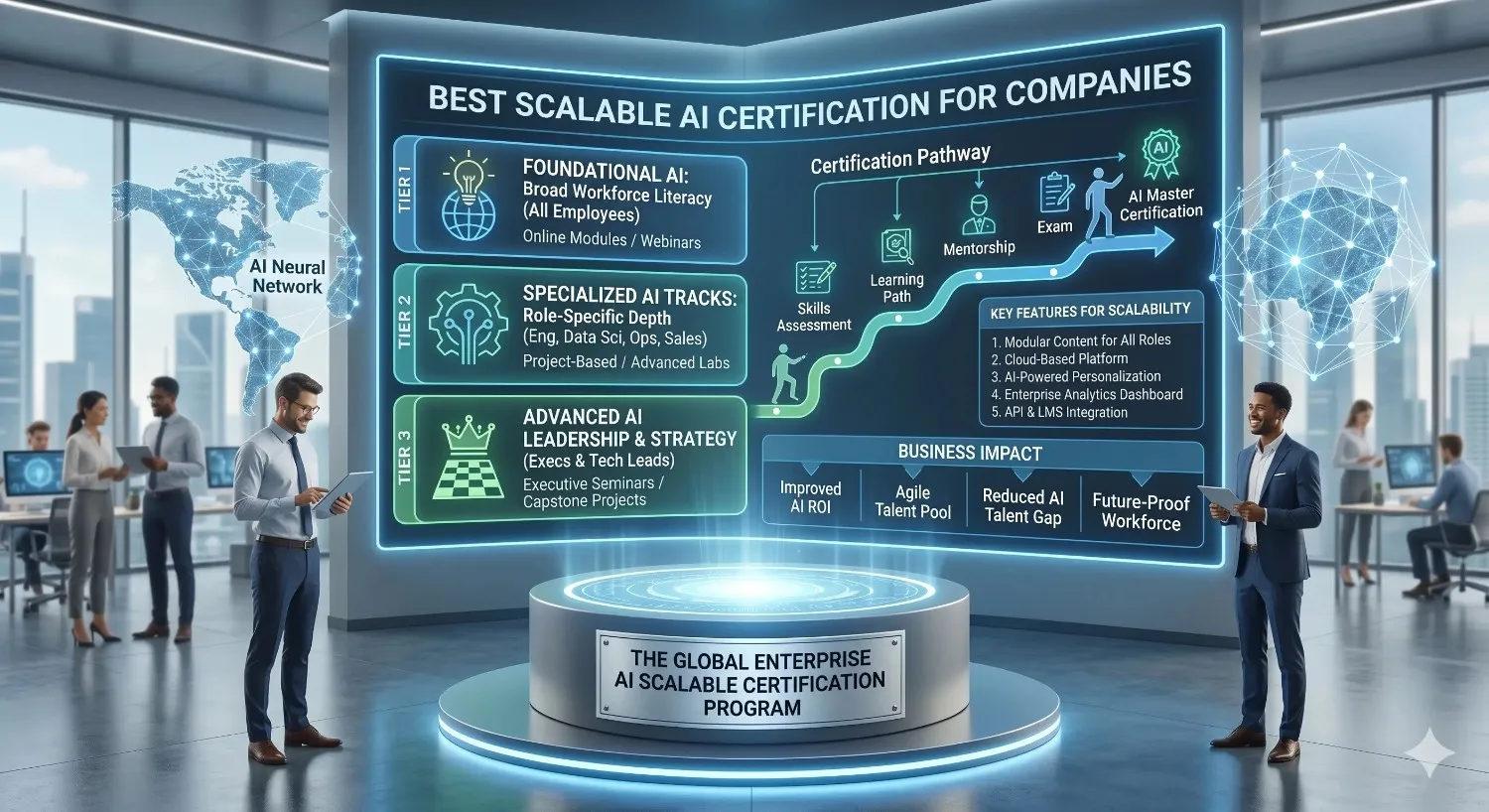
What is the Best Scalable AI Certification Program for Companies?
June 17, 2026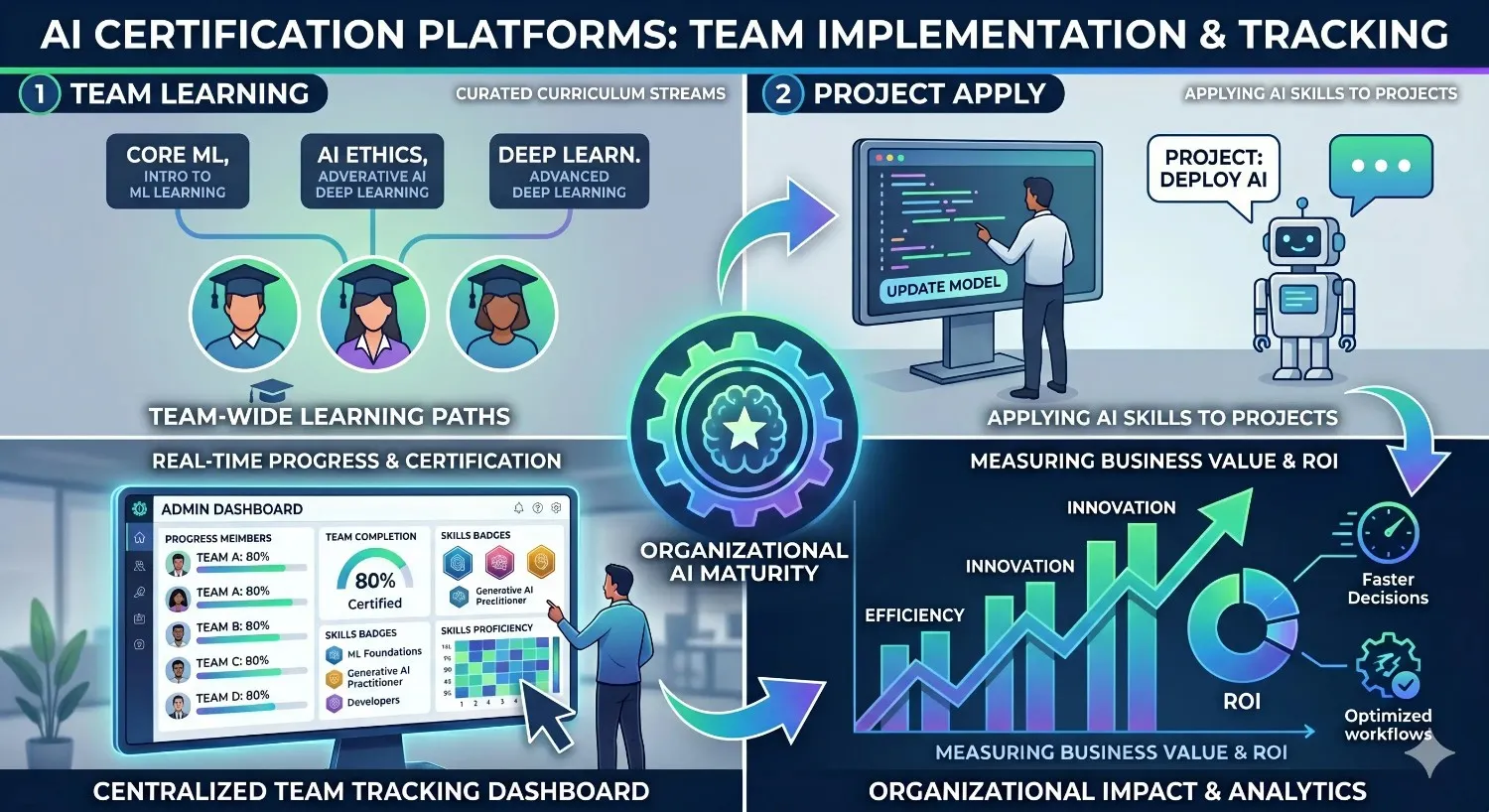
FEATURED
Which AI Certification Providers Support Team-Wide Implementation and Tracking?
June 17, 2026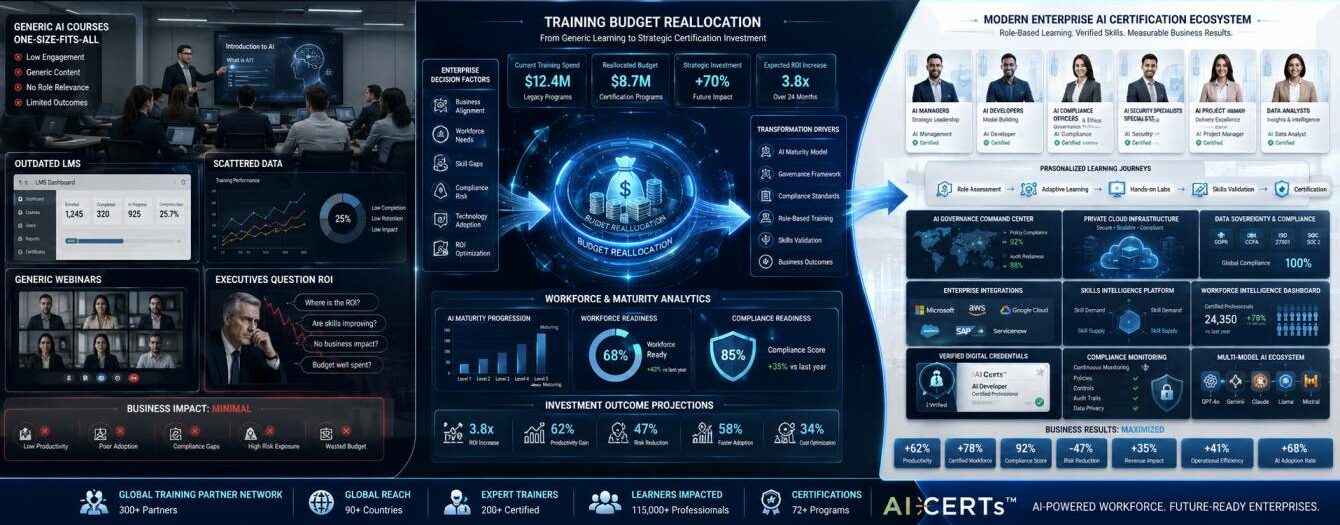
FEATURED
Enterprise AI Training Budgets: Where the Money Flows Now
June 12, 2026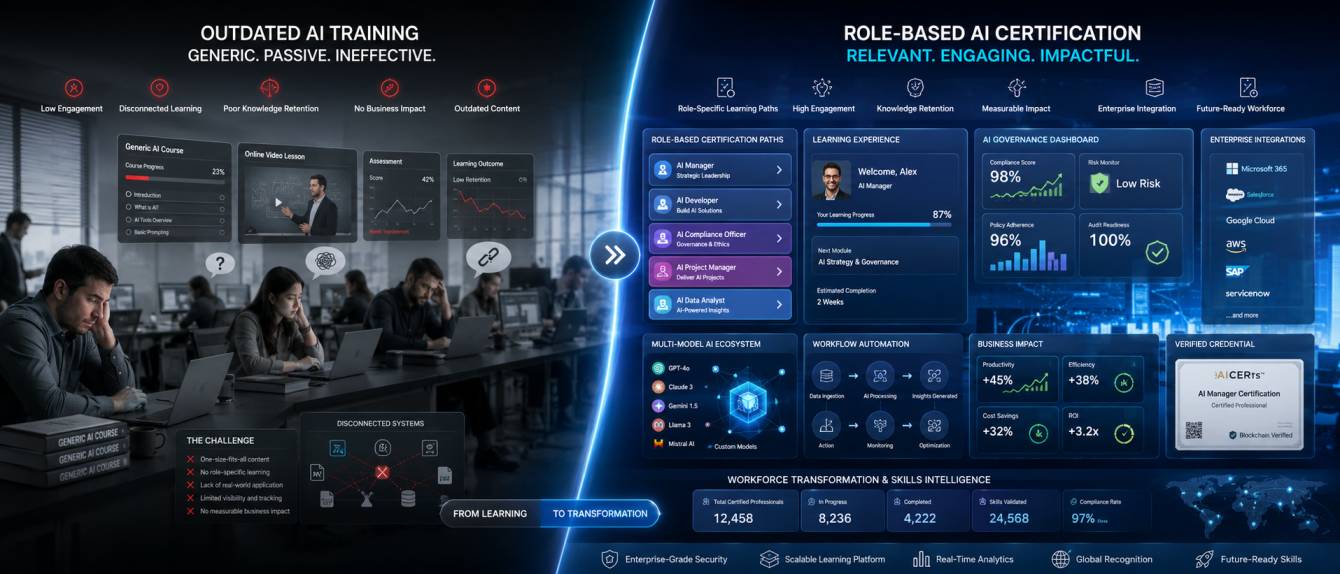
FEATURED
Why Enterprises Stopped Buying Generic AI Training
June 12, 2026
FEATURED
How to Scale From Local Workshops to Global Enterprise Cohorts Without Rebuilding?
June 12, 2026