What Makes It Hard to Upskill Employees with AI Certifications?


Executive Summary
Upskilling workforces with AI certifications fails when organizations rely on generic platform content and isolate learners. This blog explores why traditional training drops off, analyzing the root psychological, geopolitical, and structural barriers. It outlines how collaborative, role-based frameworks solve these hidden training friction points to drive real-world business value.
Table of Contents
- The Hidden Friction in Modern Workforce Upskilling
- Point 1: The Confidence Gap and the Myth of Pure Digital Delivery
- Point 2: The Fragmentation of Training Formats Across Regions
- Point 3: Over-Engineering the Technical Baseline for Non-Engineering Roles
- Point 4: Geopolitical Volatility and Sudden Platform Lockouts
- The Partner Blueprint: Capitalizing on the Global Upskilling Crisis
- Frequently Asked Questions (FAQs)
The Hidden Friction in Modern Workforce Upskilling
Many corporate executives assume that upskilling an entire workforce is simple. They buy a bulk license for an online video course, send a link to their employees, and expect instant productivity gains. However, actual data shows that generic training programs rarely transform how a company works. While workers may complete the videos to clear a compliance checkbox, they often fail to apply the concepts to their specific roles.
The core issue is that technology changes much faster than human behavior. Providing employee access to a technical platform does not instantly give them the confidence or contextual knowledge to use it safely. Without structured, role-specific guidance, employees revert to their old routines. For entrepreneurs in the professional education space, this systemic corporate failure represents a significant business opportunity. By stepping in as an authorized training partner, you can deliver the targeted learning experiences that modern companies are desperately searching for.
The Confidence Gap and the Myth of Pure Digital Delivery
The first major barrier to successful corporate upskilling is the psychological confidence gap. Most online courses assume that if a student watches a video explaining how to input commands into a text box, they will automatically know how to do it at work. This is a false assumption. Real-world training data proves that when professionals sit alone in front of a digital portal, they often feel intimidated and insecure about their skills.
This educational reality stood out clearly in the global research published by the World Economic Forum. The study evaluated workforce learning behaviors over two and a half years. The data revealed a consistent psychological pattern: regardless of their seniority, background, or industry, most corporate professionals begin their training believing they are incapable of structuring their thoughts effectively for technical tools.
Online platforms can easily track course completion and issue digital badges. What they cannot do is build real human confidence. The World Economic Forum discovered that human-in-the-loop, collaborative training sessions cause a participant’s technical confidence score to jump by more than a full point on a five-point scale in a single session. Group dynamics unlock unique use cases that individuals working in isolation completely miss. When a sales manager hears a colleague describe a workflow solution, they instantly recognize how to apply it to their own tasks.
The Fragmentation of Training Formats Across Regions
The second challenge making upskilling difficult is regional operational differences. A training strategy that functions well in a technology hub like Silicon Valley or Bengaluru often fails when scaled across thousands of local government offices, public school systems, or regional branches. Large organizations struggle to deploy unified training models because local workforces possess vastly different baselines of digital literacy.
This friction point was highlighted when the Maharashtra School Education Department in India signed an historic MoU with Google for Education. This program aims to deliver structured digital training to over 400,000 public school teachers across an entire state.
To handle this massive scale without breaking the system, the initiative relies on a strict “train-the-trainer” model. A core group of master trainers is certified first, and they cascade those skills downward across diverse regional communities over an 18-month period.
This real-world example demonstrates why independent training companies must avoid building isolated courses. Instead, you need a standardized, internationally validated infrastructure to handle multi-tiered regional training safely. By choosing to become a partner within an accredited network, your education business can instantly deliver a structured curriculum that adapts to any regional deployment model.
Over-Engineering the Technical Baseline for Non-Engineering Roles
The third barrier to workforce upskilling is the common tendency to over-engineer the learning material. Many corporate training programs are designed by engineers who focus heavily on programming logic, mathematical formulas, and deep technical infrastructure. When these technical materials are pushed onto non-technical staff members, it causes extreme cognitive overload. Employees feel overwhelmed and abandon the course because the content does not align with their actual job responsibilities.
The demand for non-technical upskilling pathways is exploding. According to the India AI Workforce Report 2026 published by Scaler, which analyzed data from 11,444 industry professionals, advanced technology has completely shifted from a specialized software skill into a broad workforce capability. The report revealed that nearly 25 percent of all advanced technology learners now come from completely non-technical backgrounds.
Furthermore, more than 50 percent of modern technology-driven career advancements are happening entirely outside of traditional engineering departments. Real growth is taking root in human resources, operations, marketing, academia, and finance.
When non-engineering professionals master role-specific tools, the financial rewards are massive. The Scaler study showed that women professionals who upskill effectively achieve an average salary increase of 145 percent. This data proves that enterprise buyers do not want overly complex computer science courses for their general workforce. They want functional, role-specific AI training programs that deliver immediate practical value.
Geopolitical Volatility and Sudden Platform Lockouts
The final obstacle making corporate upskilling incredibly complex is geopolitical volatility and compliance risk. Many corporations build their entire corporate training strategy around a single technical tool or vendor API. If that specific software provider faces a sudden legal restriction, an export ban, or a national security lockout, the company’s entire internal training infrastructure can vanish overnight.
This risk became a reality during an intense geopolitical standoff in the tech sector. Anthropic suddenly restricted access to its newest Fable 5 and Mythos models for foreign nationals under strict United States export controls. This action triggered intense panic and debate across international tech hubs, particularly in India.
The sudden restriction occurred because the White House identified specific foreign telecom investments as potential security vulnerabilities. Because Anthropic could not implement complex real-time nationality filtering on its platform, they were forced to suspend model access globally for various international corporate users.
When a company relies on a single proprietary platform for its skills foundation, it remains exposed to sudden international disruptions. This is why enterprises are moving away from tool-specific tutorials and embracing independent, credential-driven paths. Using an open, internationally recognized framework protects corporate investments from sudden vendor lockouts.
The Partner Blueprint: Capitalizing on the Global Upskilling Crisis
The corporate upskilling crisis presents a highly lucrative entry point for education entrepreneurs, universities, and corporate consulting firms. Businesses across every industry are actively looking for structured, dependable training partners to guide their workforces through these psychological, regional, and geopolitical challenges.
By connecting with the AI CERTs Authorized Training Partner (ATP) Program, you don’t have to waste time or capital building a curriculum from scratch. You can immediately leverage a respected, globally accredited ecosystem that includes over 115,000 certified learners, 200 expert trainers, 72 distinct role-based certifications, and more than 300 active partners across 90 countries.
There is a precise partnership path optimized for your specific business strategy:
- Scale your corporate business by joining the Authorized Training Partner Program.
- Build official credential pathways into university degrees via the Authorized Academic Partner Program.
- Power large-scale organizational training as an approved Association Partner.
- Generate predictable referral commissions by participating as an Affiliate Partner.
Frequently Asked Questions (FAQs)
1. Why do traditional online courses have such low completion rates for corporate teams?
Traditional online learning environments lack human interaction and collaboration. This isolation triggers a confidence gap where employees feel uncomfortable applying technical tools to their jobs, causing them to abandon the training entirely.
2. How can an independent training company win large enterprise upskilling contracts?
Enterprises avoid unverified or single-vendor training programs due to compliance and security risks. Partnering with a globally accredited certification body provides immediate industry trust, pre-built textbooks, and secure testing infrastructure.
3. What is the danger of focusing corporate training on one specific software brand?
Geopolitical events and export controls can cause sudden platform lockouts or policy shifts overnight. Aligning workforce training with independent, role-based certifications ensures your employees build foundational skills that transfer across any platform.
4. Do non-technical employees really need advanced professional certifications?
Yes. Modern data shows that nearly 25 percent of all advanced tech learners have non-engineering backgrounds. Giving these employees role-specific certifications improves operational efficiency and drives career growth without overwhelming them with unnecessary code.
5. What is the fastest way to add a full catalog of professional AI certifications to my school?
The fastest route is to join an established global network. Becoming an authorized training partner allows you to deploy a pre-validated, high-quality training catalog to your corporate clients within a matter of weeks.
For an insightful look into how global shifts impact these training decisions, the DX Today AI Daily Brief on YouTube explains the real-world operational challenges companies face with sudden platform lockouts.
Recent Blogs
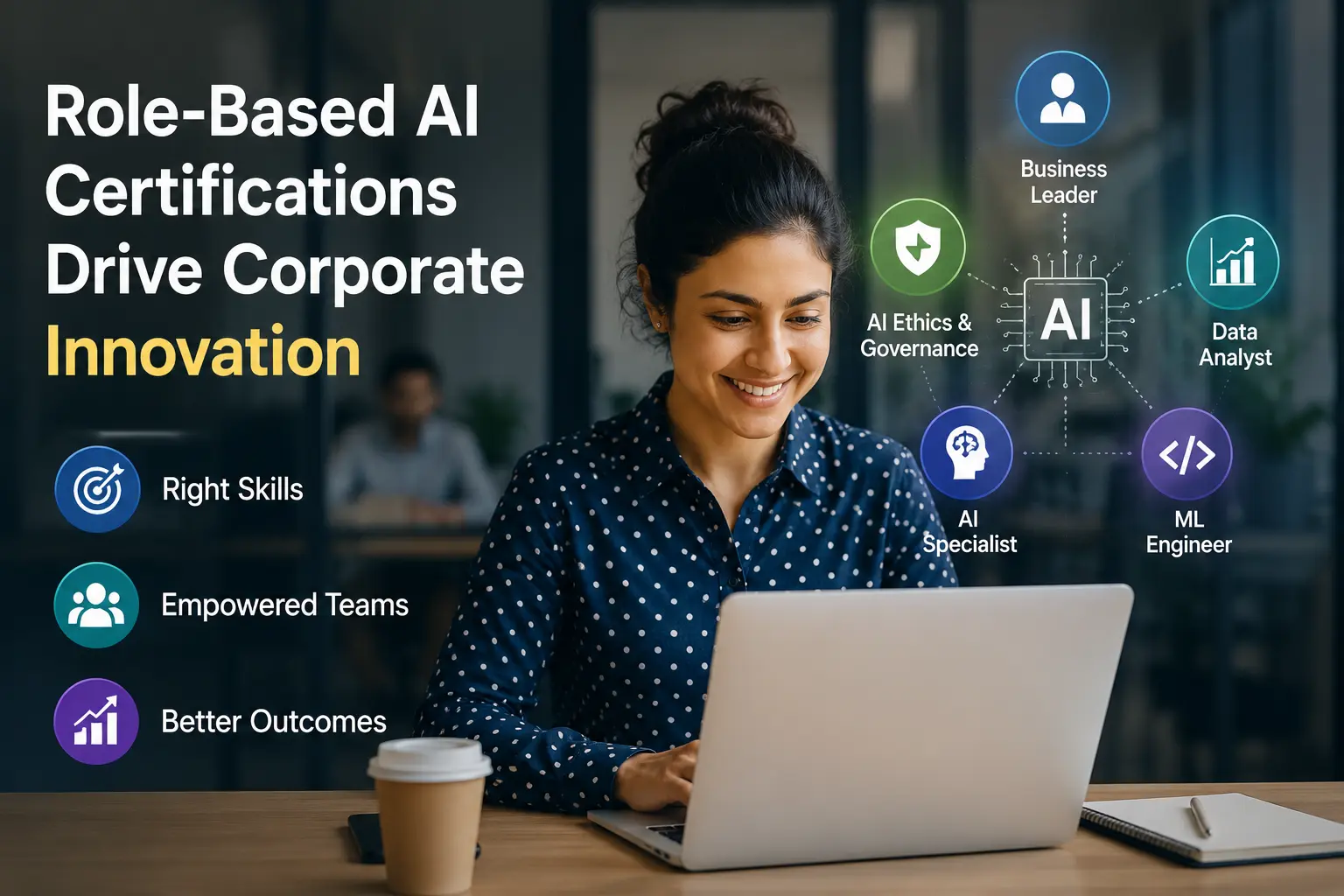
FEATURED
How Do Role-Based AI Certifications Improve Corporate Innovation Outcomes?
June 18, 2026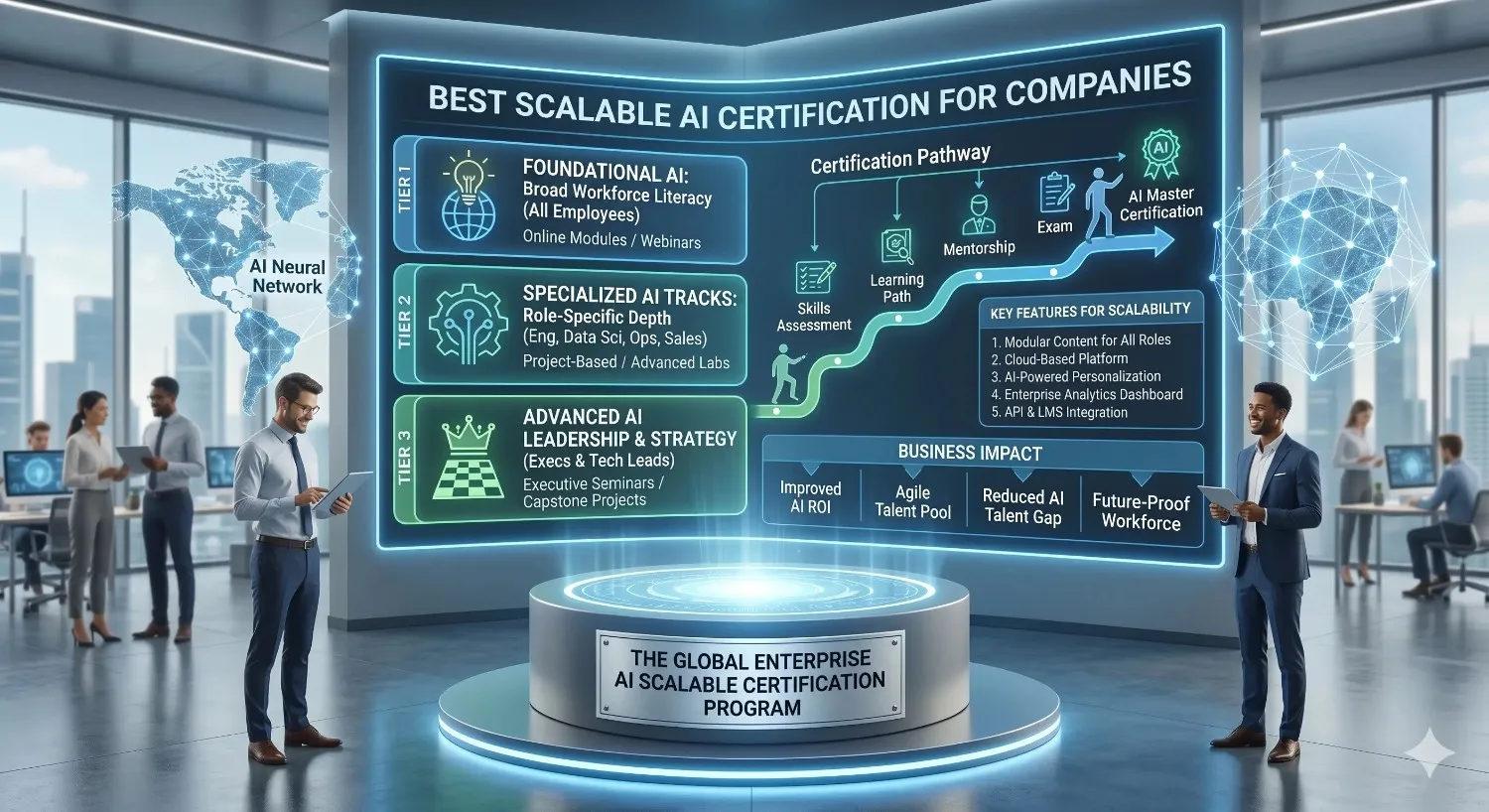
FEATURED
What is the Best Scalable AI Certification Program for Companies?
June 17, 2026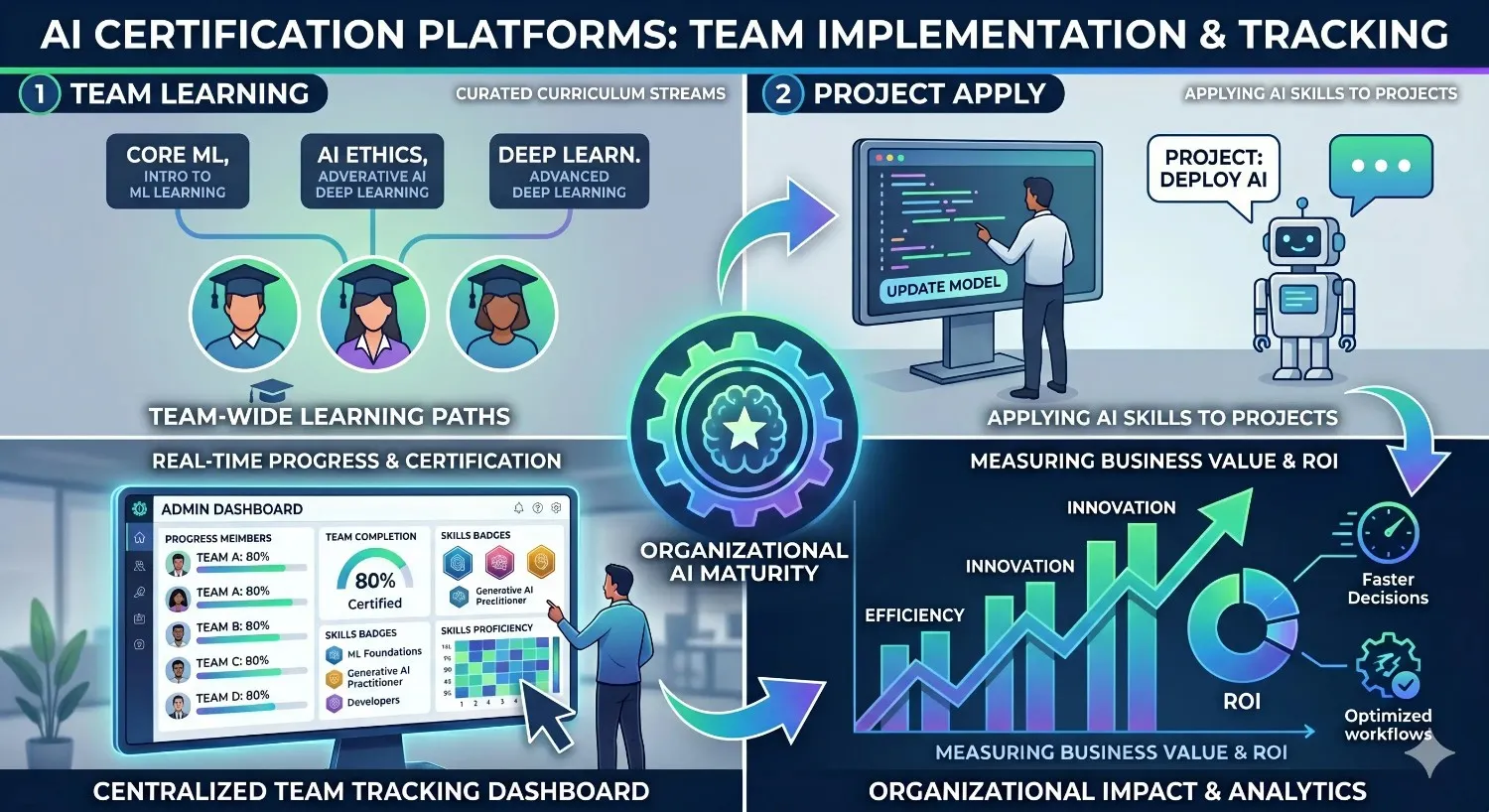
FEATURED
Which AI Certification Providers Support Team-Wide Implementation and Tracking?
June 17, 2026
FEATURED
What Are Leading Role-Based AI Certification Options for Enterprises?
June 17, 2026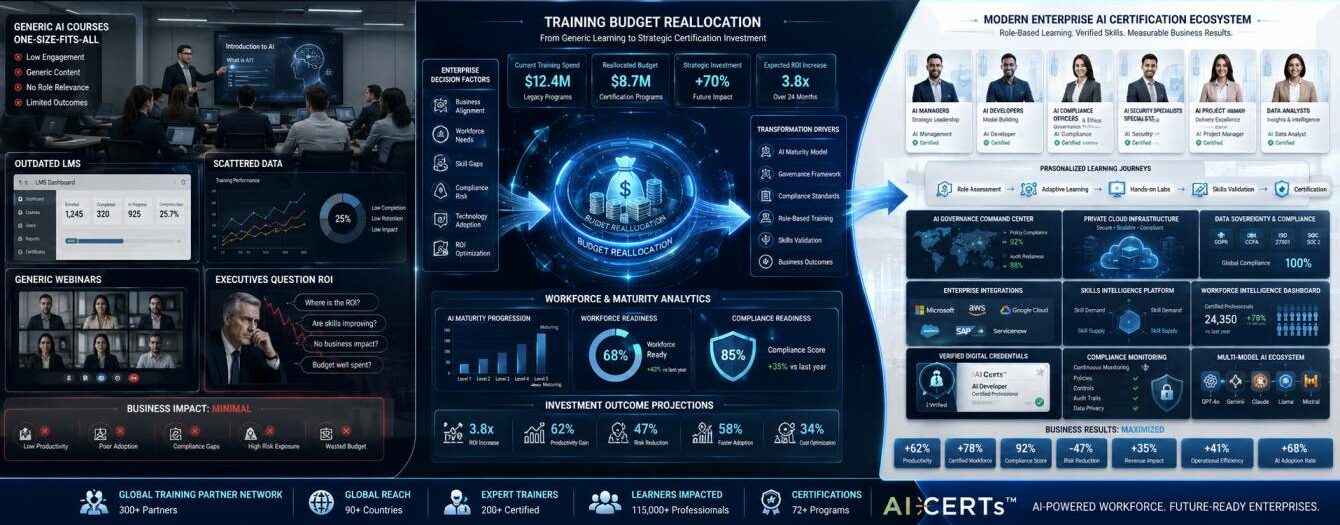
FEATURED
Enterprise AI Training Budgets: Where the Money Flows Now
June 12, 2026