Role-Based vs. General AI Certifications: What Enterprise Buyers Actually Want in 2026


In 2026, enterprise buyers are shifting from general AI awareness to role-specific mastery. Research shows that general training leaves a 59% skills gap. Leading companies now demand role-based certifications to ensure ROI. This blog explores why specialized AI training is the new standard for global business success.
1. The Great Shift: Why General AI Training is No Longer Enough
In early 2026, the “honeymoon phase” of artificial intelligence ended. For two years, companies gave employees general tools and hoped for the best. However, a recent study by DataCamp reveals a “Training Paradox.” While 82% of leaders offer some AI training, 59% of managers say their teams still cannot do their jobs effectively with AI.
Enterprise buyers now realize that a marketing manager does not need to know the same things as a legal assistant. General AI training teaches people how to “talk” to a chatbot. Role-based training teaches them how to “work” with a digital colleague. Buyers are looking for AI training programs that offer specific skills for specific jobs.
2. The Push for Applied AI Skills
The world saw a massive move toward specialized AI education. American Express announced a global partnership to launch “AI Upskilling for Small Business.” This program is not just a general overview. It features three specific tracks: AI Generalist, Digital Marketing, and Digital Customer Success.
This news confirms that even the world’s largest financial players are moving toward role-based mastery. Additionally, on the same day, Fieldguide achieved the first-ever AIUC-1 certification for AI agents in the audit and advisory sector. This proves that high-stakes industries like finance and law now require “agentic” skills—the ability to manage AI agents that perform specialized tasks.
3. Enterprise Needs: The Power of an Authorized Training Partner
When a company buys training, they aren’t just buying videos. They are buying trust. This is where an authorized training partner becomes essential. In 2026, the risk of “hallucinations” and data leaks is too high for uncertified courses.
Enterprises want training that is verified. By working with an authorized training partner, businesses ensure their staff learns from a curriculum that is updated every quarter. For example, the ISG Provider Lens report highlights that Global Capability Centers (GCCs) are no longer just “cost-cutters.” They are now strategic engines that require integrated talent and governance.
4. Role-Based vs. General: A Comparison of Value
Why is role-based better? Let’s look at the data. General certifications often result in a “souvenir badge” that looks good on LinkedIn but doesn’t change how work is done. Role-based certifications, like those offered by AI CERTs, focus on “Superagency”—the ability to orchestrate complex AI systems. Below is the comparison table.
The Impact of Training Type on Business Outcomes (2026 Data)
| Feature | General AI Training | Role-Based AI Certification |
| Weekly Time Saved | 0-2 Hours | 11.4 Hours |
| Skill Proficiency | Baseline | 2.7x Higher |
| Project Success Rate | 35% | 88% |
| Salary Premium | 5-10% | 25% |
| Employee Confidence | Low | Very High |
Source: IDC & Microsoft AI ROI Study and Nucamp 2026 Salary Reports.
5. The ROI of the AI CERTs Authorized Training Partner (ATP) Program
The AI CERTs Authorized Training Partner (ATP) Program is designed to bridge the gap between “knowing AI” and “using AI.” For training providers, this is the gold standard.
By becoming an ATP, you get access to “Battle Cards” and sales tools that explain exactly why a role-based certification in AI+ Healthcare or AI+ Finance is worth 3x more than a generic course. Buyers in 2026 are looking for an authorized training partner because they know the ROI is real. According to Microsoft-IDC data, organizations with structured, role-based training see an average ROI of $3.70 for every $1 spent, with “AI Leaders” seeing as much as $10.30.
6. How to Become a Partner and Lead the Market
The demand for specialized AI training is exploding in the APAC, GCC, and North American markets. If you are an education provider or a consultant, now is the time to become a partner.
The process is simple but the impact is massive. As an ATP, you are not just selling a course; you are solving the biggest problem in modern business: the talent gap.
Call to Action:
- To train corporate teams: Explore the ATP Program
- For universities and colleges: Join as an Academic Partner
- For industry groups: Become an Association Partner
- For individuals and influencers: Apply for the Affiliate Program
Frequently Asked Questions (FAQs)
Why is role-based AI training better than general training?
General training is too broad. Role-based training gives employees the exact tools and prompts they need for their specific job, such as HR, Law, or Marketing. This leads to higher productivity and fewer mistakes.
What is an Authorized Training Partner (ATP)?
An ATP is a company that has been officially approved to deliver AI CERTs certifications. They use official materials that are updated constantly to match new technology.
How much time can AI training really save?
According to the 2026 Enterprise AI Report, employees who finish structured, role-based training save an average of 11.4 hours per week by automating routine tasks.
Is there a demand for these certifications in 2026?
Yes. Over 90% of companies are currently facing an AI skills shortage. Enterprises are desperately looking for certified professionals who can prove they know how to use AI responsibly.
How can my organization become a partner?
You can apply directly through the AI CERTs website. There are different levels of partnership for training centers, universities, and individual affiliates.
Recent Blogs

FEATURED
Why Do Corporate AI Certification Programs Often Fail Long Term?
June 25, 2026
FEATURED
Which AI Certification Programs Work Best for Corporate L&D Teams?
June 25, 2026
FEATURED
What Is the Best AI Certification for Non-Technical Employees?
June 25, 2026
FEATURED
What Makes It Hard to Upskill Employees with AI Certifications?
June 24, 2026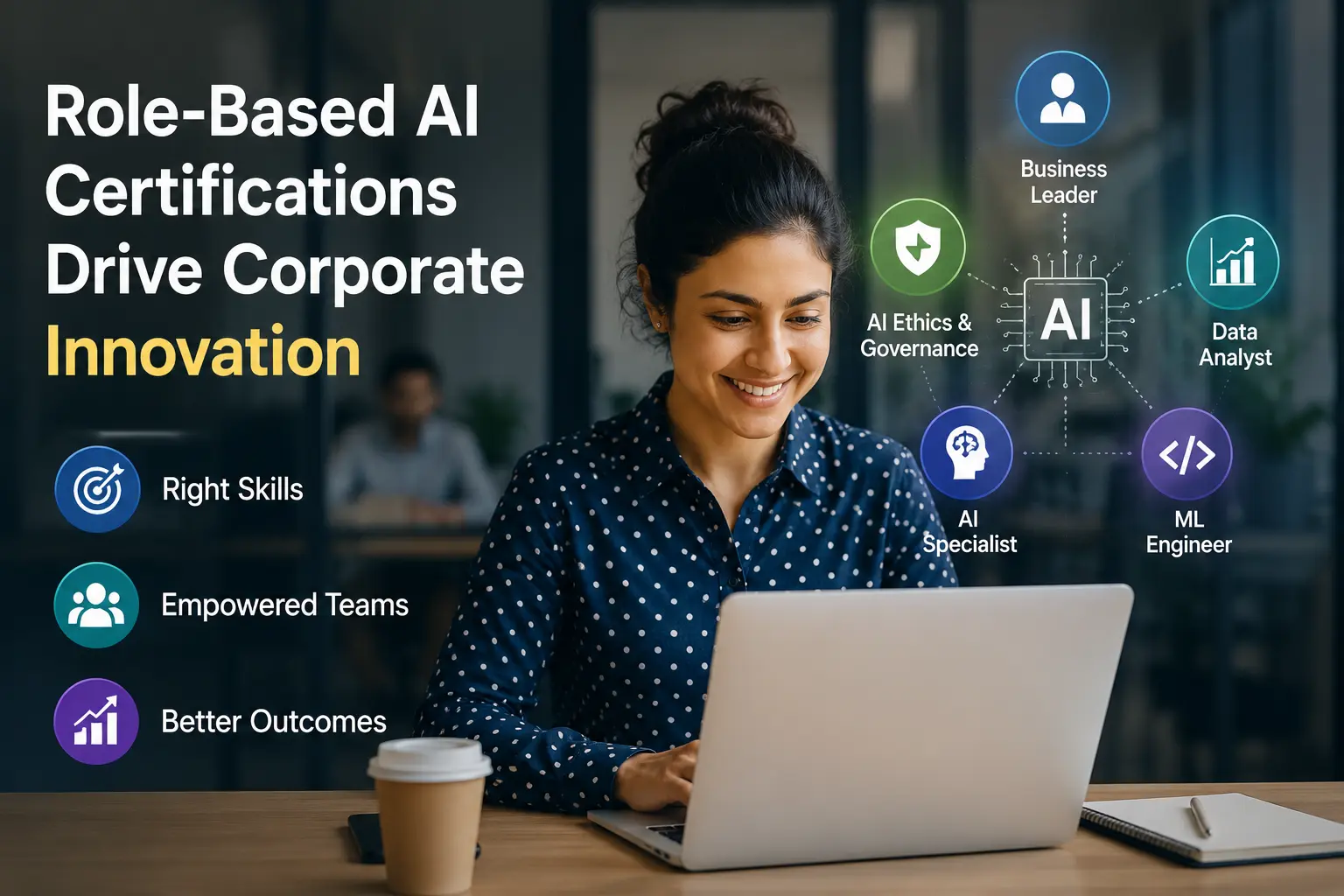
FEATURED
How Do Role-Based AI Certifications Improve Corporate Innovation Outcomes?
June 18, 2026