

AI CERTS
1 hour ago
Vehicle AI Security Drives Proactive Auto Cyber Defense
In contrast, defenders deploy AI agents to match that speed and scale. This article explains why stakeholders should prioritise Vehicle AI Security, how new platforms work, and which steps build lasting resilience.
Threat Landscape Rapidly Expands
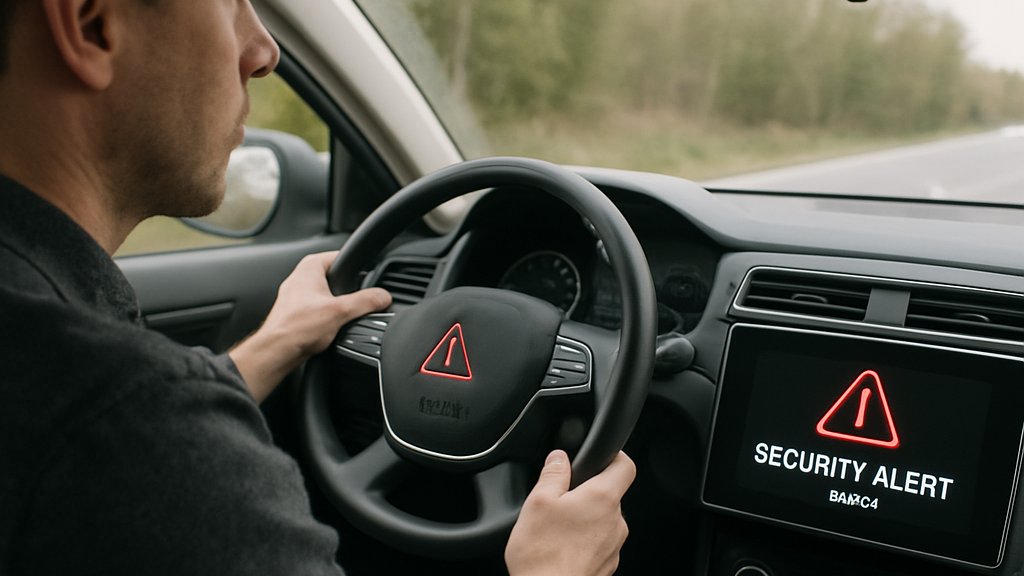
Upstream studied 494 public incidents from 2025. Ransomware represented 44% of cases, twice the 2024 share. Furthermore, 92% of breaches used remote vectors, mainly telematics and cloud APIs. VicOne’s data reinforces the danger, noting 161 cross-organisation attacks, triple the prior year.
Meanwhile, 33% of risk now touches driver-facing systems, raising direct safety concerns. Additionally, experts link spike trends to software-defined vehicles, where over-the-air code changes broaden vulnerable surfaces. Attackers exploit increasingly complex automotive software supply chains and third-party APIs.
- 44% incidents = ransomware
- 67% used telematics routes
- 68% caused data exposure
- 161 multi-business breaches recorded
These figures highlight growing urgency for strong Vehicle AI Security solutions. Nevertheless, multiple overlapping factors still magnify the threat. Transitioning to attack-surface analysis will clarify those factors.
Attack Surface Drivers Multiply
Modern connected vehicles rely on zonal controllers, 5G links, and cloud dashboards. Consequently, each component adds potential compromise points. Edge AI acceleration hardware now lives near braking actuators, reducing latency yet introducing unique model tampering risks.
Moreover, cloud AI orchestration exposes backend APIs to automated scanners. Suppliers push weekly updates, and continuous integration loops sometimes bypass rigorous review. Therefore, governance gaps appear across mobility tech ecosystems.
VicOne labels this convergence the “Overlap Era.” Vehicles, corporate IT, and cloud workloads operate as one fabric. Attack campaigns pivot across them seamlessly. Effective Vehicle AI Security must monitor all tiers, correlating anomalies in real time.
These drivers reveal why broad visibility is mandatory. Subsequently, the market has responded with specialised AI products.
AI Products Reshape Defense
Start-ups and incumbents now ship cybersecurity-first platforms built for automotive software realities. Dropzone raised $16.85 million for autonomous SOC agents that slash manual triage. Sonatus embeds edge AI enforcement inside electronic control units, guarding signals locally.
Cisco, CrowdStrike, and ETAS align with similar product roadmaps. They train foundation models solely on security telemetry, cutting false positives. Furthermore, integrated silicon partnerships, such as ETAS and Rambus, protect cryptographic keys against side-channel extraction.
Edward Wu of Dropzone notes that automated attacks once costly now become economical. Nevertheless, purpose-built Vehicle AI Security countermeasures restore balance by automating detection and response.
Product momentum shows industry commitment to AI-powered cyber defense. However, policy and oversight still trail technology.
Governance And Regulation Gaps
UNECE R155 mandates security management for new car types, yet board accountability remains uneven. Moreover, suppliers interpret frameworks differently, leaving blind spots within complex connected vehicles programs.
Upstream’s Yoav Levy stresses that adaptive AI systems invalidate static perimeter assumptions. Therefore, regulators and executives must embrace continuous risk assessments and fleet-scale telemetry sharing.
Professionals can enhance their expertise with the AI Network Security™ certification. This credential aligns with ISO/SAE 21434 practices and prepares leaders for evolving compliance demands.
Governance misalignment slows adoption of robust Vehicle AI Security frameworks. Consequently, operations teams seek concrete best practices to close gaps quickly.
Operational Best Practice Blueprint
Leading fleets implement a layered blueprint that blends edge AI and cloud analytics. Key measures include:
- Deploy vehicle SOCs aggregating multi-domain telemetry
- Harden OTA pipelines with cryptographic attestation
- Use hardware secure modules for model integrity
- Simulate attacks during every software sprint
- Share intelligence across mobility tech partners
Additionally, incident response runbooks should pair AI insights with human review, minimising downtime. In contrast, fully manual approaches cannot match automated offensive tools.
Executing this blueprint fortifies Vehicle AI Security posture across entire asset lifecycles. Subsequently, future strategy discussions shift toward long-term outlook.
Future Outlook And Actions
Market analysts expect global spending on automotive cyber defense to reach $13 billion by 2028. Moreover, investors fund specialised vendors as ransomware profits soar. Edge AI adoption will expand, driven by autonomy and predictive maintenance.
However, attacker creativity also grows. Generative malware builders lower skill thresholds, and adversaries weaponise synthetic sensor data. Therefore, continuous learning models and federation across fleets will become standard.
OEMs, suppliers, and regulators must collaborate on shared taxonomies and testbeds. Consequently, proactive Vehicle AI Security investments today translate to safer roads and stronger brand trust tomorrow.
This outlook underscores both risk and opportunity. Nevertheless, focused action guided by data can secure connected vehicles at scale.
Vehicle AI Security now anchors the next era of automotive software resilience. Additionally, integrated governance, leading certifications, and layered technology will define winners in the mobility tech race.
Conclusion
Ransomware growth, expanded attack surfaces, and AI-driven threats demand immediate, intelligent defense. Industry reports confirm that connected vehicles need dynamic protections spanning edge AI and cloud layers. Purpose-built platforms, rigorous governance, and continuous testing form the essential blueprint.
Furthermore, professionals should update skills to keep pace with evolving standards. Secure your organisation’s future by exploring the AI Network Security™ certification, and begin reinforcing fleet resilience today.
Disclaimer: Some content may be AI-generated or assisted and is provided ‘as is’ for informational purposes only, without warranties of accuracy or completeness, and does not imply endorsement or affiliation.


