

AI CERTS
2 hours ago
DeepRare Sets New Standard for AI Medical Diagnostics
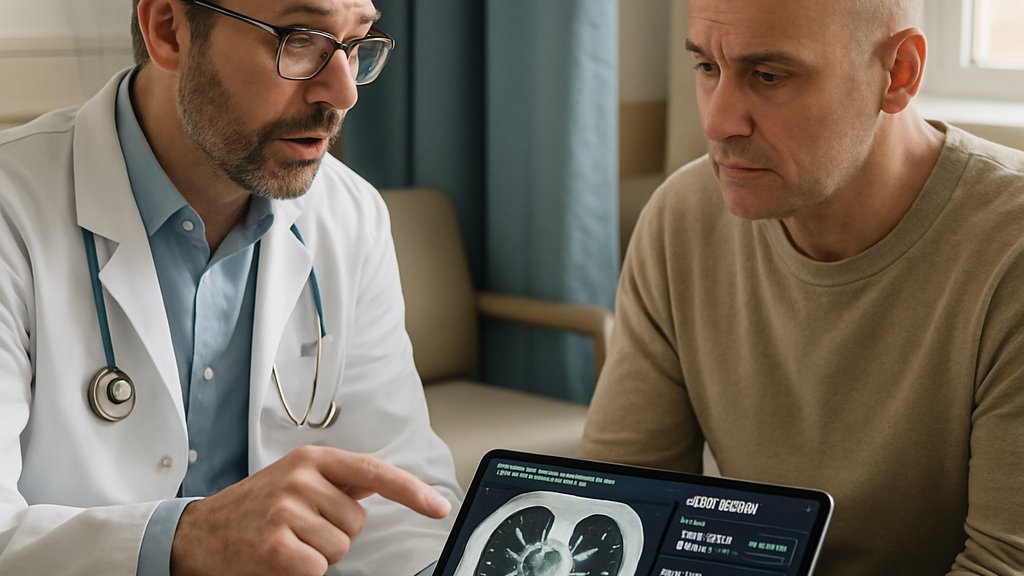
Moreover, we place DeepRare within broader dermatology and clinical imaging trends to avoid hype drift. Prepare for a data-driven tour of breakthroughs and bottlenecks shaping next-generation medical models.
Breakthrough Paper Key Details
DeepRare arrived on February 18, 2026, as a star Nature paper from Shanghai Jiao Tong researchers. However, its story began with thousands of anonymized cases spanning nine public and private datasets.
The evaluation corpus covered 6,401 patients, 2,919 disorders, and 14 medical specialties. Consequently, the test bed dwarfed earlier studies focused on single clinics or narrow phenotype slices.
Top-one accuracy reached 64.4 percent in a head-to-head trial against experienced physicians at Xinhua Hospital. Physicians scored 54.6 percent, confirming a statistically significant 10-point gap.
Furthermore, Recall@5 rose to 78.5 percent, widening the advantage as diagnostic options expanded. DeepRare maintained leadership when whole-exome sequencing augmented phenotypic inputs, beating Exomiser by 13.2 points.
These statistics establish a new evidence bar for AI Medical Diagnostics in multisystem rare disease. Nevertheless, external validation remains outstanding, a topic we revisit later.
DeepRare’s dataset scale and accuracy shift baseline expectations for researchers and regulators. Meanwhile, the architecture powering those gains deserves equal scrutiny.
Multi-Agent Architecture Design Explained
Unlike single-block medical models, DeepRare orchestrates specialist agents under a large language model controller. Consequently, each agent handles retrieval, evidence synthesis, or variant prioritization before the host compiles explanations.
In contrast, many earlier systems produced opaque rankings, frustrating clinicians demanding traceability. DeepRare instead outputs stepwise reasoning chains that ten associate-chief physicians endorsed in 95.4 percent of sampled cases.
Moreover, the multi-agent layout accommodates new modalities without retraining the full stack. Adding genomic data boosted top-one accuracy to 69.1 percent, underscoring architectural flexibility.
Such modularity signals where AI Medical Diagnostics will head as hospital data types diversify. However, complexity brings fresh integration risks for real-time clinical workflows.
DeepRare proves that orchestrated agents can outthink monolithic algorithms. Therefore, understanding its design helps leaders forecast maintenance costs and upgrade paths. Next, we quantify the benchmark edge that design delivered.
Benchmark Results Data Overview
Benchmark tables reveal consistent wins for AI Medical Diagnostics across nine datasets, public and proprietary. Moreover, DeepRare led by 23.8 percentage points on phenotype-only Recall@1, compared with the nearest competitor.
Skin, neurology, and metabolic subsets all benefited, debunking claims that dermatology dominates AI victories. Nevertheless, dermatology cases still highlighted differences in skin-tone coverage that merit caution.
- 6,401 total cases across 14 specialties
- 64.4% Recall@1 against physicians’ 54.6%
- 69.1% Recall@1 when genomics added
- 95.4% agreement on reasoning chains
These numbers reinforce AI Medical Diagnostics credibility beyond marketing slides.
These figures place DeepRare atop current healthcare AI leaderboards. Consequently, investors see fertile ground for spin-offs and partnerships focused on rare disease care.
Numbers alone rarely settle clinical debates. Still, they frame the dermatology context we examine next.
Dermatology Context Still Matters
Dermatology has long served as a proving ground for image-centric algorithms. However, systematic reviews in 2026 found that clinical imaging tools surpass novices yet seldom outpace specialists.
DeepRare differs because it emphasises textual phenotypes and genomics rather than pixels. Therefore, headlines claiming the system defeats dermatologists oversimplify the comparative frame.
Nevertheless, skin manifestations represent crucial clues in many rare disease workflows. Future versions could integrate clinical imaging seamlessly, uniting two diverging strands of healthcare AI research.
Such convergence would push AI Medical Diagnostics toward holistic patient triage. In contrast, siloed systems risk missed cues and compounded errors.
Dermatology lessons caution against overgeneralization and bias blind spots. Consequently, deployment discussions must address those pitfalls. We now examine regulatory and workflow hurdles stalling clinical rollout.
Deployment Hurdles Still Ahead
Bringing research prototypes into wards demands more than accuracy charts. Moreover, data privacy laws complicate genomic sharing, especially across borders. Hospitals evaluating AI Medical Diagnostics must weigh legal exposure alongside accuracy gains.
Regulators will expect audited reasoning trails, which DeepRare already generates. Nevertheless, prospective multicentre trials are mandatory before reimbursement codes appear.
Hospitals also juggle cybersecurity, liability, and staff training budgets. Consequently, even strong medical models can languish without clear governance frameworks.
Meanwhile, professionals can strengthen governance literacy through the AI+ Healthcare Diagnostics™ certification.
These obstacles outline a demanding path for AI Medical Diagnostics adoption. However, strategic roadmaps exist, as we discuss in the final section.
Strategic Next Clinical Steps
First, independent investigators should recreate DeepRare benchmarks using fully external datasets. Secondly, planned prospective trials must monitor ancestry, age, and disease-prevalence subgroups.
Moreover, shared model weights and transparent licensing will enable rapid peer review. In contrast, closed binaries slow innovation and erode clinician trust.
Industry consortia can pool clinical imaging and genomic resources to stress-test integrated medical models. Consequently, dermatology and neurology experts alike can flag equity gaps before deployment.
Clear validation plans, open code, and stakeholder collaboration form the success tripod. Therefore, healthcare AI managers should sketch compliance timelines now. Our conclusion distills the practical implications for decision makers.
Conclusion
DeepRare confirms that agentic design can set fresh performance marks in rare disease diagnosis. Furthermore, the work elevates AI Medical Diagnostics from point solutions to systemic decision aids. Benchmark breadth, transparent reasoning, and multi-modal flexibility all contribute to that leap.
Nevertheless, regulatory clearance, dermatology bias checks, and workflow integration remain unresolved. Consequently, executives should demand prospective trials while arming teams with governance skills and certifications. Act now to evaluate DeepRare, commission validation studies, and pursue the linked credential to stay ahead.
Disclaimer: Some content may be AI-generated or assisted and is provided ‘as is’ for informational purposes only, without warranties of accuracy or completeness, and does not imply endorsement or affiliation.


