

AI CERTS
1 hour ago
Korea Accelerates AI Factory Infrastructure Ambitions
Government ministries promise up to 50,000 secured GPUs for public research and industry. However, engineers face power, cooling, and supply chain pressures unheard of a decade ago. Analysts argue success will depend on tight integration across network, compute, and software layers. This article unpacks the numbers, challenges, and opportunities that define Korea’s AI factory surge.
Telecoms Embrace AI Factories
SK Telecom grabbed global headlines on 8 June 2026 with a gigawatt-scale AI cloud plan using NVIDIA’s DSX architecture. Furthermore, the carrier pledged its first AI factory would enter service in 2027. The plan represents Korea’s largest AI Factory Infrastructure project to date. KT quickly followed, signing a memorandum with DigitalBridge that contemplates similar industrial compute campuses. LG Uplus is already pouring concrete at Paju, where a 50 MW block is nearly sold out.
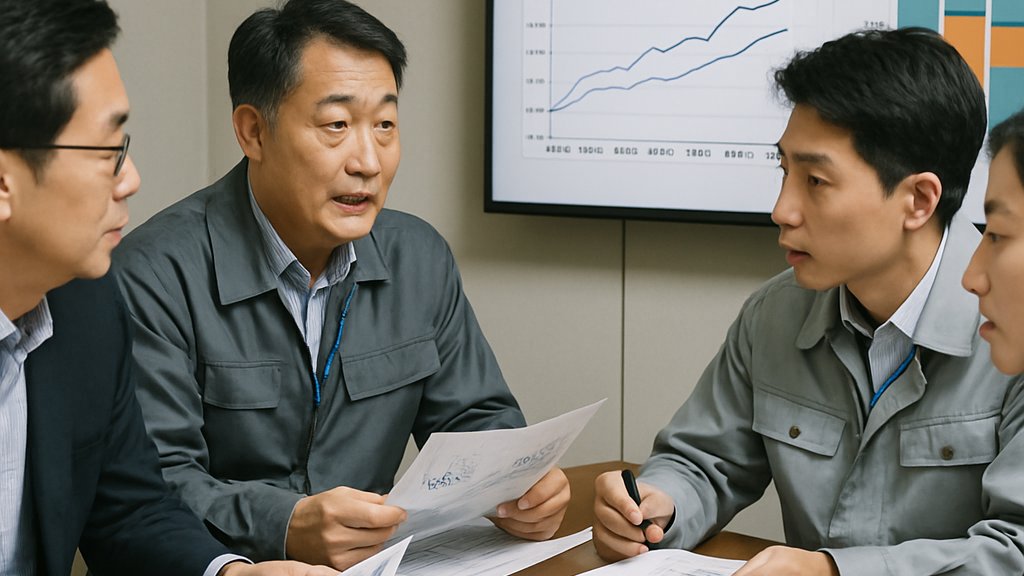
Moreover, telecom executives view AI factories as logical extensions of their 5G and fiber assets. Consequently, networks, colocation halls, and edge nodes can work together to shorten inference latency. These moves position carriers as sovereign AI suppliers while unlocking new revenue beyond connectivity.
Korean telcos therefore stand at the center of the national infrastructure buildout. However, success hinges on securing enough GPUs, power, and cooling resources. Next, we examine how the government and NVIDIA are tackling those GPU constraints.
National GPU Deployment Push
The October 2025 NVIDIA briefing disclosed a coalition exceeding 260,000 deployed GPUs across sovereign projects. In contrast, the Ministry of Science & ICT reserved up to 50,000 units for public sector workloads. Moreover, NVIDIA committed DSX software stacks that turn raw silicon into fully automated AI cloud services. Consequently, SK Telecom and Naver can spin up industrial compute clusters faster than traditional integrators.
- 260,000+ NVIDIA GPUs already active nationwide.
- 50,000 GPUs allocated for sovereign research workloads.
- First gigawatt AI factory slated for 2027 commissioning.
Government backing accelerates GPU access and derisks early capital commitments. Nevertheless, hardware scale introduces daunting power and cooling demands.
Power And Cooling Pressures
IEA data shows AI data-centre electricity demand jumped 17% in 2025 alone. Furthermore, specialized AI halls now exceed 100 MW per block, dwarfing legacy telco exchanges. LG Uplus designed Paju with hybrid air and liquid loops to manage 30 MW IT loads. However, grid interconnection remains uncertain because utility upgrades lag campus schedules.
Engineers therefore install on-site batteries and flexible controls to smooth rapid load swings. These measures mitigate risk today. Still, scaling AI Factory Infrastructure toward gigawatt levels will test national power planning.
Rising megawatts threaten project timelines and investor confidence. Capital considerations now take center stage.
Capital And Supply Risks
DigitalBridge manages 108 billion dollars in digital assets yet warns of multi-year payback horizons. Moreover, high bandwidth memory shortages and GPU queues stretch delivery schedules. Consequently, Korean groups diversify suppliers where possible, but NVIDIA still dominates advanced nodes. Large orders also meet local regulatory checks, slowing infrastructure buildout despite board approvals.
Financial and supply hurdles could delay AI Factory Infrastructure rollouts if left unaddressed. Yet collaborative partnerships appear to soften several pain points.
Strategic Industry Partnerships Rise
Naver Cloud joined Samsung, Hyundai, and SK Group in an NVIDIA-led alliance unveiled at APEC 2025. Additionally, telcos share fiber routes and backhaul designs to speed cross-campus traffic. Shared engineering lowers unit costs and accelerates infrastructure buildout milestones for all members. Academic researchers from Yonsei University contribute AI-RAN algorithms that optimize radio access compute placement. Meanwhile, sovereign AI programs ensure sensitive data never leaves Korean soil, pleasing regulators.
These partnerships strengthen technical know-how and political support in equal measure. Next, we explore how talent development sustains the momentum.
Skills And Certification Pathways
Large projects demand architects who understand thermal envelopes, network QoS, and model pipelines. Therefore, telcos fund reskilling programs that pair engineers with GPU vendors and cloud experts. Professionals can enhance their expertise with the AI Architect™ certification. Moreover, the curriculum maps directly to AI Factory Infrastructure reference stacks and deployment checklists. Similar badges cover AI cloud security, industrial compute orchestration, and sustainable power designs.
Targeted training closes immediate skills gaps for Korean operators. The final section highlights market outlook and investor signals.
Outlook For Korean Market
Analysts remain bullish yet cautious. In contrast, some forecast only half the announced capacity will reach full deployment by 2030. Nevertheless, early AI factory revenue already appears in LG Uplus order books. SK Telecom projects premium AI cloud services could lift average revenue per user after 5G plateaus. Furthermore, government export ambitions include licensing Korean language models across Asia.
Momentum seems durable if power and funding track plans. Consequently, investors will watch grid upgrades and GPU arrivals closely.
South Korea’s ambitious AI Factory Infrastructure program blends telco assets, sovereign strategy, and cutting-edge GPUs. Moreover, SK Telecom, Naver, and peers are transforming from connectivity providers into AI production powerhouses. However, grid constraints, capital intensity, and supply bottlenecks must stay on executive dashboards. Nevertheless, robust partnerships and targeted certifications suggest the ecosystem can overcome these obstacles. Therefore, readers should monitor power contracts and delivery milestones over the next 24 months. Finally, consider expanding personal expertise through accredited programs to capture career opportunities created by this historic buildout.
Disclaimer: Some content may be AI-generated or assisted and is provided ‘as is’ for informational purposes only, without warranties of accuracy or completeness, and does not imply endorsement or affiliation.


