

AI CERTS
2 hours ago
Telecom AI Agents Redefine Nokia-Google Network Stack
This article unpacks the deal, technology, business impact, and governance questions in clear detail. Moreover, it charts practical next steps for professionals seeking competitive advantage. Readers will leave with actionable insights and relevant certification guidance. Meanwhile, operator trials continue to expand across Europe, Asia, and North America. In contrast, analysts warn that early victories may hide deep integration challenges. Therefore, balanced coverage remains essential.
Market Momentum For Agents
Global telecom spending on agentic AI is accelerating. Nokia projects a $6.2 billion market for Telecom AI Agents by 2030. Furthermore, Network as Code now hosts 70 plus partners offering 20 production-grade APIs. These APIs expose identity, slicing, and quality services to external developers. Consequently, enterprises can monetize connectivity without mastering complex carrier software.
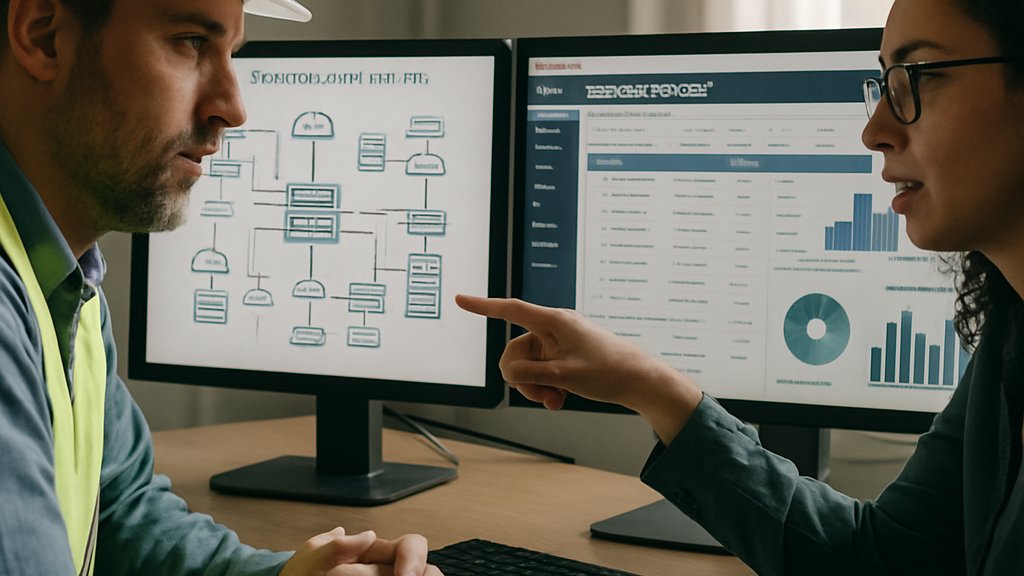
Analysts link this growth to two converging trends. First, Gemini models drastically reduce the cost of advanced reasoning over telecom data. Second, autonomous networks require intent translation layers that classical orchestration cannot deliver. Therefore, demand converges on agentic platforms that integrate LLMs with robust network APIs.
Nevertheless, market enthusiasm does not guarantee production success. Several operators remain cautious after past automation hype cycles. However, early pilots from Deutsche Telekom and Vodafone reported double-digit operational gains. These signals encourage further experimentation.
Agentic momentum feels undeniable across the sector. Yet, technical depth decides ultimate winners. Subsequently, understanding the Nokia and Google alliance becomes critical.
Nokia And Google Alliance
The partnership fuses Nokia's Network as Code with Google Cloud's Gemini Enterprise platform. Moreover, Model Context Protocol grants Gemini models secure access to telco data and tools. Meanwhile, Agent-to-Agent messaging lets business agents request connectivity from network peers autonomously.
Nokia contributes domain expertise spanning 600 million broadband lines. Consequently, Telecom AI Agents inherit rich operational knowledge for troubleshooting and optimization. Google supplies scalable inference, governance dashboards, and the Agent Developer Kit. Therefore, the alliance blends hyperscale compute with specialized carrier software.
In contrast, previous partnerships focused on isolated APIs rather than end-to-end workflows. This integrated stack lowers integration friction for developers and operators. Nevertheless, governance remains a shared responsibility across both vendors.
Together, the firms promise faster intent resolution and lower costs. However, architecture specifics warrant deeper inspection. Consequently, we next dissect the underlying agentic architecture.
Inside Agentic Architecture
At the core sits the Gemini reasoning engine. It consumes user intent, plans tasks, and selects relevant network APIs. Furthermore, MCP injects topology, policy, and capacity context during every reasoning loop. Agents then request execution through Nokia orchestration microservices.
These microservices invoke carrier software gateways that translate API calls into protocols like NetConf and gRPC. Therefore, legacy and cloud-native elements can participate without wholesale replacement. Additionally, A2A enables separate agents to collaborate on multi-domain service chains.
Security boundaries rely on fine-grained tokens issued by Google policy engines. In contrast, data residency controls remain under operator governance within Nokia's abstraction layer. Consequently, enterprises can adopt telco automation without surrendering compliance assurance.
This architecture mixes openness with strict guardrails. Nevertheless, real performance depends on operator execution. Therefore, attention shifts to operator trial results.
Operator Trials And KPIs
Eight tier-one operators publicly support the initiative. They include Deutsche Telekom, Orange, Rakuten, Vodafone, Telefónica, Globe, Tata Communications, and TELUS. Moreover, several smaller carriers evaluate proofs of concept under non-disclosure agreements.
Nokia cites first-contact resolution improvements above 50 percent in fiber fault scenarios. Furthermore, agentic diagnostics reportedly cut truck rolls by one third. Autonomous networks benefit because technicians receive precise, step-by-step guidance generated by Gemini models.
However, most metrics originate from lab environments or limited regional pilots. Independent audits remain scarce. Nevertheless, operators confirm that Telecom AI Agents already handle routine configuration tasks.
Early numbers look promising yet unverified. Consequently, risk management rises to the foreground. Next, we examine governance hurdles.
Risks And Governance Hurdles
Agentic systems introduce new attack surfaces and billing exposures. Security researchers fear runaway scripts could unintentionally consume premium slices, inflating costs. In contrast, traditional OSS tools feature hardcoded safeguards.
Therefore, Nokia embeds rate limits, approval workflows, and anomaly detection inside its orchestration layer. Google Cloud adds audit trails plus policy tagging across Gemini models. Additionally, the partners support independent certification regimes for Telecom AI Agents.
Analysts still question liability allocation when multiple agents cooperate. Nevertheless, legal frameworks continue to evolve alongside telco automation standards.
Robust guardrails are progressing but incomplete. However, skills gaps may hinder adoption. Consequently, professionals should pursue targeted upskilling.
Skills And Certification Path
Demand grows for engineers versed in LLM reasoning, networking, and security governance. Furthermore, product managers need fluency in carrier software abstraction and business models.
Professionals can validate their expertise through specialized programs. For example, the AI Telecommunications Specialist™ certification covers agentic architectures and governance. Moreover, Google Cloud offers Gemini models bootcamps through selected partners.
Nevertheless, hands-on labs with Telecom AI Agents remain the fastest learning route. Therefore, operators should embed agent sandboxes within existing telco automation testbeds.
Skilled talent will differentiate early winners. Subsequently, strategic forecasts merit attention. Hence, we evaluate the outlook to 2030.
Strategic Outlook Through 2030
Most analysts expect progressive scaling rather than an overnight revolution. Nokia forecasts Telecom AI Agents reaching mainstream maturity between 2028 and 2030. Moreover, autonomous networks should capture service agility gains that outpace current SDN investments.
- Depth of Gemini models integration and domain adaptation.
- Breadth of carrier software APIs exposed via Network as Code.
- Strength of telco automation governance, including auditing and compliance.
- Availability of skilled professionals certified in agentic architectures.
Consequently, ecosystem coordination between hyperscalers, vendors, and operators will shape competitive dynamics. In contrast, fragmented standards could stall adoption and erode trust.
Overall, agentic momentum appears durable. Nevertheless, disciplined execution remains mandatory. Therefore, stakeholders should act decisively now.
Nokia and Google have ignited a realistic path toward intent-driven networks. Telecom AI Agents promise faster service creation, richer customer experiences, and leaner operations. Moreover, autonomous networks powered by Telecom AI Agents could unlock new revenue beyond connectivity. However, production deployment will require rigorous governance, certified talent, and evolved carrier software practices. Organizations investing early in Telecom AI Agents gain crucial experience ahead of the curve. Consequently, readers should explore hands-on projects and pursue the linked certification to master Telecom AI Agents.
Disclaimer: Some content may be AI-generated or assisted and is provided ‘as is’ for informational purposes only, without warranties of accuracy or completeness, and does not imply endorsement or affiliation.


