

AI CERTS
1 hour ago
Anjuna Overwatch: Confidential Agent Platform for Secure AI
Furthermore, market analysts predict booming demand for such guardrails. Fortune Business Insights values the confidential computing segment at roughly USD 24.2 billion for 2025. Meanwhile, Grand View Research expects the AI agents sector to grow at double-digit CAGRs through 2030. Therefore, Overwatch lands at the intersection of two explosive trends, offering enterprises a path to provable integrity without sacrificing velocity.
Market Forces Rapidly Align
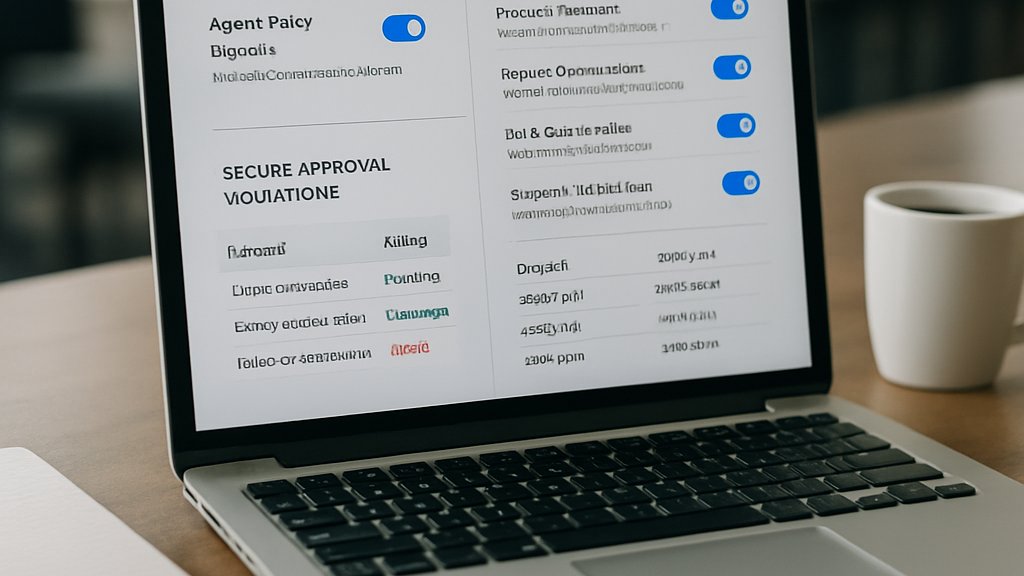
Vendor roadmaps show a clear pivot toward agent control planes. Microsoft pitched Agent 365, IBM advanced Orchestrate, and startups like Guild.ai chase the same oversight layer. However, most proposals still rely on standard VMs and software attestations. In contrast, Overwatch roots its trust in silicon, using Intel SGX, AMD SEV, and AWS Nitro enclaves.
Moreover, confidential computing adoption is accelerating. Gartner lists it as a strategic technology for 2026. Consequently, boards now ask CISOs when—not if—they will enable data-in-use protection. This urgency pushes buyers to platforms that combine governance with runtime isolation. Overwatch positions itself as that combined answer, branding the stack a second-generation Confidential Agent Platform.
These converging pressures amplify urgency. Therefore, leaders need clear criteria to compare solutions before agent sprawl becomes unmanageable.
Inside Overwatch Product Details
Overwatch inserts a lightweight supervisor into the agent loop. Therefore, every prompt, tool call, and credential request is attested inside a trusted runtime before execution. Additionally, policies follow a least-privilege model. A developer can grant an agent one-time database access without exposing full admin keys.
The runtime also supports automatic output redaction. Consequently, sensitive strings, personal data, or proprietary formulas never leave the enclave. Overwatch then brokers secrets only after verifying remote attestation proofs, blocking supply-chain tampering.
Overwatch ships alongside Seaglass and Northstar, forming a broader Anjuna suite. However, the company highlights Overwatch as its flagship Confidential Agent Platform aimed directly at agent governance gaps. Ayal Yogev, Anjuna’s CEO, argues that “policy must live inside the same hardware boundary as the code.”
These design choices deliver measurable control. Nevertheless, architects must weigh integration workload, which the next section explores.
Key Security Benefits Explained
The architecture yields several advantages:
- Hardware-rooted integrity checks stop insider attacks before execution.
- Real-time policy enforcement limits blast radius for misbehaving agents.
- Auditable logs support PCI DSS, NIST, and EU AI Act mandates.
- Secrets remain encrypted in memory, meeting strict confidential computing requirements.
Moreover, Overwatch adds dynamic redaction, masking regulated data on the fly. Consequently, teams can test new workflows without running separate anonymization pipelines. The approach aligns with autonomous AI security principles that stress continuous runtime verification.
Professionals can deepen their expertise through the AI Security 3™ certification, which covers enclave design patterns and agent governance. Therefore, security staff gain both product proficiency and industry-recognized credentials.
These benefits appear compelling on paper. However, rapid adoption still depends on ecosystem maturity, as the following trend illustrates.
Global Confidential Computing Surge
Hardware vendors now embed enclave support in CPUs, GPUs, and NICs. Consequently, cloud providers expose Nitro, SEV-SNP, and Confidential VMs as on-demand SKUs. Additionally, CNCF projects such as Confidential Containers automate deployment pipelines.
Therefore, Overwatch can chain attestations across multi-cloud fleets, creating a consistent trusted runtime. Furthermore, third-party integrations, including Yubico and Delinea, layer human approval tokens on top of machine checks. This stack directly addresses autonomous AI security guidelines that call for hardware plus runtime authorization.
Momentum suggests a tipping point. Nevertheless, operational complexity remains a central obstacle, leading to the next discussion.
Complex Governance Challenges Persist
Every control plane introduces its own attack surface. Consequently, Overwatch must defend its supervisory enclave as fiercely as it defends underlying agents. Moreover, performance overhead can rise when GPU TEEs mature unevenly across vendors.
Standards fragmentation adds friction. Multiple MCP dialects and proprietary APIs complicate integration for teams already juggling identity providers. Therefore, interoperability roadmaps will heavily influence long-term viability for any Confidential Agent Platform.
Despite these issues, early design partners, including Ascendo AI, report smooth proofs of concept. However, independent benchmark data is still scarce. Buyers should ask Anjuna for latency numbers and attestation artifacts before committing.
These practical hurdles underscore a core truth. Nevertheless, structured evaluation can streamline rollouts, as shown next.
Adoption Considerations Moving Ahead
Enterprises evaluating Overwatch should follow a phased plan. First, map existing agent flows and assign sensitivity labels. Secondly, pilot low-risk agents inside the Confidential Agent Platform to measure latency. Additionally, integrate observability tools early to avoid blind spots.
Key checklist items include:
- Verify enclave support across planned clouds.
- Confirm agent governance APIs align with current identity providers.
- Stress-test redaction rules against real traffic.
- Collect remote attestation evidence for auditors.
Furthermore, teams should budget extra cycles for secret rotation workflows, because enclave restarts often invalidate session keys. Consequently, robust automation becomes essential.
These steps will surface true integration costs. Therefore, leadership gains data to balance risk against performance before scaling adoption.
Strategic Takeaways For Today
Overwatch merges governance and isolation into a single Confidential Agent Platform. Moreover, the launch validates growing consensus that agents require hardware-anchored supervision. Market projections show both confidential computing and agent control planes entering mainstream budgets within two years.
However, success demands operational discipline. Teams must master enclave provisioning, policy authoring, and continuous attestation pipelines. Additionally, they should monitor evolving GPU TEE support to avoid hidden performance cliffs.
Nevertheless, early adopters gain a powerful bargaining chip with regulators and customers. Attested runtime logs demonstrate proactive compliance with strict autonomous AI security mandates. Consequently, enterprises that invest now can differentiate on trust and speed.
These insights frame the evolving landscape. Meanwhile, professionals should prepare to upskill as the ecosystem matures.
Conclusion
Anjuna Overwatch arrives when agent risk outpaces traditional controls. By embedding policy inside TEEs, the product delivers a verifiable shield for every decision loop. Furthermore, market data and analyst forecasts signal explosive growth for confidential computing and agent governance solutions. However, integration complexity and performance trade-offs require meticulous planning. Nevertheless, organizations that adopt a phased approach and pursue relevant certifications position themselves ahead of regulatory and competitive curves. Explore the linked AI Security 3™ course, deepen your enclave skills, and turn trust into your next strategic advantage.
Disclaimer: Some content may be AI-generated or assisted and is provided ‘as is’ for informational purposes only, without warranties of accuracy or completeness, and does not imply endorsement or affiliation.


