

AI CERTS
54 minutes ago
SEC’s AI Financial Oversight: Disclosure to Demonstration
Consequently, governing boards, data scientists, and lawyers must coordinate like never before. Moreover, investors increasingly demand clear evidence that algorithms align with their profiles. Early missteps have already triggered costly settlements. Meanwhile, upcoming examinations promise deeper scrutiny of every deployment claim. Understanding these forces is essential for any organization leveraging machine learning to drive growth. Therefore, this report unpacks shifting expectations, key risks, and practical safeguards.
Robust AI Financial Oversight
SEC statements underscore a clear theme across the 2026 examination priorities document. Namely, artificial intelligence claims must withstand real inspection. Examiners will sample data pipelines, decision logs, and governance minutes. Consequently, glossy slide decks without evidence will invite findings.
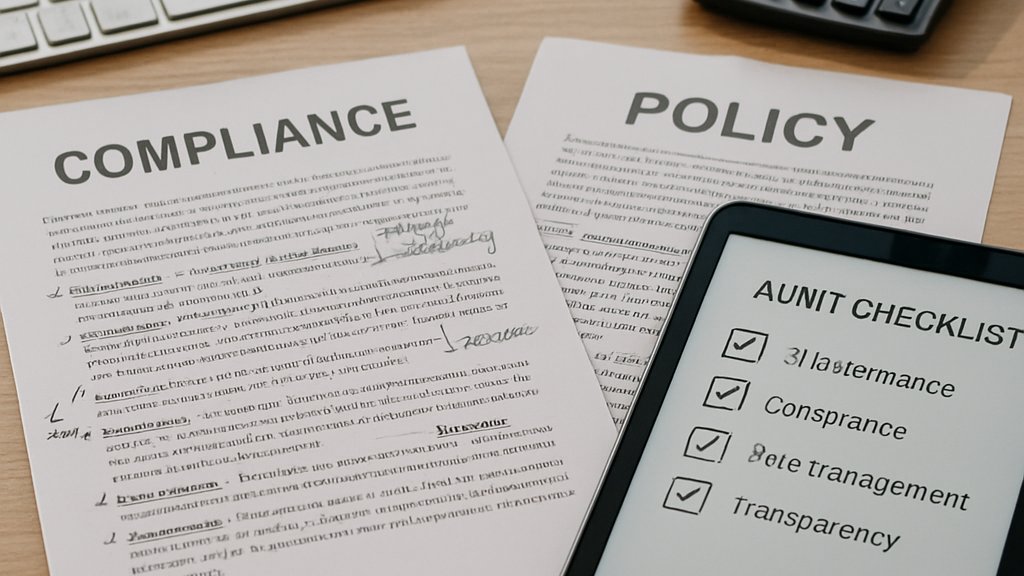
The agency's AI Task Force broadens this reach beyond advisory firms. Moreover, broker-dealers and public issuers now sit within the same spotlight. Chair Gary Gensler stresses that innovation must support investor protection, not undermine it. Therefore, documentation must prove suitability, explainability, and resilience.
Such rigor anchors the evolving model of AI Financial Oversight envisioned by Washington. In contrast, the prior disclosure regime relied mainly on narrative risk factors. That leniency faded once settlement headlines exposed widespread exaggeration. These developments set the stage for deeper operational reviews ahead.
Firms must now substantiate every algorithmic promise or face regulatory pushback. Subsequently, attention shifts from words to demonstrable controls in practice.
SEC Emphasizes Demonstration Now
Sigmet analytics captured the pivotal language change in March. Consequently, the term "demonstrate" replaced "describe" throughout the latest examination priorities. Examiners therefore expect walk-throughs of validation tests, governance workflows, and escalation paths. They will likely request granular audit logs mapping inputs to outputs.
Meanwhile, the Investor Advisory Committee urges formal rulemaking within one year. Such deadlines compress implementation planning cycles across registrants. Moreover, third-party vendors must supply evidence of quality assurance or risk screening failures. Failing to coordinate these proofs could breach broader compliance obligations.
This evidence-based era of AI Financial Oversight will demand cross-functional rehearsal before examinations. Nevertheless, proactive preparation can convert oversight into market trust.
The SEC message is simple: show, do not just tell. Accordingly, firms must embed demonstration scripts into everyday risk routines.
AI Washing Enforcement Ramps
Recent settlements illustrate escalating penalties for AI washing claims. Delphia and Global Predictions paid fines after overstating proprietary models. Presto Automation faced similar action over inflated generative features. Consequently, marketing teams must synchronize with technical staff before publishing content.
Enforcement officials reiterate that existing antifraud statutes already cover AI hype. Therefore, additional rules are unnecessary to sanction misleading statements. Moreover, investigations often rely on simple code reviews and user interviews. These tools quickly expose disparities between hype and reality.
Persistent AI washing can jeopardize entire corporate compliance cultures. Consequently, boards now require attestations from engineering leaders before approving investor materials.
SEC enforcement shows zero tolerance for unsupported algorithmic marketing. Next, we examine how disclosure practices are adapting.
Disclosure Pressures Intensify Rapidly
Nasdaq data indicates that one-third of 2025 Form 10-Ks flagged standalone AI risks. However, many filings still lack operational context. Investors complain that boilerplate language obscures material impacts on revenue and costs. Therefore, the Investor Advisory Committee calls for standardized examples and defined AI terminology.
Examiners echo that plea during scoping discussions. They ask whether AI outputs align with documented investor profiles at trade time. Consequently, registrants must tie model outcomes directly to suitability metrics. Failing to do so could trigger findings under existing compliance rules.
The disclosure burden therefore converges with operational proof, tightening the circle. This convergence deepens the reach of AI Financial Oversight across public company reporting.
Standardized language will soon demand parallel evidence. Consequently, governance teams must bridge disclosure and practice immediately.
Stronger Model Governance Needed
Model governance now tops many board agendas. SEC guidance lists explainability, version control, vendor oversight, and incident response as minimum expectations. Furthermore, audit logs should enable reconstruction of every trading recommendation. These elements help satisfy examination priorities around demonstrability.
Many firms adopt layered governance playbooks to keep pace. For example, several advisers maintain separate oversight committees for data, models, and compliance. Moreover, continuous validation cycles limit drift and highlight performance degradation quickly. Consequently, remediation can occur before investor harm.
Such governance fortifies the backbone of AI Financial Oversight demanded by regulators. Nevertheless, documentation is useful only if examiners can trace links from policy to production.
Robust governance transforms abstract assurances into verifiable facts. Next, we outline concrete steps for implementation.
Practical Steps For Registrants
Market practitioners recommend a phased readiness plan. First, map every AI use case to investor or operational outcomes. Consequently, you can prioritize high-risk models for immediate hardening. Second, assemble multidisciplinary teams covering data science, legal, risk, and compliance.
Third, test controls under exam-like conditions using randomized transactions. Moreover, retain logs and screenshots as potential evidence packages. Fourth, rehearse narratives so executives can discuss methodology confidently. Therefore, examiner interviews will mirror prepared tabletop sessions.
The following checklist reflects recurring SEC requests:
- Proof of alignment between AI outputs and investor profiles
- Version history for models and datasets
- Access controls for privileged model changes
- Incident logs detailing anomalies and fixes
- Evidence of board oversight and funding approvals
Following this list reduces surprises during examinations. Subsequently, your organization advances its readiness for heightened AI Financial Oversight.
Proactive preparation lowers cost and reputational risk. Meanwhile, it frees teams to focus on innovation.
Certification Pathways For Leaders
Skilled talent remains the linchpin of sustained control. Consequently, executives pursue targeted education to stay ahead of regulatory curves. Professionals can enhance their expertise with the AI Executive™ certification. Moreover, the curriculum covers governance, risk metrics, and disclosure strategy aligned with AI Financial Oversight demands.
Holding recognized credentials signals commitment to regulators and investors. In contrast, ad-hoc training rarely meets evolving examination priorities. Therefore, boards increasingly budget for accredited upskilling programs.
Certification accelerates culture change across technical and business functions. Consequently, firms gain credibility before the first question is asked.
The SEC has drawn a bright line around trustworthy algorithm governance. Consequently, AI Financial Oversight is no longer aspirational marketing; it is a measurable obligation. Firms that embed AI Financial Oversight into daily processes can seize competitive advantage through investor confidence. In contrast, entities that neglect AI Financial Oversight risk enforcement, reputational damage, and lost capital access. Therefore, act now: audit models, refine disclosures, and pursue certifications that future-proof leadership.
Disclaimer: Some content may be AI-generated or assisted and is provided ‘as is’ for informational purposes only, without warranties of accuracy or completeness, and does not imply endorsement or affiliation.


