

AI CERTS
1 hour ago
FDA Clears AI Tool for Breast Metastasis Prediction
Unlike genomic assays that ship tissue to external labs, this solution operates within digital pathology workflows. Therefore, clinicians could receive actionable risk scores within two days. Stakeholders across oncology and Digital Health ecosystems view the move as a pivotal moment. However, careful evaluation of evidence, economics, and integration remains vital.
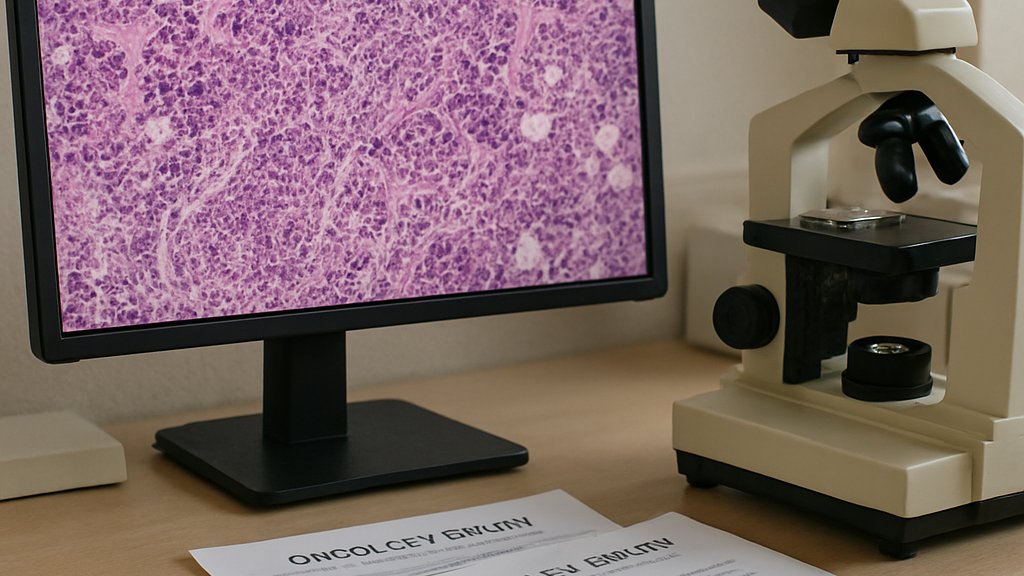
Industry observers compare the announcement to Artera's earlier prostate clearance that pioneered AI pathology regulation. In contrast, the breast application confronts a crowded landscape of genomic tests. Nevertheless, experts predict that speed, cost, and expanding imaging infrastructure will amplify adoption, provided real-world performance meets expectations. This article unpacks the clearance, technology, validation data, competitive pressures, and outstanding challenges.
FDA Clearance Signals Shift
The FDA clearance arrived through the 510(k) pathway, leveraging ArteraAI Prostate's earlier de novo precedent. Consequently, reviewers accepted multimodal artificial intelligence as substantially equivalent for risk scoring tasks. Furthermore, the agency endorsed the intended use statement covering adjuvant therapy decision support.
Press materials highlighted robust data volumes. Specifically, development sets included roughly 12,000 patients from six Phase III trials. Meanwhile, validation covered more than 7,000 patients across four additional trials. The regulatory dossier therefore spans diverse geographies, scanners, and clinical protocols.
These milestones suggest regulators now view AI-enabled slide analysis as a mature category. Nevertheless, post-market surveillance and performance audits remain mandatory under the clearance terms.
Regulatory acceptance broadens clinician confidence. However, true impact depends on demonstrated Breast Metastasis Prediction accuracy in daily practice. This pivot leads naturally to the underlying model design.
How MMAI Model Works
Training Dataset Scale Details
ArteraAI Breast combines whole-slide H&E images with structured clinical variables using multimodal architectures. Moreover, ensemble learning mitigates overfitting across imaging sites. The company reports cloud or on-premise deployment options, aligning with modern Digital Health frameworks.
- 12,000 development patients across six randomized trials
- 7,000 validation patients from four trials
- 68% classified as low risk with 95% ten-year survival
- 52% chemotherapy benefit in high-risk NSABP B-20 subgroup
- One-to-two-day turnaround using routine slides
Additionally, the model outputs categorical low, intermediate, and high scores. Consequently, oncologists can calibrate chemotherapy recommendations without extra tissue or shipping delays. In contrast, genomic assays often require seven or more days.
Domain shift remains a recognized threat in digital pathology. Therefore, Artera plans ongoing federated audits to monitor scanner and stain variability. Experts in oncology AI advocate independent verifications before hospital procurement.
Technical foundations appear solid. However, stakeholders still compare Breast Metastasis Prediction performance against established genomic benchmarks. The next section explores that competitive dynamic.
Comparing Genomic Assay Options
Oncology practice already relies on Oncotype DX, MammaPrint, and Prosigna. Consequently, any new tool must show non-inferior prognostic value. MedTech Dive reported that analysts expect head-to-head studies within 18 months. Moreover, Artera positions its model as faster and potentially cheaper.
Independent clinicians emphasize cautious optimism. In contrast, they note limited peer-reviewed manuscripts for ArteraAI Breast. Nevertheless, early abstracts display hazard ratios comparable to genomic assays. Furthermore, digital pathology hardware is now common in tertiary centers, easing adoption hurdles.
Payers also scrutinize evidence. Therefore, real-world cost-effectiveness analyses will influence reimbursement codes. Meanwhile, guideline committees require published data before endorsing algorithms for systemic therapy guidance.
Competitive evaluations will shape hospital procurement. However, sustained Breast Metastasis Prediction accuracy across demographic subgroups will determine ultimate clinical trust. These considerations feed into implementation challenges.
Implementation And Uptake Challenges
Deploying oncology AI demands more than software installation. Subsequently, laboratories must integrate slide scanning, secure data storage, and quality control pipelines. Moreover, personnel need training on result interpretation and workflow triage.
Domain shift risks can erode accuracy. Therefore, institutions should conduct local validation before routine use. Additionally, fairness audits evaluating race, age, and morphological variants remain essential to prevent hidden stratification.
Reimbursement uncertainty also slows uptake. Consequently, Artera engages payers to establish value-based pricing aligned with chemotherapy avoidance savings. Professionals can enhance their expertise with the AI Researcher™ certification, which covers evaluation frameworks for clinical algorithms.
Operational barriers are surmountable with planning. Nevertheless, consistent Breast Metastasis Prediction outputs across sites will be scrutinized. Market implications merit further discussion.
Market Impact For Oncology
Digital Health investors view the clearance as a catalyst for AI-driven diagnostics. Consequently, shares of several public digital pathology vendors rose after the announcement. Furthermore, larger imaging players explore partnerships to bundle hardware with algorithms.
The oncology community benefits if accurate risk scores eliminate unnecessary chemotherapy. Moreover, faster results may shorten treatment initiation, improving patient experience and hospital throughput. Analysts project a serviceable market exceeding $1 billion annually in HR+/HER2- disease alone.
Competitive dynamics extend beyond breast cancer. Subsequently, companies like Paige and Lunit advance similar platforms for colorectal and lung indications. Therefore, Artera's dual clearances establish early brand authority within oncology AI.
Market momentum appears strong. However, future Breast Metastasis Prediction guidelines and payer policies will influence revenue trajectories. That uncertainty drives ongoing research efforts.
Future Research And Regulation
Artera plans prospective, multicenter implementation studies launching later this year. Additionally, investigators will compare algorithm scores directly with Oncotype DX in pragmatic settings. Meanwhile, the company collaborates with the FDA on post-market performance dashboards.
Regulators worldwide monitor these developments. Consequently, CE-marked expansions may follow in Europe and Asia. Moreover, harmonized standards for digital pathology scanners could streamline cross-border deployments.
Academic groups also pursue open datasets to benchmark breast algorithms. In contrast, proprietary models limit external replication. Nevertheless, federated learning initiatives may bridge data-sharing barriers and accelerate innovation.
Continued evidence generation remains crucial. Therefore, sustained Breast Metastasis Prediction validation will underpin guideline adoption and payer confidence.
Ongoing studies will clarify utility. However, decisive outcomes will guide the next wave of clinical AI approvals.
ArteraAI Breast illustrates how multimodal AI, digital pathology, and rigorous validation can translate into regulatory success. Moreover, FDA clearance signals mainstream acceptance of Breast Metastasis Prediction within precision oncology. Nevertheless, hospitals still require cost evidence, equitable performance, and integration support.
Prospective trials, payer negotiations, and global harmonization will determine whether Breast Metastasis Prediction reshapes adjuvant therapy decisions long term. Consequently, clinicians and administrators should track emerging data, reimbursement updates, and technical standards. Digital Health leaders should monitor payer responses. Ultimately, reliable Breast Metastasis Prediction could spare thousands from unnecessary chemotherapy.
Professionals seeking strategic insight into algorithm evaluation can pursue the AI Researcher™ credential. Meanwhile, innovators must prioritize robust, transparent methods to sustain trust. Engage with peer communities, attend forthcoming conferences, and contribute to real-world evidence efforts. Stay informed as Breast Metastasis Prediction evolves alongside oncology AI standards.
Disclaimer: Some content may be AI-generated or assisted and is provided ‘as is’ for informational purposes only, without warranties of accuracy or completeness, and does not imply endorsement or affiliation.


