

AI CERTS
53 minutes ago
Harvard Finds AI Clinical Reasoning Surpasses Doctors
However, excitement meets caution. Text-only experiments differ from real wards filled with scans, sounds, and human nuance. Nevertheless, the peer-reviewed Science paper offers the clearest evidence yet that sophisticated language models can outperform many doctors on structured reasoning challenges. The following report unpacks the data, method, and future steps.
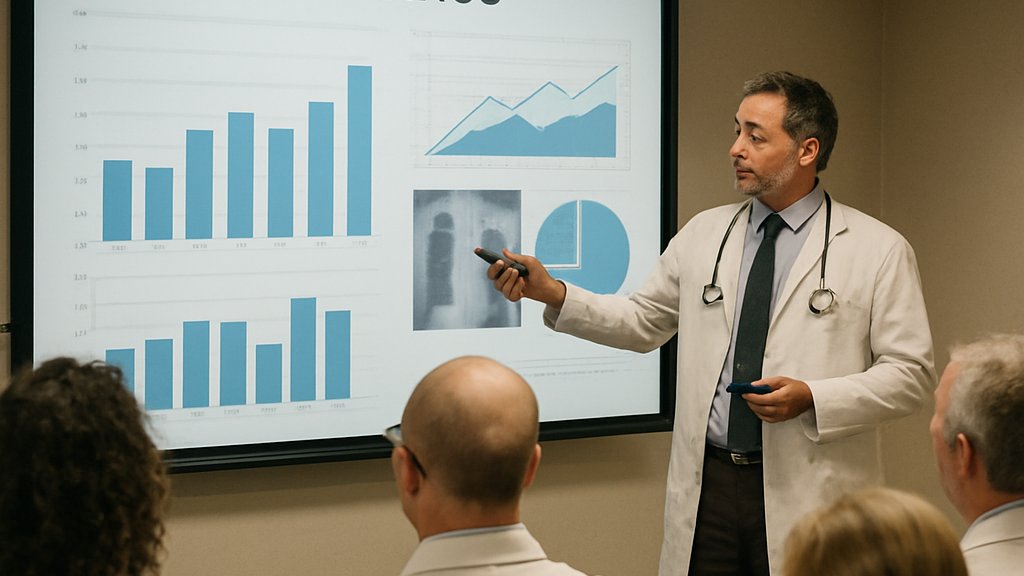
AI Clinical Reasoning Breakthrough Study
The paper, authored by Brodeur and colleagues, appeared 30 April 2026 in Science. It compared OpenAI’s o1-preview model to internal-medicine attendings and GPT-4 variants. Moreover, tasks ranged from differential diagnosis to management planning. Importantly, ER triage performance relied on de-identified medical records drawn from a busy Boston emergency department.
Manrai, a senior author, stated, “We’re witnessing a profound change that will reshape medicine.” In contrast, co-author Rodman warned that algorithms remain tools, not replacements. These balanced perspectives framed media coverage worldwide.
These opening facts establish the study’s provenance and stakes. Consequently, readers can trust that subsequent statistics rest on rigorous peer review.
Key Study Design Highlights
Researchers created five experiment families. First, they fed 143 classic NEJM Clinicopathologic Conference cases into each system. Secondly, six landmark vignettes gauged management decisions. Thirdly, structured reasoning quality was scored using the ten-point R-IDEA rubric. Additionally, probabilistic calibration tests measured confidence alignment.
Finally, investigators performed a blinded second-opinion trial on 79 real emergency encounters. Two attending physicians produced independent notes at triage, evaluation, and admission stages. Subsequently, raters compared AI output, physician notes, and true discharge diagnoses.
These protocols ensured a multifaceted view of performance. However, every task remained text-based, limiting conclusions about imaging or bedside interactions.
The design combined retrospective vignettes and near-real-time EHR content. Therefore, the results speak both to controlled benchmarking and chaotic frontline settings.
Performance Against Physicians Benchmarks
The numbers impressed seasoned clinicians. On 143 CPC tests, o1-preview listed the correct diagnosis 78.3% of the time. Moreover, its first guess proved right 52% of cases, beating physician baselines by double-digit margins.
Management reasoning margins widened. Median o1 scores reached 86%, while doctors using conventional resources hit 34%. Consequently, mixed-effects analysis showed a 49-point advantage for the model.
- Diagnostic accuracy gap: 78.3% vs 70.7% confidence interval for humans.
- Management reasoning gap: 86% vs 34% median scores.
- Probability calibration: AI predictions aligned closer to references than 553 human practitioners.
These figures underscore rapidly shifting baselines. Nevertheless, the study used internal-medicine attendings, not emergency specialists, as human comparators.
Collectively, the benchmarks confirm superior algorithmic reasoning on curated text scenarios. However, practical deployment still demands broader validation.
ER Triage Outcome Stats
Real-world findings drew particular notice. During ER triage, o1-preview achieved exact-or-near diagnoses in 65.8% of 79 cases. Physician one reached 54.4%; physician two, 48.1%. Furthermore, model performance climbed to 79.7% once full admission notes were available.
These gains matter because early ER triage missteps cascade into downstream harm. Moreover, improved diagnostic accuracy at the doorway could compress treatment timelines and shorten stays.
Nevertheless, study authors stress that clinicians supplied every data point used by the model. Therefore, efficiency gains may depend on streamlined capture of medical records and structured inputs.
The ER evidence hints at real bedside value. Still, hospitals must test AI in live triage workflows before claims translate into safer care.
Benefits And Limitations Discussed
Potential benefits appear compelling. Strong differentials can reduce missed diagnoses. Additionally, quick second opinions may support rural or overnight teams. Multilingual capacity also helps parse complex medical records from global patients. Professionals can enhance their expertise with the AI Healthcare Specialist™ certification.
In contrast, limitations require sober review. The model never examined patients, read scans, or answered family questions. Moreover, training data contamination remains possible despite authors’ controls. Equity concerns also loom because language models sometimes encode demographic bias.
Two sentences summarize: AI delivered big text-task wins, yet medicine is multimodal and social. Consequently, responsible rollout demands rigorous guardrails.
These caveats naturally lead to governance themes explored next.
Regulatory And Safety Considerations
Regulators now assess clinical LLMs under software-as-a-medical-device frameworks. Meanwhile, hospital lawyers ponder liability when algorithms suggest harmful plans. Furthermore, hallucinations, though rarer in o1-preview, still occur.
Experts urge a human-in-the-loop model. Consequently, decision support labels, audit logs, and fallback protocols should accompany any deployment. Independent replication across diverse health systems also remains critical.
Safety demands transparent benchmarks, ongoing monitoring, and clear accountability chains. Therefore, vendors and providers must craft shared governance playbooks before widespread adoption.
This regulatory lens sets the stage for future research priorities.
Future Research Pathways
Investigators propose prospective randomized trials measuring patient outcomes, error rates, and workflow impact. Moreover, multimodal models integrating imaging, waveforms, and speech could boost diagnostic accuracy further. Collaborative engineers already prototype versions that ingest continuous vital streams alongside text.
Additionally, fairness audits must test performance across age, gender, and minority subgroups. In contrast, many existing datasets over-represent academic centers. Therefore, broad sampling guards against unintended inequity.
Commercial roadmaps should align with clinician training programs. Consequently, certifications like the earlier linked AI Healthcare Specialist™ course equip teams to evaluate and steer new tools responsibly.
Research must bridge controlled studies and messy wards. However, disciplined pilots will decide whether AI Clinical Reasoning truly transforms practice.
These future directions underscore an urgent but manageable agenda. Altogether, the field now stands at a pivotal frontier.
Conclusion
Harvard’s peer-reviewed study positions AI Clinical Reasoning as a rising force in diagnostics. Moreover, the o1-preview model beat physicians on curated tests and real ER triage notes. Nevertheless, live trials, safety frameworks, and equitable datasets remain pivotal. Consequently, healthcare leaders should monitor developments, pursue rigorous pilots, and cultivate staff expertise. Ready to lead that change? Explore specialized certifications and stay ahead of the curve.
Disclaimer: Some content may be AI-generated or assisted and is provided ‘as is’ for informational purposes only, without warranties of accuracy or completeness, and does not imply endorsement or affiliation.


