

AI CERTS
4 months ago
Scaling Human-Centric AI: Governance, Feedback, Workforce Risks
Meanwhile, FT analyses show investors rewarding firms that solve these issues early. This feature explores how companies can meet the moment. It synthesises data from the EU AI Act, Stanford HAI, and industry experiments. Additionally, we reveal emerging playbooks blending technology, Organisational Design, and redesigned workflows. By the end, you will understand where to focus resources when Scaling AI responsibly.
Regulatory Momentum Builds Worldwide
Europe now sets the pace with the EU AI Act entering force in August 2024. Consequently, firms deploying general models must embed documented human oversight from design through operation.
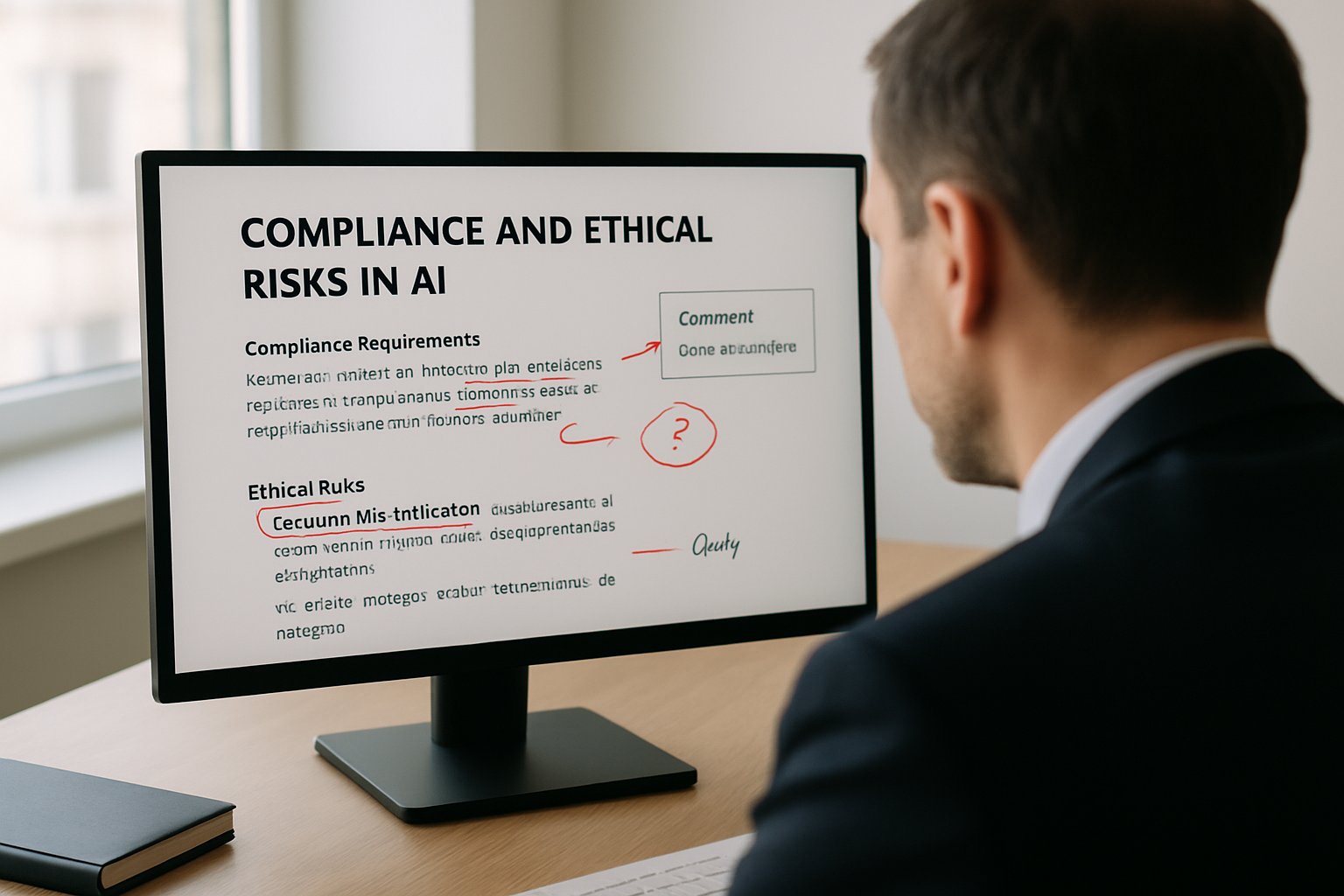
Fei-Fei Li argues this legal wave cements Human-Centric AI as a strategic imperative, not a slogan. Moreover, NIST and OECD guidelines align, creating converging global baselines.
FT reporters note investors now demand clear oversight roadmaps before funding Scaling AI initiatives. Therefore, compliance teams collaborate with Organisational Design experts to map accountable roles.
Regulatory clocks are ticking fast. However, oversight costs surge next, as the following section explains.
Feedback Costs Spiral Up
OpenAI’s early RLHF runs required tens of thousands of human comparisons and hundreds of GPU days. Furthermore, each new domain doubles data needs because reward models cannot transfer perfectly.
Market research pegs the Human-Centric AI services market near USD 15 billion, yet annotation spending dominates budgets. Moreover, labour shortages spike prices when headlines expose traumatic moderation tasks.
Companies therefore experiment with Human-Centric AI methods such as Constitutional AI and guardian agents to trim reviewer hours. In contrast, auditors warn these shortcuts hide bias if humans stop sampling outputs.
Feedback economics threaten Scaling AI unless costs fall or quality rises. Labour realities sharpen this dilemma, which the next section explores.
Labour Ethics Spotlight Intensifies
Investigations in Kenya revealed labelers earning under two dollars per hour while reviewing violent content. Subsequently, workers formed the Data Labelers Association and demanded living wages and trauma support.
FT coverage amplified the story, pressuring vendors and cloud giants to reassess contracts. Consequently, procurement teams now include human-rights clauses alongside technical specs.
Organisational Design leaders warn that ethical breaches erode trust faster than model failures. Moreover, public Pew surveys show Americans remain more worried than excited about AI.
Ethical labour is now board-level risk. The following section shows why rethinking workflows offers a scalable remedy.
Workflow Design Determines Success
BCG suggests replacing ad-hoc reviewers with structured Human-Centric AI oversight roles, dashboards, and escalation paths. Therefore, Workflows become the skeleton that lets humans catch failures without drowning in alerts.
A well-designed pipeline routes low-risk queries to automated checks while escalating edge cases to experts. Additionally, active learning prioritises samples that teach the model most, reducing labelling hours.
Key Scaling Statistics Today
- Pew 2024 survey: 52% Americans more concerned than excited about AI adoption.
- InstructGPT needed 33k ranking comparisons, illustrating steep feedback scaling.
- MarketResearchFuture forecasts Human-Centric AI market hitting USD 40 billion by 2030, CAGR 30%.
These numbers prove that Workflows and tooling, not bigger teams, unlock sustainable expansion. Efficient process trumps brute labour. Next, we inspect how automation complements humans without abandoning accountability.
Automation Meets Oversight Innovation
Guardian agents now monitor live systems, sending alerts when behaviour drifts from policies. Moreover, Anthropic’s Constitutional AI self-critiques outputs against a written charter, reducing direct labels.
However, auditors ask who writes the charter and whether hidden biases persist. Subsequently, leading teams pair automated screens with periodic human audits to stay compliant.
This hybrid keeps Human-Centric AI principles alive while supporting aggressive Scaling AI timelines. Meanwhile, Workflows orchestration platforms integrate agent signals into existing quality dashboards.
Automation stretches oversight budgets further. Yet executives still need a strategic roadmap, our final section.
Strategic Roadmap For Leaders
Start by mapping high-risk uses and assigning accountable owners across legal, product, and safety teams. Consequently, embed Organisational Design principles so decision rights match expertise and authority.
Next, build modular feedback loops combining RLHF, self-critique, and targeted human review. Additionally, contract annotators through vendors that guarantee living wages and wellness programs.
Practitioners can upskill via the AI+ UX Designer™ certification. Finally, track metrics monthly and share findings with regulators and FT journalists to demonstrate transparency.
A clear plan turns aspiration into repeatable practice. However, lasting impact requires culture, not checklists, as our conclusion states.
Scaling AI responsibly demands more than technical horsepower. Human-Centric AI anchors success by aligning systems with human values, laws, and wellbeing. Moreover, integrated workflows and Organisational Design transform alignment guidelines into daily habits. Consequently, companies that master Human-Centric AI improve trust, reduce risk, and win markets. Take action today: review workflows, secure fair feedback pipelines, and invest in Human-Centric AI education. Download our checklist and pursue certification to accelerate your Human-Centric AI journey now.
Disclaimer: Some content may be AI-generated or assisted and is provided ‘as is’ for informational purposes only, without warranties of accuracy or completeness, and does not imply endorsement or affiliation.


