

AI CERTS
2 hours ago
Generative Film Backlash Surges at Cannes Amid AI Film Debate
Consequently, industry leaders, investors, and unions now scrutinize AI film economics, ethics, and law under global spotlights. Moreover, professionals will find actionable insights, including certification routes improving prompt engineering fluency. Meanwhile, OpenAI’s $30-million Critterz experiment amplifies stakes by compressing production into nine months. In contrast, Cannes executives insist real vision remains human. Therefore, this deep dive clarifies the Generative Film Backlash forces shaping deals through 2026.
Cannes Spotlight Intensifies Quickly
Numbers tell the story before the applause stops. Specifically, WAIFF logged 5,474 submissions from over 80 nations, quadrupling its inaugural slate. Meanwhile, 412 projects advanced to the Cannes finale, filling the Palais des Festivals with synthetic dreamscapes. Nevertheless, the official Palme d'Or roster excluded every fully AI film, emphasizing human authorship rules.
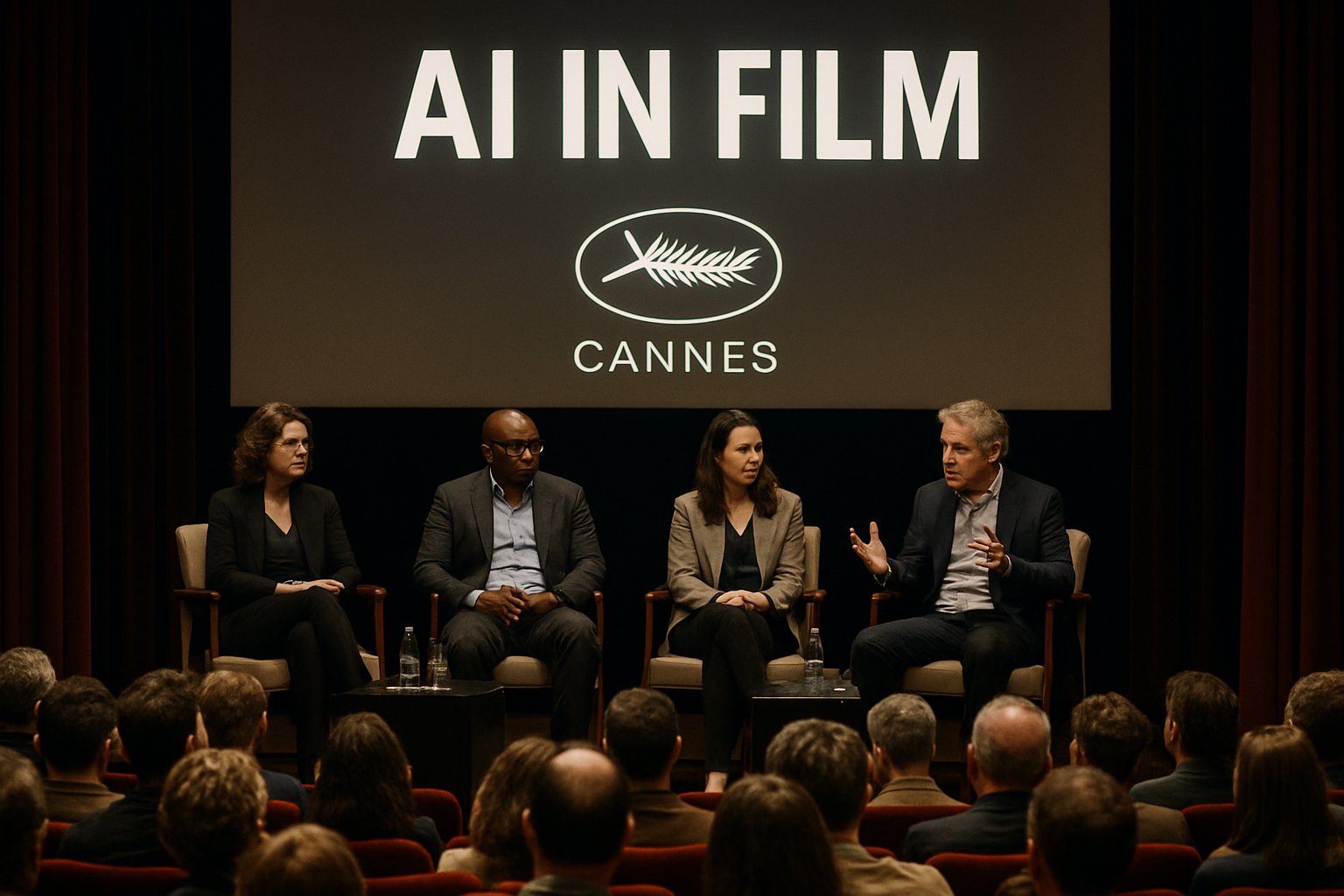
Festival president Iris Knobloch stated that cinema should reflect “personal vision” rather than dataset patterning. Consequently, journalists framed the WAIFF as an upstart movement challenging century-old gatekeepers. That narrative fuels the Generative Film Backlash as veteran directors fear algorithmic mimicry will dilute prestige. Subsequently, programming clashes created two parallel red carpets along the same seafront.
WAIFF’s surge proves demand for algorithmic storytelling. However, the Palme d'Or barrier signals institutional reluctance, propelling the next economic conversation.
Cost Economics Shift Rapidly
Budgets illustrate the disruption more vividly than posters. For example, creators reported paying €500 for sequences that once cost €20,000 in conventional VFX houses. Moreover, OpenAI’s Critterz carries a modest $30-million budget against Pixar’s typical $200-million outlays. Therefore, investors now model portfolios around multiple low-risk bets instead of one tentpole, redefining film investment logic.
Lower costs attract fresh financiers who previously avoided the volatile indie space. However, unions warn that compressed crews threaten thousands of specialist jobs. The Generative Film Backlash gains traction here as craftspeople equate efficiency with existential risk. In contrast, some producers champion democratization, claiming AI film pipelines free resources for marketing and accessibility.
Cost math favors experimentation and scale. Yet, job security fears intensify debates addressed in courtrooms next.
Legal Storm Brewing Now
Court dockets read like festival programs this year. Currently, analysts track roughly 140 active copyright lawsuits targeting generative platforms across three continents. Disney and Universal’s joint action against Midjourney headlines the wave, alleging unlicensed character cloning. Furthermore, German lawyer Tim Kraft told Cannes panels that platforms must pay for every training fragment.
Regulators echo that view. The EU AI Act now mandates watermarking, while U.S. courts debate transformative fair use. Consequently, studios hedge by demanding indemnities before signing AI film deals. Generative Film Backlash advocates cite these uncertainties as proof the industry rushed ahead of law.
Key headline cases illustrate the scale:
- Disney/Universal v. Midjourney – filed June 2025
- Getty Images v. Stability AI – filed January 2025
- Andersen Authors v. OpenAI – filed March 2026
The Generative Film Backlash narrative intensifies whenever new filings surface. Litigation creates chilling effects on investment timelines. Nevertheless, creative experiments persist, leading to ethical flashpoints next.
Artistic Integrity Debate Flares
Awards juries clashed over authorship at WAIFF screenings. Notably, director Mathieu Kassovitz shouted “What the fuck?” after viewing an entry mimicking La Haine. He then dismissed copyright norms, yet still doubted synthetic performances could feel genuine emotion. Similarly, Cannes leaders argued AI imitates style but cannot experience trauma or joy.
Jean-Michel Jarre countered that tools are neutral, calling AI “imagination augmented” when paired with fair pay. Consequently, the phrase artistic integrity dominated panel hashtags and press headlines. The Generative Film Backlash captures this clash between authenticity and automation. Meanwhile, younger creators view the dispute as a generational power handover.
Authenticity rhetoric shapes public perception. However, market forecasts reveal another dimension of opportunity.
Dynamic Market Outlook Ahead
ResearchAndMarkets values generative media revenue near $2.5 billion in 2025, with double-digit CAGR projections. Moreover, venture capital tracked by PitchBook shows 320 deals in 18 months for creative AI startups. Film investment committees now treat algorithmic tooling as standard line items, mirroring post-2000 digital cinema shifts. Consequently, analysts predict hybrid workflows will dominate mid-budget features by 2028.
However, profitability demands clear licensing frameworks, or insurance premiums will erode savings. In contrast, early successes like Critterz could unlock family streaming packages hungry for fresh IP. Generative Film Backlash sceptics argue quality gaps will slow adoption, yet surveys show rising audience curiosity. Subsequently, attention shifts toward workforce upskilling.
The market promises growth amid risk. Therefore, professionals must enhance expertise to stay competitive.
Essential Skills And Certifications
Studios increasingly request prompt engineers who can coax consistent looks across evolving model versions. Accordingly, professionals can validate skills through the AI Prompt Engineer™ certification. Moreover, hiring managers recommend cross-training in IP law, data provenance, and cloud deployment. Consequently, multidisciplinary teams command premium retainers during current talent shortages.
Core capabilities gaining traction include:
- Advanced prompt iteration and version control
- Legal literacy on training data
- Multimodal pipeline orchestration
- Ethical review and watermarking techniques
Generative Film Backlash discussions often overlook these practical career upsides. Nevertheless, early adopters who master tools can shape responsible standards from within.
Upskilling nurtures both compliance and creativity. Finally, we return to the wider crossroads.
Future Paths Forward Together
Cannes proved that code and creativity now share the same stage. Moreover, WAIFF’s success and the official resistance create a productive friction pushing policy and product innovation. Generative Film Backlash will endure until courts, festivals, and investors settle clear guardrails. Consequently, professionals must monitor lawsuits, refine skills, and engage constructively in standards bodies. Palme d'Or winners of 2030 may well credit both human insight and silicon speed. Therefore, explore the linked certification and shape ethical, profitable, awe-inspiring cinema.
Disclaimer: Some content may be AI-generated or assisted and is provided ‘as is’ for informational purposes only, without warranties of accuracy or completeness, and does not imply endorsement or affiliation.


