

AI CERTS
2 hours ago
Governed CRM Workflows demand AI-ready governance
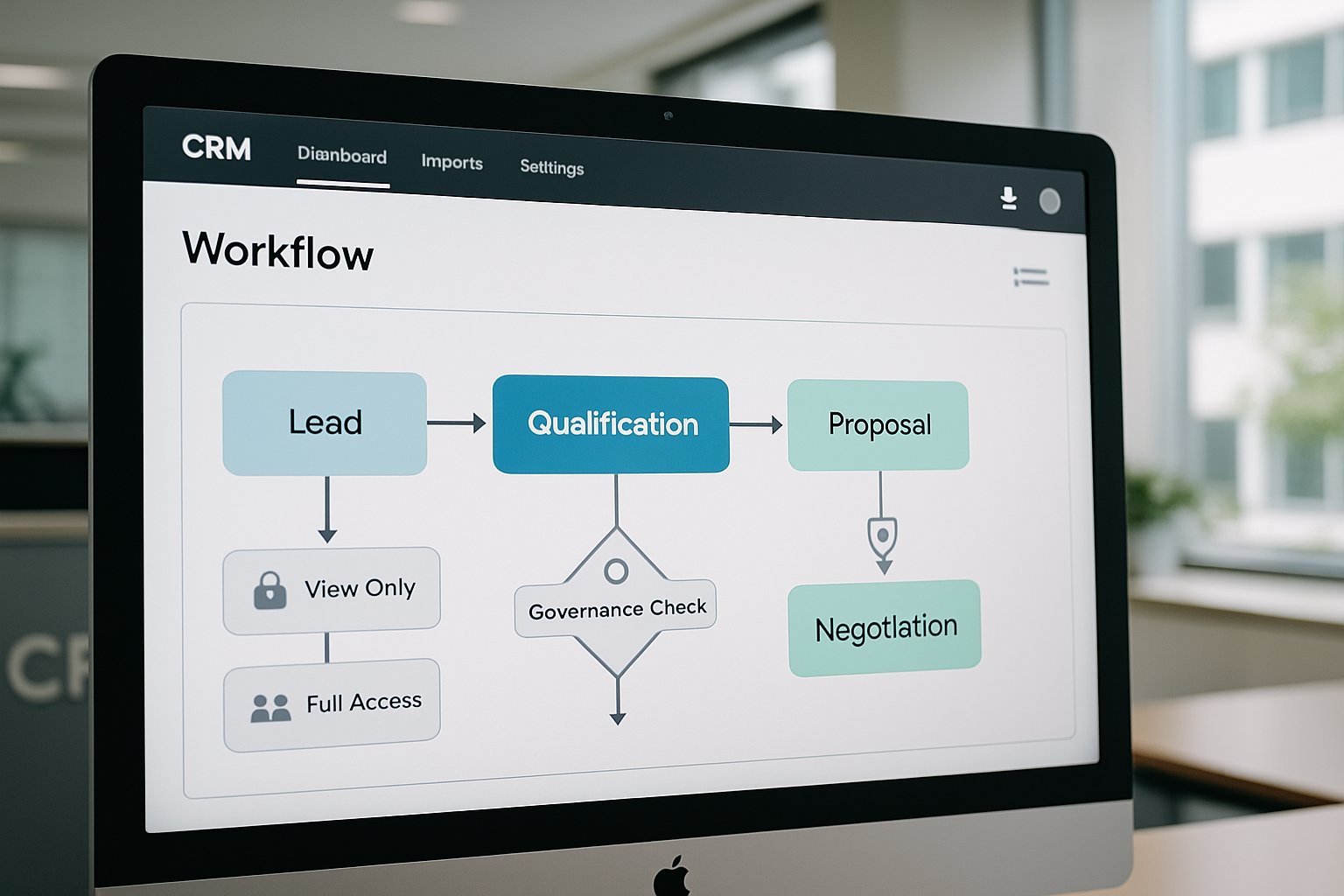
Dreamforce 2025 framed the shift clearly. Marc Benioff declared, “We’re entering the age of the Agentic Enterprise.” Therefore, understanding Data 360’s guardrails matters more than ever. This feature unpacks the architecture, business momentum, and practical steps required to operationalize Governed CRM Workflows without sacrificing innovation.
Drivers For Agentic Enterprise
Rebranding Data Cloud to Data 360 signaled an expanded mission. Furthermore, Salesforce linked the relaunch to agentic use cases that demand strict governance. The company reported nearly $1.4 billion ARR and 32 trillion records ingested in Q3 FY26. In contrast, many rivals still replicate data blindly, adding latency.
Zero-copy connectivity supports minimal replication, reducing storage overhead while keeping context fresh for AI agents. Consequently, Governed CRM Workflows can reference external lakes without unnecessary duplication. Analysts at CDP.com argue the approach “reduces policy drift across channels.” These market forces explain why adoption surged 114% year-over-year.
The section shows why business pressure intensifies daily. However, technical concepts must follow for clarity.
Rebrand Aligns With AI
Dreamforce keynotes tied Data 360 directly to conversational agents. Additionally, the platform now embeds policy enforcement points that decide access at runtime. This alignment explains rising interest from regulated industries chasing compliant AI.
These context drivers set expectations. Subsequently, architects must grasp the core control primitives.
Core Data Governance Concepts
Data Spaces create logical partitions that localize risk. Moreover, attribute-based access control evaluates user, purpose, and data tags in milliseconds. Automated classification bolsters identity resolution by labeling PII before profiles merge. Consequently, sensitive information rarely leaks between brands or regions.
Semantic lineage captures every transformation. Therefore, auditors can trace how one record fuels downstream Governed CRM Workflows. Private Connect secures movement across clouds over private links, maintaining minimal replication while honoring residency constraints.
Understanding these concepts clarifies the design blueprint. Nevertheless, practitioners still ask how the pieces materialize in product features.
Data Spaces Segmentation Model
Teams map business units to Data Spaces. Subsequently, ABAC rules inherit those boundaries, granting marketers region-specific views while denying broader access to finance data. This separation underpins responsible governance with only four configuration steps.
Concept mastery leads naturally to technology specifics. Therefore, the next section details the guardrail mechanics.
Architectural Guardrail Features Explained
Zero Copy queries remote warehouses through Private Connect. Meanwhile, platform encryption with customer-managed keys secures at-rest storage. Moreover, policy enforcement points monitor every retrieval, including retrieval-augmented generation calls.
- Data 360 ingested 15 trillion zero-copy records last quarter.
- Unstructured volume grew 390%, yet storage stayed flat thanks to minimal replication.
- Audit trails log each outbound data call, strengthening governance evidence.
These controls empower safer Governed CRM Workflows by restricting what AI can read or write. Additionally, automated tag propagation ensures encryption and policies travel with data.
Technical safeguards matter, yet operational discipline completes the picture. Consequently, a checklist follows.
Operational Implementation Checklist Guide
Project teams often underestimate planning. Therefore, establish a Center of Excellence before provisioning Data 360. Moreover, decide early between a single home org and multi-org clusters to avoid future rework.
- Select tenant regions with legal, security, and finance input.
- Activate automated classifiers, then appoint stewards to validate identity resolution outcomes.
- Enable Private Connect to support minimal replication across lakes.
- Rotate encryption keys quarterly, aligning with platform recommendations for strong governance.
- Track credit consumption monthly to avert billing surprises.
Professionals can deepen expertise through the AI+ Human Resources™ certification. Consequently, teams gain structured methods for change management inside Governed CRM Workflows.
This checklist reduces common pitfalls. Nevertheless, leaders also weigh business benefits against lingering constraints.
Benefits And Practical Trade-Offs
Centralized policies reduce shadow IT risks. Additionally, Zero Copy shortens data latency, accelerating decision cycles. In contrast, Data 360 is not a full MDM; separate systems may still handle legal master data.
Cost predictability remains challenging because Salesforce processes can spike during heavy identity resolution runs. Nevertheless, disciplined chargeback mitigates shock. Moreover, platform encryption introduces minor processing overhead, yet many regulators require it.
Balancing benefits with trade-offs yields realistic expectations for Governed CRM Workflows. Subsequently, financial momentum validates market confidence.
Market Momentum Metrics Update
Salesforce disclosed 9,500 paid Agentforce deals in the latest quarter. Furthermore, 3.2 trillion LLM gateway tokens flowed through Data 360. Consequently, customers trust the platform for production AI.
ARR reached nearly $1.4 billion, growing 114% year-over-year. Moreover, ingestion hit 32 trillion records while maintaining minimal replication. These achievements reflect strong governance messaging resonating with buyers.
Such numbers reveal traction behind Governed CRM Workflows. Therefore, concluding insights synthesize strategic priorities.
Final Takeaways
Data 360 delivers automated controls, private connectivity, and robust identity resolution. Moreover, Zero Copy upholds minimal replication without slowing agents. However, achieving resilient governance demands upfront design, continuous stewardship, and vigilant cost tracking.
Consequently, organizations embracing Governed CRM Workflows realize faster AI adoption and reduced compliance risk. Nevertheless, thoughtful integration with existing MDM remains vital.
Ready to strengthen skills and lead secure transformations? Explore the linked certification and elevate your next Governed CRM Workflows initiative today.
Disclaimer: Some content may be AI-generated or assisted and is provided ‘as is’ for informational purposes only, without warranties of accuracy or completeness, and does not imply endorsement or affiliation.


