

AI CERTS
2 hours ago
Meta’s $48B Bet: Infrastructure Scaling With CoreWeave and Nebius
Therefore, this article unpacks the timeline, vendors, financial contours, and operational hurdles behind the deals. Additionally, it highlights career implications and training options for engineers aiming to ride the next capacity wave.
Meta Capital Surge Context
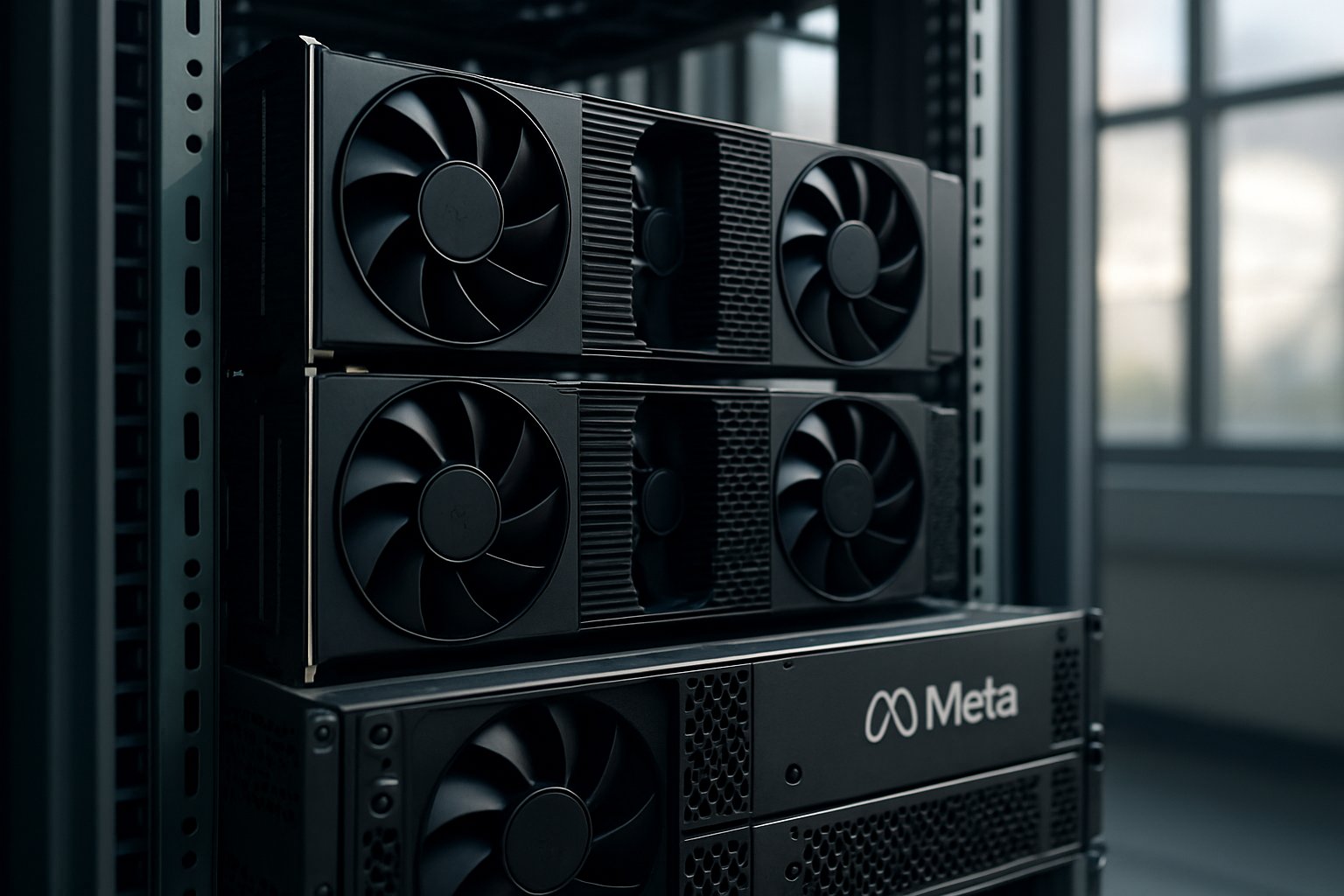
January earnings guidance shocked markets. Meanwhile, Meta raised 2026 capital expenditure to $115–$135 billion, almost doubling 2025 spend. Furthermore, management tied most of the increase to AI infrastructure. Infrastructure Scaling surfaced as the guiding mantra during the call.
Subsequently, vendor announcements cascaded. NVIDIA pledged “millions” of Blackwell and Rubin GPUs. AMD followed with a six-gigawatt Instinct roadmap. Nevertheless, neither release carried a definitive dollar figure. In contrast, CoreWeave and Nebius provided clear contractual totals, letting reporters aggregate the headline $48 billion.
These figures reveal aggressive compute investment and signal urgency. However, elevated outlays raise margin questions. The scale debate continues. Yet, Meta commitment to Infrastructure Scaling remains unmistakable.
The context shows why fresh capacity matters. Consequently, the next section focuses on the CoreWeave deal details.
CoreWeave Deal Snapshot Details
On 9 April 2026, CoreWeave disclosed a $21 billion expansion with Meta extending through 2032. Moreover, the neocloud will dedicate GPU clusters optimized for training and inference workloads. Analysts note that specialist cloud providers like CoreWeave shorten deployment cycles versus building new Meta sites.
Additionally, CoreWeave CEO Michael Intrator said, “Leading companies choose our AI cloud for demanding workloads.” The comment underscores competitive positioning. Furthermore, industry watchers highlight three immediate benefits:
- Speed: racks deploy within months, not years.
- Flexibility: contracts scale capacity seasonally.
- Diversification: Meta avoids single-vendor bottlenecks.
Nevertheless, execution risk persists because CoreWeave must finance rapid datacenter growth. Consequently, credit analysts watch debt ratios closely. The agreement exemplifies Infrastructure Scaling via external partnerships.
These insights clarify one half of the $48 billion sum. However, another provider fills the remaining gap, as the next section explains.
Nebius Agreement Scope Overview
Nebius announced its five-year accord on 16 March 2026. The structure guarantees $12 billion of dedicated capacity plus up to $15 billion in optional bursts. Therefore, total value reaches roughly $27 billion.
Moreover, Nebius CEO Arkady Volozh emphasized long-term collaboration and predictable demand. Additionally, the deal advances Nebius into the first tier of cloud providers servicing hyperscalers. Infrastructure Scaling again appears at the contract’s core.
However, Nebius faces similar financing and buildout hurdles. Energy sourcing, permitting, and talent could slow cluster rollouts. Nevertheless, the staged structure gives Meta flexibility while supporting future compute investment peaks.
Combined with CoreWeave, the contracts cement a $48 billion Meta commitment to rented GPUs. Consequently, strategy shifts toward multi-vendor hedging, which the following section explores.
Multi-Vendor Risk Hedge Strategy
Meta’s procurement now spans NVIDIA, AMD, CoreWeave, Nebius, and other cloud providers. Furthermore, internal silicon projects continue in parallel. This lattice reduces supply shocks and pricing power concentration. Additionally, it creates bargaining leverage during future refresh cycles.
However, juggling diverse roadmaps complicates software optimization. Engineers must tune models across Blackwell, Rubin, MI450, and proprietary accelerators. Consequently, unified orchestration layers become essential. Meanwhile, Meta leverages Infrastructure Scaling philosophy to justify the operational overhead.
The hedge improves timeline resilience. Nevertheless, contractual complexity introduces legal and accounting challenges. Clear disclosure will matter during forthcoming filings.
These strategic moves diversify risk. However, execution obstacles still loom, as the next section outlines.
Operational Challenges Ahead Critical
Building multi-gigawatt GPU clusters strains regional grids. Moreover, new datacenters must secure renewable power purchase agreements to meet sustainability goals. Consequently, permitting timelines could slip.
Additionally, cost inflation threatens budgets. Memory, networking, and cooling components remain scarce. Therefore, contingency spending may rise beyond planned compute investment. In contrast, rapid supplier expansion might relieve some bottlenecks.
Nevertheless, ambiguous press valuations complicate investor models. AMD’s capacity pledge lacks fixed dollar terms, creating headline noise. Furthermore, accountants must parse how Meta recognizes optional Nebius capacity.
Key operational hurdles include:
- Grid interconnection delays.
- Specialist talent shortages.
- Potential warrant dilution from supplier incentives.
Addressing these issues will test Infrastructure Scaling practicality. Consequently, market observers evaluate supplier health, which the next section details.
Market And Certification Paths
Supplier stocks reacted swiftly. Moreover, CoreWeave leveraged the backlog to secure fresh debt at favorable rates. Nebius pursued similar financing. Consequently, investors weigh growth prospects against leverage.
Additionally, demand for skilled engineers skyrockets. Professionals who master heterogeneous GPU orchestration gain premium salaries. Therefore, many pursue upskilling programs. Professionals can enhance their expertise with the AI Developer™ certification.
Furthermore, hiring managers prioritize candidates who understand Infrastructure Scaling principles, multi-vendor tuning, and cost optimization. Meanwhile, universities race to update curricula. CoreWeave and Nebius both sponsor learning tracks to expand talent pipelines.
This talent shift underpins sustained compute investment success. Nevertheless, strategic evaluation continues, leading to the final overview.
Strategic Outlook Summary Final
Meta’s $48 billion GPU contracts illustrate Infrastructure Scaling at hyperscale speed. Moreover, diversified sourcing spreads risk across CoreWeave, Nebius, and silicon giants. However, energy, financing, and talent remain tangible threats.
Consequently, stakeholders will monitor upcoming SEC filings for clarity on obligations. Additionally, next quarter’s capex commentary may reveal deployment cadence. Nevertheless, Meta commitment to AI dominance appears unwavering.
These developments reshape cloud providers economics and spur intense compute investment globally. Therefore, professionals positioning early can capture emerging opportunities.
Consequently, proactive learning and certification remain decisive advantages.
In conclusion, Meta’s aggressive spend sets new industry baselines. Furthermore, multi-vendor architectures demand flexible minds and scalable skills. Engineers should, therefore, pursue continuous education. Consider enrolling in the AI Developer™ program today and stay ahead of the Infrastructure Scaling curve.
Disclaimer: Some content may be AI-generated or assisted and is provided ‘as is’ for informational purposes only, without warranties of accuracy or completeness, and does not imply endorsement or affiliation.


