

AI CERTS
58 minutes ago
Samsung’s Surge Redefines AI Chip Market
Industry observers attribute the windfall to demand for High-Bandwidth Memory feeding artificial-intelligence accelerators worldwide. However, executives also warned that supply constraints could worsen into 2027, keeping margins volatile. This article unpacks the drivers, risks, and strategic meaning behind Samsung’s record Earnings. Readers will gain data-driven insights, concise risk assessments, and actionable certification guidance for career advantage.
Samsung Surges On Demand
Samsung’s Device Solutions division generated KRW 81.7 trillion Revenue during the Quarter, dwarfing rival results. Furthermore, memory operating profit leapt to KRW 53.7 trillion from just KRW 1.1 trillion a year earlier. That represents roughly a 49-fold improvement, depending on the base metric referenced in filings. Bloomberg noted the figure beat analyst consensus by almost 18 trillion won, underscoring momentum.
Meanwhile, group Earnings reached KRW 47.1 trillion, translating to 7,123 won per share. In contrast, total operating margin touched 42.7 percent, a level unseen since the 2017 NAND supercycle. Consequently, investors briefly pushed Samsung shares to a record intraday high before profit-taking trimmed gains. These headline metrics confirm that AI demand now dominates corporate performance.
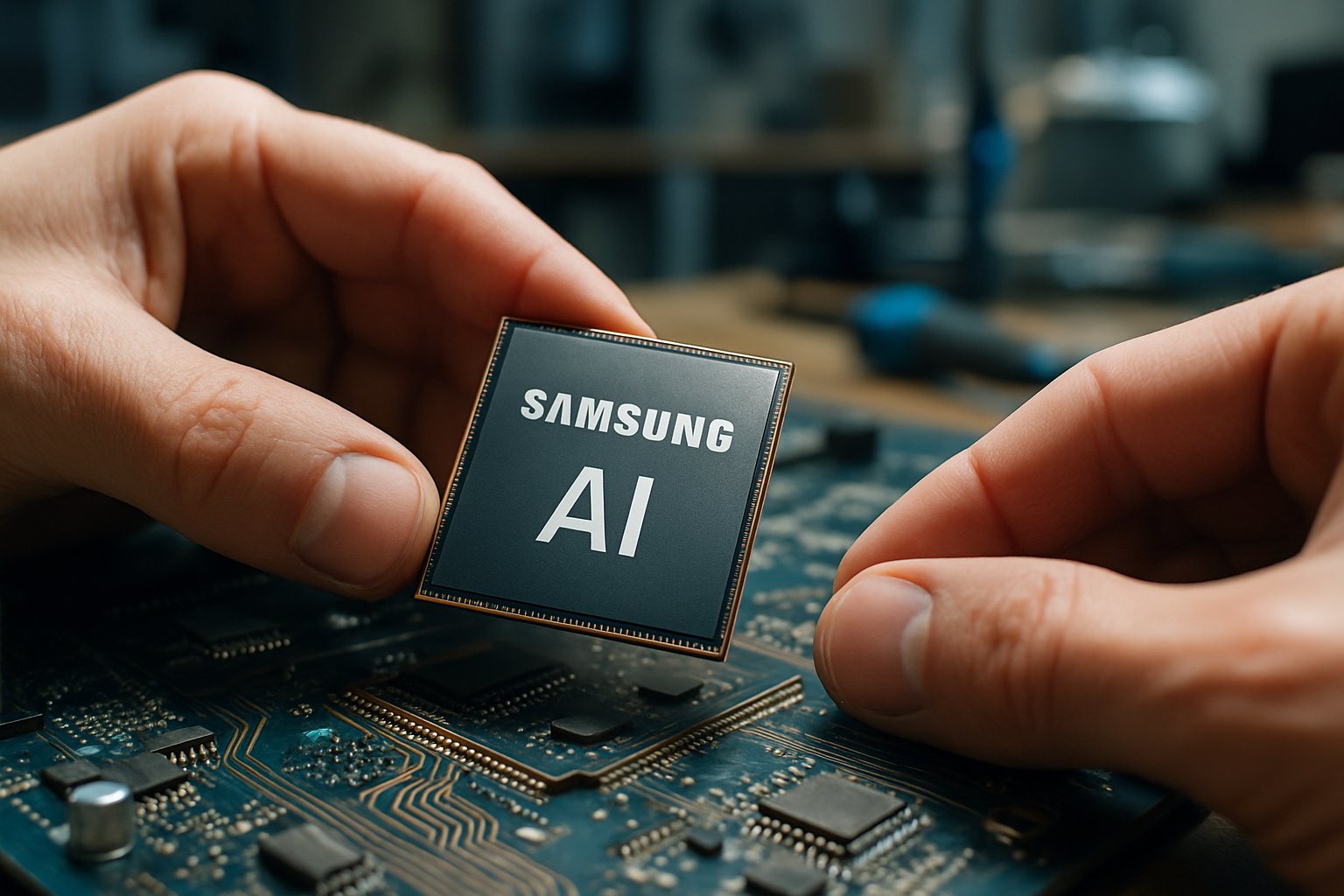
Samsung’s explosive numbers derive directly from specialized memory shipments. However, understanding why those shipments spiked requires a closer look at several structural forces.
Drivers Behind Profit Boom
Multiple structural drivers converged during the first Quarter to lift Samsung’s profitability. Additionally, hyperscale cloud providers raced to secure HBM4 supply for next-generation accelerators, locking in multi-year contracts. Consequently, Samsung could negotiate price increases exceeding 70 percent on some contract lots, according to TrendForce summaries.
- HBM4 stacks consume more wafer area than standard DRAM, limiting industry output flexibility.
- Server DRAM demand jumped as inference clusters expanded beyond training centres.
- Price elasticity remained low because accelerator releases outpaced memory supply additions.
- Corporate buyers feared allocation cuts, therefore accepting longer contractual commitments.
Moreover, Samsung redirected some consumer DRAM lines toward HBM4, tightening notebooks and smartphone inventories. Analysts noted that this reallocation amplified spot-price moves across the entire DRAM complex. Consequently, the AI Chip Market absorbed premium memory and widened the profitability gap versus commodity chips. These demand catalysts explain why Revenue scaled so quickly despite historical price volatility. Therefore, stakeholders should monitor HBM4 qualification schedules at major accelerator vendors for future signals.
Strong contract pricing remains the immediate Earnings engine. Nevertheless, supply dynamics decide whether this engine sustains or stalls, which we explore next.
AI Memory Supply Crunch
Supply constraints dominate executive commentary. Kim Jaejune told analysts that 2027 demand already exceeds planned capacity. Moreover, TrendForce tracks point to DRAM contract prices rising 40-90 percent Quarterly through early 2026. Additionally, wafer and advanced packaging tools cannot be installed overnight, extending lead times. Therefore, any unplanned fab disruption could cascade across downstream compute projects. In contrast, competitors SK Hynix and Micron are expanding but remain months behind Samsung’s latest nodes.
Consequently, the current capacity gap may widen before the next multibillion-dollar fabs reach volume. These bottlenecks keep the AI Chip Market undersupplied, sustaining premium pricing. However, chronic tightness also invites regulatory scrutiny and customer pushback, as seen in past memory cycles.
Tight supply explains today’s margins. Yet, Samsung’s record capital plan aims to shift this balance.
Strategic Investment Accelerates Growth
Samsung approved a 110-trillion-won capital plan for 2026, its largest annual outlay. Furthermore, management earmarked significant funds for HBM4 lines, advanced packaging, and EUV tooling. Subsequently, construction crews have started expanding Pyeongtaek and Taylor campuses, according to municipal filings. Meanwhile, the foundry group pursues two-nanometre logic processes to cross-sell with AI memory offerings.
Consequently, Samsung seeks to capture greater share across the broader AI Chip Market value chain. Moreover, rising cash flows from Q1 provide internal financing, reducing external debt needs. Professionals can deepen expertise through the AI Executive Essentials™ certification, aligning skills with emerging memory economics. These investments could defend margins despite cyclical swings.
However, capital intensity raises break-even thresholds. Next, we assess labour and competitive risks that could undermine those thresholds.
Labour And Competitive Risks
Samsung faces an 18-day strike threat starting May 21 if bonus negotiations collapse. Additionally, unions demand higher profit sharing after observing extraordinary Quarterly results. Prolonged industrial action could idle cleanrooms and delay customer shipments, aggravating the supply crunch. Nevertheless, management claims contingency plans will protect critical HBM lines. Meanwhile, SK Hynix enjoys favourable press coverage for employee profit participation, pressuring Samsung’s stance. Competitive dynamics also loom large beyond labour.
Micron has secured U.S. subsidies to boost HBM capacity and court hyperscaler contracts. Consequently, price leadership within the AI Chip Market could rotate quickly if Samsung stumbles. Moreover, hyperscalers exert considerable bargaining power and may dual-source aggressively. Labour disputes and rivalry could compress Earnings unexpectedly.
Industry participants therefore track every demand forecast to gauge the broader outlook.
AI Chip Market Outlook
Forecasting demand remains an art because AI workloads evolve rapidly. However, most analysts see the AI Chip Market growing at a compounded 28 percent through 2027. Moreover, server DRAM volume could reach 500 billion gigabytes annually, assuming hyperscalers maintain present capex trajectories. Consequently, memory Revenue for top three suppliers may exceed KRW 300 trillion by 2027. In contrast, consumer NAND pricing appears poised to stay elevated until additional HBM packaging lines relieve wafer bottlenecks.
Subsequently, margin normalization may occur, yet analysts expect a higher floor than past cycles. Therefore, strategic planning must integrate scenarios ranging from prolonged scarcity to a sudden efficiency breakthrough. These scenarios signal where the AI Chip Market could surprise investors.
Consensus expects upside skew but warns of volatility. Key lessons for stakeholders follow.
Key Takeaways For Stakeholders
Samsung’s Q1 story blends rapid demand, scarce supply, and bold investment. Moreover, record Quarterly Revenue demonstrates how specialised memory now drives corporate value. However, labour tensions and fresh competition threaten this favourable equation. Consequently, risk management demands vigilance across supply contracts, workforce negotiations, and geopolitical subsidy programmes.
- Secure multi-year memory contracts early.
- Diversify suppliers to mitigate strike or fab outages.
- Invest in skills via the AI Executive Essentials™ pathway.
- Monitor macro indicators guiding the AI Chip Market trajectory.
These actions create resilience ahead of potential market shifts. Therefore, stakeholders who adapt quickly will capture upside while containing downside. We now conclude with a strategic recap.
Samsung’s first-quarter 2026 results crystallize the economic might of specialised AI memory. Furthermore, the firm’s record financial metrics confirm that scale amplifies advantage. However, looming labour disputes, intense rivalry, and capacity delays remind leaders that growth never comes risk-free. Consequently, continuous scenario planning remains essential.
Professionals who understand supply bottlenecks and capital cycles will forecast surprises more accurately. Moreover, credentials like the AI Executive Essentials™ program provide structured frameworks for decision making. Adopt these frameworks to navigate the AI Chip Market confidently and seize emerging opportunities. The cycle favours the prepared.
Disclaimer: Some content may be AI-generated or assisted and is provided ‘as is’ for informational purposes only, without warranties of accuracy or completeness, and does not imply endorsement or affiliation.


