

AI CERTS
1 hour ago
Runpod Flash: Faster AI Development Substrate Without Docker
However, the release also rekindles debates about security, reproducibility, and vendor control. Moreover, Runpod's latest ARR numbers show enterprises already paying for the speed edge. In contrast, skeptics question how the new flow fits into hardened continuous delivery pipelines. This article reviews Flash's launch, architecture, performance, security, and market impact for technical leaders.
Flash Launch Overview Highlights
Flash graduated from beta to general availability on the same April day. Runpod published an MIT licensed GitHub repository, PyPI package, and detailed documentation. Moreover, GA added network volumes, load balanced APIs, queue jobs, and cross endpoint calls. The company positions Flash as removing the “Docker packaging tax” that slows experimentation.
VentureBeat coverage echoed that claim and quoted CTO Brennen Smith praising simplified orchestration. Meanwhile, the official blog stressed artifact caps of 500 megabytes and default GPU disks of 64 gigabytes. These specifics ground ambitious marketing in concrete resource limits.
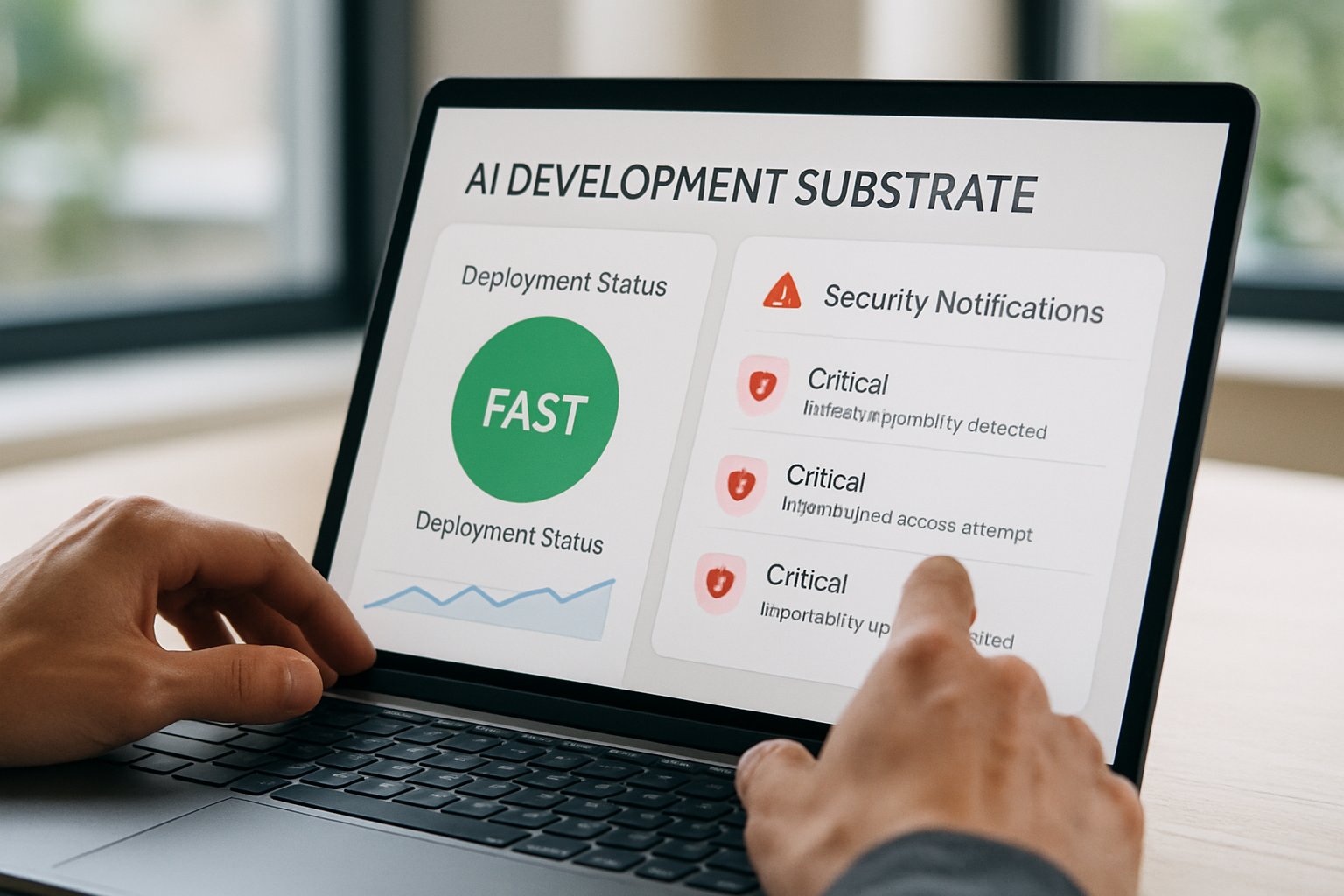
Overall, Flash enters production with mature tooling and measured constraints. Consequently, early adopters can weigh promise against clear limits before adopting the AI Development Substrate. The next section unpacks what “containerless” really means.
Containerless Promise Explained
Flash claims to eliminate containers, yet containers still run behind the curtain. Under the hood, Runpod mounts developer artifacts into managed host images. Therefore, the burden moves from building images to trusting Runpod's curated runtime. Developers decorate a Python function, call flash build, then push a bundle. Subsequently, flash deploy spins GPU or CPU workers that attach the bundle at start. In contrast, traditional flows demand a Dockerfile, a build server, and a registry push.
Flash feels containerless because those chores vanish from the local loop. Nevertheless, teams must remember that the AI Development Substrate still relies on container isolation provided by Runpod. Next, we explore how that architecture influences technical details.
Technical Under The Hood
Flash exposes a simple @Endpoint decorator covering four deployment patterns. Additionally, the CLI enforces binary wheels and matches the local Python interpreter. Cross platform builds allow M-series Mac laptops to target Linux GPUs without drama. Moreover, PyTorch ships inside the base GPU image, reducing bundle size. Bundle size cannot exceed 500 megabytes; larger models must stream from network volumes. Flash offers persistent NetworkVolume mounts up to four terabytes that cache weights across restarts.
- Default GPU disk: 64 GB
- Default volume: 100 GB
- Volume maximum: 4,096 GB
- Typical cold start: 1 minute
- Warm invocation: ~1 second
Consequently, heavy checkpoints persist, and warm starts remain quick. Flashboot further preloads images, while workers parameters keep minimum instances alive. These mechanisms compose a pragmatic AI Development Substrate that hides complexity yet respects resource physics. Therefore, developers gain speed without losing visibility into quotas. Performance metrics illustrate the payoff.
Performance And Scale Gains
Early users report drastic iteration improvements. One PyPI note states first runs take one minute, subsequent runs one second. Moreover, maintaining one warm worker removes even that initial minute. Runpod claims thousands of concurrent endpoints already run Flash in production workloads. However, the company lists 500,000 developers while VentureBeat cites 750,000, so adoption metrics remain fuzzy. ARR has reached 120 million dollars, signaling commercial traction.
- No Docker build queue delays
- Cross platform artifact portability
- Faster warm start latency
- Load balanced HTTP endpoints
Dev leads report shipping five times more experiments weekly. Collectively, these factors underpin strong cost and velocity advantages. Flash demonstrably shrinks the idea-to-GPU loop, fulfilling the AI Development Substrate vision. Consequently, stakeholders must weigh those gains against security considerations coming next. Security now takes center stage.
Security And Control Tradeoffs
Removing explicit images disrupts established scanning and attestation workflows. Furthermore, serverless functions introduce unique permission and dependency drift risks. Industry CNAPP vendors warn about inventory blind spots and zombie APIs. Nevertheless, Runpod still isolates workers inside provider images and offers environment variable hygiene. Teams can fall back to custom Docker images when stricter reproducibility is vital. Additionally, secrets rotate without forcing rebuilds because environment variables stay outside config hashes. Professionals can enhance security through the AI Developer™ certification.
Flash shifts some burdens yet keeps fallback options, giving enterprises a balanced AI Development Substrate. Therefore, governance teams should map new workflows to existing controls before full rollout. The following section assesses market implications.
Market Impact Analysis View
Runpod's revenue and developer metrics suggest real momentum despite metric discrepancies. Moreover, Flash directly competes with AWS Lambda GPU layers, Modal, and Baseplate. In contrast, Runpod emphasizes open source freedom, hoping to create a community moat. Python developers gain immediate wins because they reuse local environments and requirements.txt files. Open Source alignment attracts contributors who extend sample repos and add skill packages for agents. Dev teams may standardize on Flash for experimentation while retaining cloud primitives for regulated workloads. Consequently, analysts frame Flash as a wedge product that could broaden Runpod's platform footprint.
The market thus gains another credible AI Development Substrate option beyond hyperscalers. Subsequently, technical adopters will demand clear roadmaps and support commitments. Practical guidance closes the discussion.
Actionable Next Steps Forward
Start by installing runpod-flash from PyPI and decorating a simple handler. Then invoke flash build and flash deploy to experience the containerless loop firsthand. Moreover, enable flashboot and keep one worker warm to eliminate cold starts. Integrate volume mounts early to persist model caches and respect the 500 megabyte cap. Dev pipelines should attach policy gates that verify dependency manifests before deployment. Open Source scanners like Trivy can still inspect artifacts inside the build directory. Furthermore, schedule periodic flash undeploy sweeps to avoid zombie endpoints consuming budget.
Following these steps unlocks the promised velocity of the AI Development Substrate. Consequently, organizations can prototype faster while keeping governance intact. The conclusion recaps key insights and invites further exploration.
Conclusion And Outlook Ahead
Runpod Flash compresses build, deploy, and iterate cycles for GPU workloads. Moreover, the AI Development Substrate redefines speed without abandoning container safety. Open Source licensing widens trust and encourages community extensions. Dev stakeholders must integrate fresh security gates before scaling to sensitive tasks. Nevertheless, organizations already see measurable savings in cold starts and engineer hours. Therefore, the AI Development Substrate may emerge as a standard abstraction across multi-cloud environments. Finally, pursue the linked AI Developer™ certification to master this AI Development Substrate.
Disclaimer: Some content may be AI-generated or assisted and is provided ‘as is’ for informational purposes only, without warranties of accuracy or completeness, and does not imply endorsement or affiliation.


