

AI CERTS
1 hour ago
Multi-Agent Breakthrough in Quantum Device Tuning Scalability
Readers will gain a concise yet rigorous view of progress and open challenges. Moreover, we connect these breakthroughs to practical roadmaps for quantum hardware commercialization. Statistics from Oxford and Nature teams illustrate reliable performance boosts and near-linear scaling. Meanwhile, expert quotes contextualize the scientific momentum driving deployment. Finally, we outline certification paths that prepare professionals for this accelerated field.
Why Scalability Now Matters
Quantum computers involve thousands of independent voltage, pulse, and feedback parameters. In contrast, classical autotuners fall apart as couplings grow between those parameters. Therefore, scalable control becomes mandatory before laboratories can move beyond prototype quantum devices. Analysts estimate calibration time grows quadratically when manual tweaking dominates workflows. However, recent MARL papers report near-constant steps to convergence across larger dot arrays. Effective Quantum Device Tuning demands algorithms that scale with qubit count. Such evidence suggests production fabs may finally embrace automated calibration strategies.
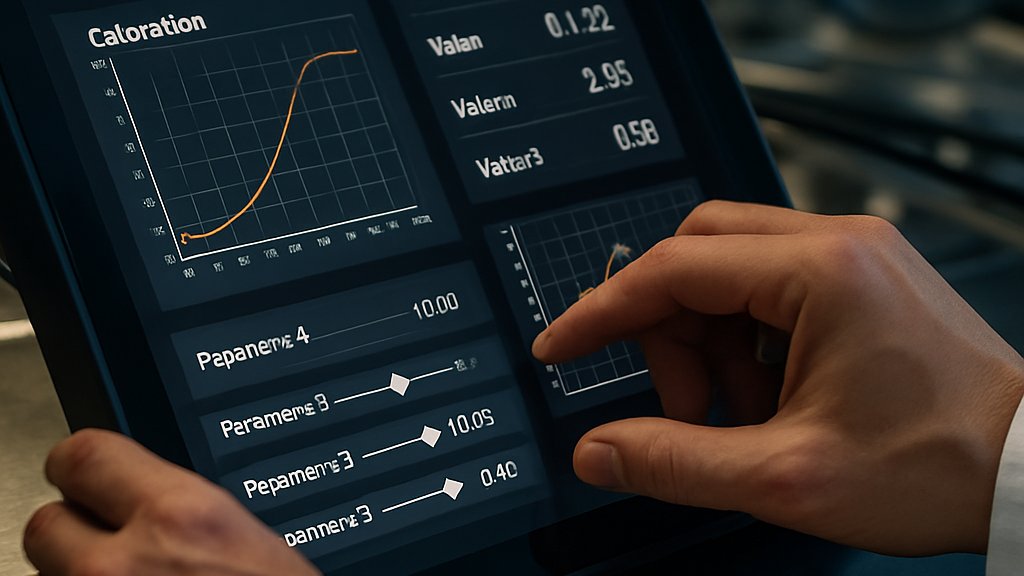
Efficient scaling turns theoretical performance into usable qubit quality. Subsequently, the field pivots toward algorithms that respect experimental budgets.
Inside The QADAPT Breakthrough
QADAPT frames tuning as a cooperative game among software agents controlling virtual voltages. Action-space factorization, guided by an online Kalman filter, decouples strongly coupled gates. Consequently, multi-agent reinforcement learning avoids gradient interference that plagues centralized trainers. Oxford simulations show 93% convergence within 100 steps on four-dot benchmarks. Moreover, mean steps drop to just 13 when a 10% threshold suffices. QADAPT demonstrates Quantum Device Tuning through virtualized voltages rather than raw gate settings.
- 93% convergence within 100 steps on four-dot arrays
- O(N) measurement scaling up to eight dots
- Zero-shot transfer to unseen eight-dot devices
These figures underscore QADAPT's claim of near-linear measurement scaling, critical for large quantum devices. Nevertheless, authors acknowledge missing hardware-in-the-loop validation. They plan collaborative experiments to test robustness under noise and drift. QADAPT marries physics insight with decentralized learning to unlock scalable control. However, hardware studies must confirm those simulated advantages before industry adoption accelerates. The next section surveys how related experiments already deliver on-chip gains.
Real-World QEC Performance Data
The Willow superconducting processor provided a pivotal testbed for reinforcement learning driven error correction. Policy gradient agents fine-tuned thousands of control channels without explicit system models. Consequently, logical error rates dropped by an average 20%, reaching record lows of 7.72×10⁻⁴. Moreover, simulations indicated feasibility for distance-15 codes featuring roughly 40,000 parameters. Researchers also quantified drift dynamics, finding steering remains effective when drift periods exceed 150 epochs.
Such quantitative insight guides scheduling of automated calibration cycles in daily operations. Researchers treated logical error as an indirect metric for Quantum Device Tuning during experiments. Such insight proves adaptable across multiple generations of quantum hardware.
QEC experiments prove that learning agents can battle decoherence on real hardware. In contrast, the next breakthrough targets measurement bottlenecks during rapid readout.
Optimizing Fast Qubit Readout
Readout speed often sets throughput limits for near-term quantum hardware. IBM scientists tackled this issue using reinforcement learning to shape pulse envelopes and reset timings. The method cut assignment error to 4.6×10⁻³ while tripling resonator reset speed. Furthermore, the protocol integrated smoothly with existing firmware, illustrating minimal deployment friction. Pulse shaping represents another frontier of Quantum Device Tuning with immediate latency benefits. Automated calibration in this context reduced manual pulse tweaking sessions from hours to minutes.
Enhanced readout complements prior error-correction gains by shrinking measurement latency. Consequently, system architects can allocate longer windows for logical computation, boosting useful clock cycles. Yet benefits must be weighed against unresolved obstacles, as the following section outlines.
Benefits And Remaining Challenges
Advantages span scalability, performance, and modular deployment. Moreover, zero-shot transfers cut retraining costs when moving policies between quantum devices.
- Near-linear measurement budgets enable scalable control for large arrays
- 20-30% logical error suppression improves commercial viability
- Three-fold faster readout accelerates experimentation cycles
Nevertheless, challenges persist regarding sample efficiency, exploration noise, and simulator realism. Researchers debate optimal trade-offs between centralized critics and decentralized actors in multi-agent reinforcement learning. Additionally, off-policy methods can suffer gradient instability inside coupled action spaces. Hardware validation gaps remain the chief barrier for enterprise procurement teams. Collectively, these studies frame Quantum Device Tuning as a cornerstone of fault-tolerant roadmaps. Yet, stable Quantum Device Tuning on hardware still contends with exploration noise.
The advantages dominate on paper, yet empirical robustness still demands proof. Therefore, stakeholders track upcoming hardware-in-the-loop demonstrations with great interest. Commercial actors are already sketching roadmaps, as the next section discusses.
Industry Adoption Road Ahead
Large vendors like IBM, Google, and Rigetti now run pilot autotuning projects. Furthermore, Oxford's group reports negotiations for on-chip trials using European facilities. Investors observe that scalable control unlocks higher device uptime, a direct revenue multiplier. Market analysts predict that automated calibration workflows will integrate with cryogenic monitoring dashboards. Firms view Quantum Device Tuning as a differentiator for service-level agreements. Professionals can boost expertise via the AI+ Quantum Device™ certification. Such credentials add credibility when pitching new multi-agent reinforcement learning initiatives internally.
Growing commercial pilots indicate momentum toward mainstream deployment. Consequently, skill development and strategic planning become urgent for technical leaders. The final section distills actionable insights from the entire discussion.
Key Takeaways And Actions
Quantum Device Tuning now emerges as a decisive lever for scaling useful machines. The QADAPT simulator, Willow processor, and IBM readout study jointly validate multi-agent techniques across diverse quantum hardware. Moreover, measurement budgets shrink while error metrics improve by double-digit margins. Nevertheless, field trials must confirm stability under drift and unforeseen couplings. Professionals should monitor upcoming hardware-in-the-loop campaigns and refine internal test benches. Consequently, earning targeted credentials strengthens one’s case for leading Quantum Device Tuning programs. Explore the linked certification and position your team at the frontier of automated calibration.
Disclaimer: Some content may be AI-generated or assisted and is provided ‘as is’ for informational purposes only, without warranties of accuracy or completeness, and does not imply endorsement or affiliation.


