

AI CERTS
1 hour ago
Autonomous Driving AI Gains Object Permanence Edge
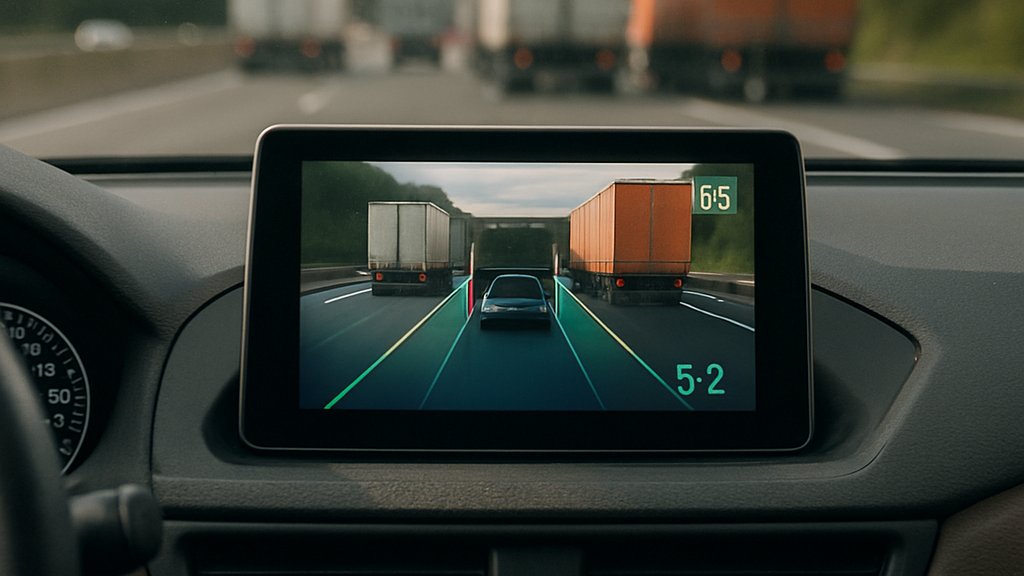
These findings set the stage for permanence-aware networks, planners, and industry standards. Consequently, this article unpacks the progress, trade-offs, and next steps toward reliable hidden-actor handling.
Why Object Permanence Matters
Children learn that a toy still exists when hidden under a blanket. Similarly, object permanence lets vehicles remember an occluded cyclist after a delivery truck blocks the view. Consequently, planners avoid dangerous lane changes that would cut across the unseen bike.
Standard perception pipelines drop unobserved tracks once detections disappear. In contrast, permanence-aware networks propagate latent states through time, feeding a more complete perception stack downstream. This richer memory reduces brittle behaviours, especially in cluttered downtown corridors.
BeyondSight quantified the benefit on nuScenes-Permanence. Moreover, mean average precision for hidden actors jumped from zero to 0.249. Planning error also fell by roughly 11 percent, indicating smoother control trajectories.
Waymo names these hidden hypotheses “speculative agents” and stores them as occupancy flow fields. Therefore, both academia and industry converge on the same cognitive principle. These gains underscore why Autonomous Driving AI must master object permanence before large-scale deployment.
Remembering vanished actors lowers collision risk and smooths control. However, quantifying that improvement demands rigorous benchmarks, discussed next.
Benchmarking Hidden Actors Performance
Evaluating permanence requires datasets that annotate both visible and invisible phases of each trajectory. nuScenes-Permanence extends the original 1,000 scenes with occlusion windows and actor status labels. Meanwhile, the Waymo Open Dataset experiments add occupancy metrics for speculative agents.
BeyondSight reports that roughly 30 percent of scene agents remain fully occluded during any single frame. Additionally, performance declines as occlusion lengthens; unobserved precision drops from 0.307 at two seconds to 0.219 at six seconds. These numbers reveal the stubborn difficulty of long gaps.
- mAP_unobs rose from 0.000 to 0.249 with permanence training.
- Planning L2 average error decreased from 0.61 to 0.54 meters.
- About 1.4 million camera images support nuScenes annotations.
Consequently, these metrics isolate hidden-actor handling from overall detection accuracy. Researchers can now ablate memory modules without confounding visibility factors.
Testing suites now score Autonomous Driving AI specifically on unobserved precision. nuScenes-Permanence remains the reference set for evaluating object permanence under camera-only sensing.
Robust benchmarks therefore anchor measurable progress. Next, we explore how planners exploit the improved forecasts.
Occlusion-Aware Planning Techniques Latest
Planning modules convert permanence predictions into safe acceleration commands. TUM’s “From Shadows to Safety” planner inserts phantom agents within reachable occluded space, then solves a risk field. Consequently, the ego vehicle slows entering blind junctions yet remains assertive on clear roads, raising driving safety.
Other teams frame occlusions as partially observable Markov decision processes. Moreover, reachability analysis computes worst-case trajectories for speculative agents, tightening collision envelopes. Nevertheless, higher caution often increases travel time at crowded intersections.
Waymo evaluates the trade-off quantitatively. Collision risk falls while average intersection traversal time rises, mirroring academic findings. Therefore, tuning the caution threshold remains a product decision rather than a pure engineering choice.
Autonomous Driving AI that ignores hidden actors fails safety audits.
Occlusion-aware planners prove feasible yet carry design compromises. Subsequently, we survey industrial adoption and dataset support.
Industry Adoption And Datasets
Autonomous Driving AI startups and incumbents now integrate permanence into their perception stack roadmaps. Furthermore, Qualcomm co-authors BeyondSight to accelerate chip-level support for temporal memory.
Waymo publishes occupancy flow field code, while Cruise experiments with lidar-only permanence forecasting. In contrast, Tier-1 suppliers request standardized validation procedures before deploying costly compute.
- University of Toronto: BeyondSight E2E model
- Waymo: Occupancy Flow Fields research
- Technical University of Munich: Open-source occlusion planner
- Qualcomm: AI accelerators for temporal propagation
Dataset growth supports these efforts. nuScenes and Waymo Open Dataset together host over 2.6 million annotated images for self-driving AI training.
Industry traction therefore appears strong but uneven across geographies. Next, we compare benefits with open challenges.
Pros And Remaining Challenges
Permanence brings several clear advantages. First, the approach raises driving safety by halting reckless maneuvers near blind corners. Second, it improves simulation fidelity, which benefits embodied vision research.
However, false persistence introduces phantom agents that never materialize. Consequently, planners may act overly defensive, frustrating riders and reducing throughput. BeyondSight shows increasing false positives as occlusions extend beyond six seconds.
Computational cost also matters. Occlusion filters and POMDP solvers demand memory and latency budgets that rival core detection modules. Nevertheless, hardware vendors now optimize recurrent layers for embedded inference.
- Improved risk awareness at intersections
- Better offline tracking for dataset labeling
- Foundations for cooperative perception via V2X
These factors outline a balanced picture of promise and caution. Therefore, developers require proven implementation patterns. The following section highlights common solutions in the field.
Implementation Patterns Emerging Today
Teams converge on four practical strategies. Firstly, temporal query propagation stitches feature maps across frames to maintain latent tracks. Secondly, offline re-identification completes broken journeys, boosting object permanence ground truth for self-driving AI.
Thirdly, planners inject rule-driven phantom agents into occluded road segments. Moreover, reachable set envelopes bound possible motions, supplying risk fields for decision layers. Fourthly, occupancy flow grids encode probability and velocity jointly, simplifying embodied vision training pipelines.
Professionals can enhance their expertise. They can pursue the AI Data Robotics™ certification to master temporal perception techniques.
Shared patterns accelerate adoption while curbing redundant research. Finally, we examine what the roadmap means for future safety cases.
Path Forward For Safety
Autonomous Driving AI must now prove permanence handling on public roads, not just datasets. Regulators demand evidence that memory modules reduce crash metrics without excessive conservatism.
Moreover, long-duration occlusions remain unsolved; mAP steadily deteriorates past the six-second mark. Researchers propose cooperative perception to share hidden-agent hypotheses across fleets, boosting driving safety.
Standardized risk metrics could accelerate certification. Waymo already publishes safety performance dashboards, and others will likely follow.
Therefore, the next milestone involves closed-course stress testing with offence-driven phantom agents. Consequently, mature permanence features will graduate into consumer self-driving AI services within the decade.
Autonomous Driving AI will then navigate urban mazes with human-like caution. Nevertheless, continued validation will remain critical.
This outlook highlights a clear trajectory yet underscores unresolved technical debt. Developers should track benchmarks, hardware, and regulation to stay ahead.
In summary, permanence-aware perception and planning transform how Autonomous Driving AI sees the world. Moreover, rigorous benchmarks, occlusion-aware planners, and rich datasets already push object permanence into production. Additionally, industry partnerships and certifications ensure practitioners gain the skills to scale these systems safely. Consequently, the road ahead rewards teams that balance innovation with verification. Explore the cited resources and elevate your craft today.
Disclaimer: Some content may be AI-generated or assisted and is provided ‘as is’ for informational purposes only, without warranties of accuracy or completeness, and does not imply endorsement or affiliation.


