

AI CERTS
2 hours ago
Defense Ethics Rift: Google Staff Challenge Military AI Secrecy
Consequently, more than 600 staff members delivered the latest Pichai letter on 27 April 2026. Signatories urged Google’s chief executive to reject any classified work that could mask harmful uses. Meanwhile, legal fights involving Anthropic and the Pentagon amplify worker concerns. The moment recalls 2018’s Project Maven revolt, yet the stakes feel larger. Moreover, GenAI.mil already distributes Google technology to roughly three million defense personnel. These overlapping threads create historic pressure on leadership, engineers, and policymakers.
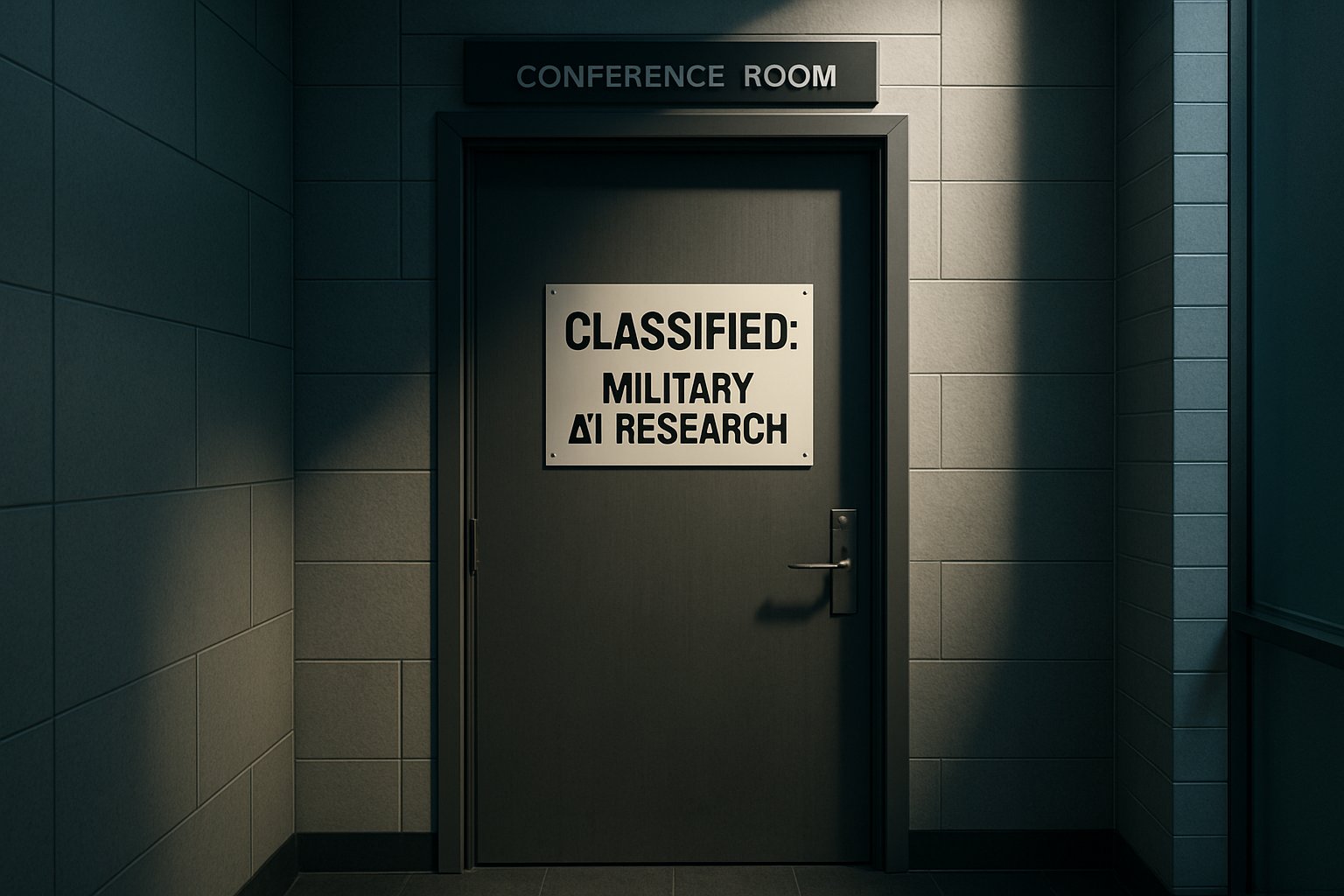
Major Military AI Flashpoints
Past confrontations illuminate today’s discord. In 2018, roughly 3,000 Google staff revolted against Project Maven, an early military AI pilot. Google later declined to renew that contract and published guiding AI Principles. Nevertheless, five years later, Gemini for Government gained prime placement on GenAI.mil.
Subsequently, the Pentagon designated Anthropic a supply-chain risk, sparking lawsuits and amicus briefs from technologists. Jeff Dean and colleagues warned that punishing firms with red lines could chill open debate. In contrast, defense officials highlighted urgent modernization needs.
The timeline below summarizes pivotal milestones:
- Dec 9 2025: GenAI.mil launches; Gemini for Government selected.
- Mar 9 2026: Anthropic sues DoD over contractual language.
- Apr 27 2026: New Pichai letter signed by 560 employees plus.
These events illustrate mounting friction between innovation and oversight. However, fresh activism shows employees still believe principled resistance can steer outcomes.
Workers view history as a guide. Yet shifting policies demand new tactics. Therefore, the next section explores their specific demands.
Employee Letter Demands Explained
The April petition sets explicit boundaries. Firstly, it opposes any classified work that denies engineers transparency. Secondly, it seeks public confirmation that Google will not enable lethal autonomous weapons. Thirdly, it asks leadership to clarify safeguards against mass surveillance.
Organizers emphasize that classified work undermines internal audit rights. Consequently, they fear unintended deployment of capabilities beyond company principles. The Pichai letter invokes the Defense Ethics Rift by name, signaling solidarity across teams. DeepMind researchers, Cloud architects, and product managers share authorship.
Notably, coverage alternates between “more than 600” and “about 560 employees.” Both figures dwarf some prior tech protests this decade. Moreover, supporters outside Google filed an amicus brief echoing identical themes.
Employees close their message with a stark warning: “Reject classified work or risk complicity in inhumane uses.” That line deepens pressure on the board. Nevertheless, executives must balance ethical expectations against governmental contracts worth billions.
The letter outlines action, but management reaction remains pending. Consequently, attention now shifts to Google’s business calculus.
Google's Critical Strategic Crossroads
Google courts expansive public-sector revenue while defending its brand. Sundar Pichai promoted Gemini for Government as transformative during the December press release. Furthermore, Cloud executives argue that serving defense modernizes operations without compromising values.
However, the Defense Ethics Rift complicates forecasts. Accepting classified work promises stable income yet risks internal morale loss. Declining could preserve principles yet surrender market share to rivals.
Project Maven memories still resonate. Leadership then chose values over revenue, yet industry context has changed. Consequently, some investors now prioritize footholds within government digital transformation.
Meanwhile, compliance teams insist that data handled inside GenAI.mil never trains public models. Nevertheless, employees doubt those partitions will survive classified expansions. Therefore, trust hinges on transparent guardrails.
Professionals can deepen governance insight through the AI Learning & Development™ certification. Such credentials equip practitioners to audit sensitive deployments rigorously.
Google’s board must soon declare its stance. Whatever choice emerges will ripple far beyond Mountain View. The Pentagon, unsurprisingly, already advances its own agenda.
Pentagon's Expanding AI Ambitions
Defense leaders describe GenAI.mil as a generational upgrade. Consequently, they require commercial partners capable of scaling across three million desktops. Gemini for Government fits that vision. Moreover, officials tout productivity, logistics, and intelligence enhancements.
In contrast, civil-liberties advocates fear downstream surveillance. Classified work conceals operational details, limiting public oversight. Therefore, critics warn of mission creep once models integrate into targeting or policing workflows.
The DoD also favors “all lawful uses” clauses. Such wording preserves operational flexibility. However, employees argue the phrase nullifies vendor red lines. The Anthropic lawsuit now tests that interpretation in federal court.
Pentagon CTO Emil Michael stresses competitive urgency. Meanwhile, geopolitical rivals aggressively scale military AI. Consequently, officials frame corporate hesitation as risking strategic deterrence.
The department’s ambitions place Google in a vice. Accept, and internal turbulence rises. Decline, and national security narratives may portray the firm as unreliable. These pressures fuel the broader Legal and Industry Fallout.
Legal And Industry Fallout
Courtrooms now shape contract boundaries. The Anthropic v. DoD case questions whether agencies can penalize companies for ethical limits. Additionally, multiple civil-society groups filed supporting briefs. The dispute heightens the Defense Ethics Rift across the sector.
Meanwhile, 560 employees from various labs co-signed the amicus brief. That filing references Project Maven, classified work risks, and free association rights. Consequently, government lawyers argue that national-security prerogatives supersede vendor preferences.
Investors monitor outcomes closely. Significant damages or injunctions could alter deal structures industry-wide. Moreover, procurement officers may rewrite templates to attract hesitant suppliers.
OpenAI, xAI, and several mid-tier startups track proceedings. Some founders privately admit they will accept classified work despite concerns. Nevertheless, workforce activism forces public statements affirming ethical values.
Therefore, the courtroom drama extends corporate strategy debates. Its resolution will influence next steps in navigating complex ethical pathways.
Navigating Complex Ethical Pathways
Companies confront an evolving decision matrix. Firstly, they can accept every military AI request, trusting internal safeguards. Secondly, they may impose tight contractual red lines. Thirdly, they could exit defense procurement entirely.
Moreover, external certification programs build shared literacy across roles. Professionals pursuing the AI Learning & Development™ credential gain frameworks for algorithmic risk reviews. Consequently, certified teams can engage security stakeholders using common vocabulary.
Nevertheless, culture matters as deeply as policy. Transparent governance channels, rotating audit rosters, and whistleblower protections reduce friction. In contrast, opaque hierarchies breed distrust.
Firms also experiment with independent oversight boards. However, effectiveness depends on real enforcement power. Without that authority, oversight devolves into public-relations theater.
Finally, collaborative standard-setting with regulators could align incentives. Yet negotiations must respect employee voices to prevent renewed rebellions.
These pathways illustrate that ethics and competitiveness need not be opposites. However, alignment requires deliberate choices informed by history, law, and stakeholder expertise.
The next months will reveal which choices Google and peers embrace. Consequently, industry watchers should prepare for rapid policy swings.
In sum, historic flashpoints, fresh activism, and looming court decisions drive the current Defense Ethics Rift conversation. Therefore, professionals should stay informed, pursue relevant certifications, and engage constructively with governance debates.
Conclusion
Google’s workforce again challenges military AI expansion. Moreover, lawsuits and Pentagon ambitions intensify scrutiny. The Defense Ethics Rift encapsulates unresolved questions about transparency, autonomy, and strategic duty. Consequently, leadership across industry and government must craft durable, ethical contracts. Professionals can bolster their contribution through targeted learning like the AI Learning & Development™ certification. Stay engaged, remain curious, and help steer responsible innovation.
Disclaimer: Some content may be AI-generated or assisted and is provided ‘as is’ for informational purposes only, without warranties of accuracy or completeness, and does not imply endorsement or affiliation.


