

AI CERTS
2 hours ago
Apple’s AI Chip Strategy Accelerated by Project Titan Fallout
Meanwhile, we track critical numbers like the $30 billion Broadcom agreement and 2,000 redeployed engineers. Finally, discover how certifications can position teams for the edge AI hardware wave. In contrast, the piece also scrutinizes risks from talent churn and entrenched GPU ecosystems. Readers will finish with actionable insights for shaping internal semiconductor design roadmaps.
Titan Exit, Silicon Surge
Project Titan consumed a decade of R&D and roughly 2,000 specialists. Nevertheless, February 2024 brought cancellation and immediate reassignment into Apple’s silicon and machine learning groups. Consequently, veteran automotive SoC architects began refining internal neural engines for phones, Macs, and data centers.
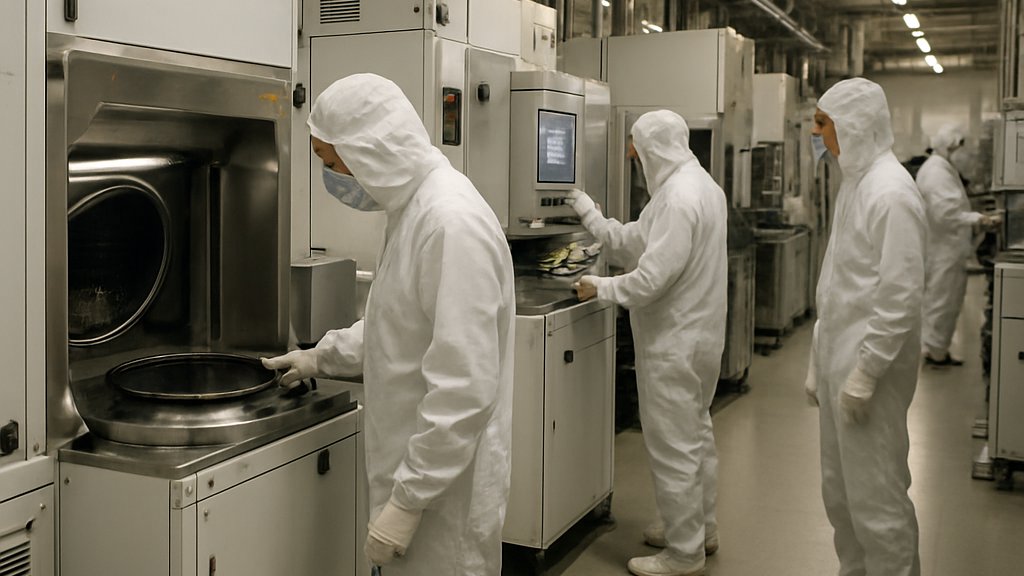
Bloomberg reports indicate the unfinished Titan chip matched four M2 Ultra processors in raw throughput. Moreover, that prototype now seeds custom accelerator blocks inside upcoming Apple silicon generations. Such reuse shortens validation cycles, cuts masks, and advances the overarching AI Chip Strategy. Former autonomous driving engineers also apply vehicle perception expertise to on-device vision models. Therefore, Apple integrates automotive-grade safety practices into consumer semiconductor design workflows. These adjustments underline a hardware strategy focused on reuse rather than reinvention. Additionally, lessons from vehicle functional safety now guide chip verification for mission-critical healthcare wearables.
Titan's demise became a catalyst for diversified silicon roadmaps. Subsequently, expanded manufacturing capacity reinforced that momentum.
Broadcom Deal Expands Capacity
Apple inked a multiyear Broadcom contract worth over $30 billion in July 2026. Furthermore, the agreement promises more than 15 billion U.S.-built radio and connectivity chips. Tim Cook emphasized these parts as critical to sustaining Apple silicon performance and reliability.
In contrast, previous sourcing leaned heavily on overseas suppliers, exposing geopolitical and logistics risks. Legacy autonomous driving verification benches now test radio firmware resilience. Consequently, domestic fabs now give Apple tighter visibility into semiconductor design iterations. Such control aligns with the broader AI Chip Strategy by reducing lead times for neural subsystems.
- 2026 Broadcom deal: $30 billion, 15 billion chips committed.
- $600 billion total U.S. investment pledged across four years.
- AI accelerator market projected at $95 billion during 2025.
Moreover, onshore production mitigates export control uncertainties affecting advanced lithography equipment.
Market analysts estimate the 2025 AI accelerator and GPU infrastructure segment at roughly $95 billion. Therefore, additional wafer capacity positions Apple to capture a larger share of that spending. Meanwhile, competitors like NVIDIA still dominate data-center training, underscoring the urgency of Apple’s investment.
The Broadcom pact secures scaled production for future edge AI components. Consequently, supply assurances feed directly into upcoming Private Cloud Compute rollouts.
Private Cloud Compute Pivot
Apple's Private Cloud Compute extends its device privacy ethos into the cloud. Originally, PCC ran exclusively on Apple silicon inside confidential data centers. However, the 2026 expansion added Google Cloud and NVIDIA GPUs for heavier generative workloads.
PCC encrypts data in use, preventing operators from viewing user prompts or proprietary model weights. Moreover, confidential computing lets Apple maintain regulatory compliance across diverse jurisdictions. This security first stance differentiates the company's AI Chip Strategy from rivals emphasizing sheer scale. In contrast to competitors, Apple publishes detailed white-papers explaining PCC threat models and silicon root-of-trust.
Edge AI remains central; on-device neural engines handle quick inference while PCC covers overflow requests. Consequently, latency stays low and energy budgets remain stable. Professionals may upskill with the AI Engineer™ certification.
PCC blends privacy, flexibility, and multivendor hardware. Subsequently, these elements tighten Apple's full-stack hardware strategy.
Reuse Of Titan IP
Apple salvaged design libraries, packaging innovations, and thermal solutions from the abandoned car platform. Consequently, engineers transplanted those blocks into upcoming Mac and iPhone SoCs. Mark Gurman reported the Titan SoC equaled four M2 Ultras in compute density.
Furthermore, neural processing units derived from automotive vision now accelerate edge AI perception tasks. This reallocation exemplifies cost-effective semiconductor design reuse across product lines. Such moves reinforce the AI Chip Strategy while shortening time to market. Nevertheless, some Titan engineers departed, citing slowed decision cycles during the transition.
Autonomous driving veterans bring functional safety rigor into consumer workflows. Talent gaps could hamper the hardware strategy if not addressed quickly. Therefore, Apple has increased cross-training and external hiring to stabilize expertise. Edge devices benefit because the Titan thermal system excels at sustained workloads without throttling.
Repurposed automotive IP cuts costs and energizes consumer chip lines. Consequently, effective reuse remains pivotal within Apple's AI Chip Strategy roadmap.
Competitive Landscape And Risks
NVIDIA controls the lion’s share of data-center training accelerators. Meanwhile, AMD, Intel, and hyperscalers race with their own custom silicon. In contrast, Apple focuses on vertically integrated edge AI experiences.
However, GPU ecosystems enjoy vast developer tooling and optimized kernels. Therefore, Apple must convince researchers to port workloads onto its neural engines. Licensing frameworks, compilers, and documentation form another battleground in this semiconductor design war.
Talent churn also looms; Bloomberg highlighted senior departures through 2026. Autonomous driving veterans bring functional safety rigor into consumer workflows. Nevertheless, generous retention packages aim to protect the evolving AI Chip Strategy. Supply chain shocks, especially in lithography, could still derail timelines. Market watchers forecast Apple could capture five percent of accelerator share by 2028 if execution holds.
Competition and attrition inject volatility into forecasts. Subsequently, adaptive planning must anchor the hardware strategy going forward.
Strategic Roadmap For Devices
Apple intends to ship next-generation Macs sporting enhanced Neural Engines by 2027. Additionally, upcoming Vision Pro iterations will tap those accelerators for immersive spatial computing. Edge AI improvements promise longer battery life and richer on-device language models.
Meanwhile, the company pairs PCC with endpoint chips to balance privacy and capability. Furthermore, the AI Chip Strategy aligns with a broader consumer hardware strategy spanning wearables and home devices. Apple silicon roadmaps now reference shared IP blocks across every product category.
Developers watching these moves should prepare optimized models for limited memory footprints. Professionals can validate competencies through the AI Engineer™ program. Consequently, teams remain competitive as Apple's ecosystem evolves. Subsequently, cross-platform developer toolkits will abstract neural engine differences, easing code portability.
Device-level advances will showcase Apple's integrated approach. Therefore, this roadmap solidifies the AI Chip Strategy across form factors.
Apple transformed an ambitious car dream into a pragmatic silicon advantage. Moreover, Broadcom capacity, PCC privacy, and repurposed Titan IP now reinforce future devices. However, fierce GPU competition and talent turnover remain unresolved threats. Consequently, organizations tracking Apple should monitor manufacturing milestones and developer tooling releases. Professionals can stay ahead via the AI Engineer™ certification. Take action today and future-proof your technical leadership.
Disclaimer: Some content may be AI-generated or assisted and is provided ‘as is’ for informational purposes only, without warranties of accuracy or completeness, and does not imply endorsement or affiliation.


