

AI CERTS
2 hours ago
Quantum Network Security: Orchestrating QKD, PQC, Cloud
Quantum Network Security Trends
Market interest exploded during the last 18 months. Grand View Research values the QKD network segment at roughly USD 446 million in 2024. Moreover, analysts forecast multibillion revenues by 2030 as telecom operators monetise quantum-safe infrastructure. Singtel’s October 2025 launch of a Hybrid Quantum-Safe Network signalled commercial readiness. The service fuses QKD network links supplied by ID Quantique with Palo Alto’s post-quantum cryptography gateways. Therefore, early adopters can protect data centres, cloud workloads, and branch circuits under one service agreement.
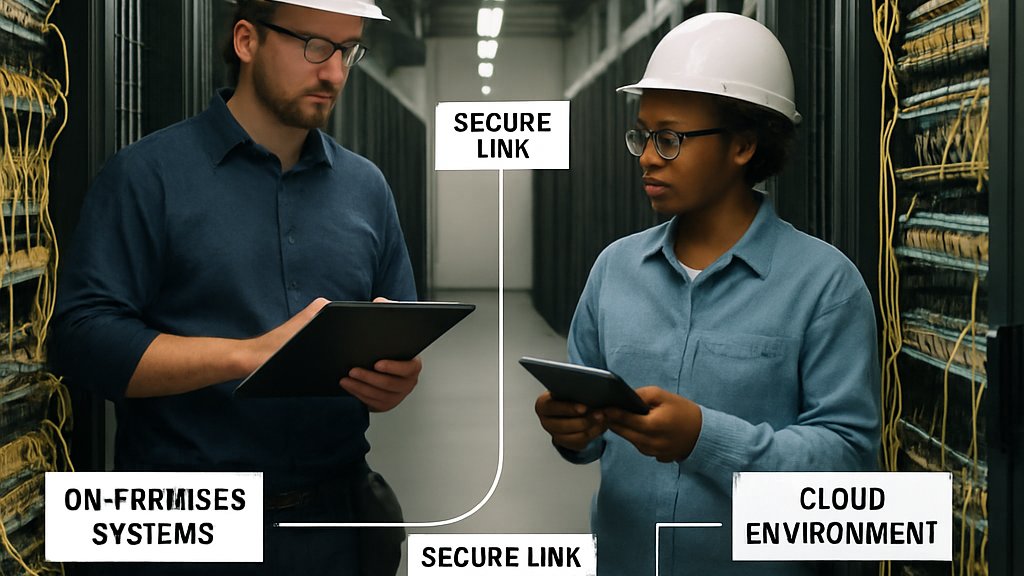
Quantum XChange extended momentum in May 2026 by partnering with Korean integrator YAC. Their Phio TX platform delivers crypto-agile key management via containers. Additionally, local QKD gear feeds keys into the orchestrator through ETSI GS QKD-014 APIs. These announcements confirm that Quantum Network Security now benefits from credible, repeatable blueprints.
The commercial rush matters. However, operators still grapple with cost, reach, and operational complexity. These challenges will shape adoption curves. Consequently, leaders must understand technical metrics before signing long-term contracts.
Technical Metrics Snapshot Today
Field trials reveal realistic capacities. Metropolitan QKD spans tens to hundreds of kilometres over dark fibre. Meanwhile, aggregate key rates hover between hundreds of kilobits and several megabits each second, depending on wavelength multiplexing. In contrast, post-quantum cryptography adds negligible latency but increases handshake sizes. Consequently, network appliances need additional CPU headroom.
Hybrid settings blend strengths. QKD network links supply fresh symmetric keys for bulk encryption. Simultaneously, post-quantum cryptography authenticates sessions and guards less critical paths. Therefore, organisations enjoy defence-in-depth even if one primitive falters.
These numbers illustrate feasibility. Nevertheless, executives need audited performance sheets covering peak traffic and failover behaviour. Clear metrics de-risk deployment decisions. Furthermore, transparent reporting helps regulators evaluate nationwide quantum-safe infrastructure plans.
Market Momentum Accelerates Globally
Carrier interest goes beyond headline launches. GSMA working groups now discuss service-level templates for Quantum Network Security offerings. Moreover, European sovereign initiatives such as EuroQCI fund cross-border backbones using both QKD network nodes and post-quantum cryptography overlays. Consequently, interoperability has become a board-level concern.
Standards bodies moved early. ETSI’s ISG-QKD released GS QKD-015 and GS QKD-018, defining software-defined networking hooks for key relay and orchestration. Additionally, ITU-T’s Y.3800 series outlines functional architecture for multi-domain key managers. Therefore, operators can integrate quantum hardware with familiar SDN controllers like ONOS.
Industry alignment unlocks scale. However, capital allocation remains cautious because optical components still carry premium pricing. Subsequently, CFOs evaluate blended models where QKD covers a subset of links while broader post-quantum cryptography secures everything else. Cloud orchestration then stitches policies across layers.
Operational Lessons From Pilots
Academic testbeds offer practical insights. Austria’s AIT demonstrated a hybrid system combining QKD, WireGuard, and a containerised key server. Meanwhile, BT’s London pilot pushed QKD keys into Kubernetes secrets for microservices. These efforts proved that modern DevSecOps pipelines can absorb quantum-safe infrastructure without dramatic rewrites.
Pilot teams also flagged friction points. In contrast to traditional IP links, QKD network equipment demands precise timing and temperature control. Moreover, trusted repeater nodes reintroduce physical security considerations. Consequently, facilities teams coordinate closely with security architects.
Nevertheless, operators report encouraging uptime. Turkcell integrated ID Quantique’s Clavis XG system in 2025 and achieved carrier-grade availability. Therefore, commercial service-level objectives appear attainable when projects follow disciplined engineering practices.
Standards Shape Interoperable Future
Interoperability reduces vendor lock-in. Consequently, enterprises insist on open APIs before approving Quantum Network Security budgets. ETSI GS QKD-004 specifies RESTful key-delivery endpoints that feed hardware security modules. Moreover, GS QKD-014 describes management information models for SDN controllers. Cloud orchestration tools can thus request keys programmatically and rotate them on demand.
IETF researchers complement these efforts by defining hybrid key-encapsulation mechanisms. Additionally, NIST is finalising lattice-based algorithms that will underpin mass-market post-quantum cryptography libraries. Therefore, application developers can adopt quantum-resistant protocols without waiting for physical QKD links.
Standards momentum signals regulatory confidence. However, full certification frameworks remain under construction. Professionals can enhance their expertise with the AI+ Quantum Security™ certification to stay ahead of compliance demands.
Strategic Roadmap For Leaders
Decision makers should adopt a phased strategy. Firstly, inventory cryptographic assets and prioritise workloads with long sensitivity windows. Secondly, deploy post-quantum cryptography across software stacks using crypto-agile libraries. Thirdly, pilot QKD network links on high-value fibre routes to validate integration. Finally, converge both layers under cloud orchestration for central policy control.
Key milestones include:
- Signing multi-vendor proofs of concept with ETSI-compliant interfaces
- Measuring end-to-end latency and key refresh intervals
- Training staff through quantum-focused certification programs
- Establishing cross-domain incident response that includes optical components
This roadmap balances risk and investment. Moreover, it positions organisations to capitalise on future quantum repeater breakthroughs without major redesigns.
Deployment Hurdles And Solutions
Despite progress, scaling remains challenging. QKD hardware costs exceed conventional transceivers. However, multiplexing and volume manufacturing are lowering prices. Consequently, analysts expect per-link costs to drop 30 % by 2028.
Another hurdle involves trusted nodes. These sites must be physically secure, increasing operational overhead. Nevertheless, layered security policies and tamper-evident modules mitigate related risks. Additionally, emerging measurement-device-independent QKD promises longer distances without trust assumptions.
Post-quantum cryptography introduces its own issues. Larger key sizes raise packet overhead and can trigger intrusion detection false positives. Therefore, network teams should update monitoring baselines and stress-test appliances.
These challenges highlight critical gaps. However, emerging solutions are transforming the market landscape. Forward-looking firms already implement quantum-safe infrastructure to gain customer trust.
Market Outlook And Benefits
Adopters cite several advantages:
- Enhanced secure networking posture through defence-in-depth
- Regulatory readiness ahead of privacy mandates
- Differentiated services for finance and government clients
- Future-proofing against cryptanalytic surprises
Moreover, Quantum Network Security integrates smoothly with cloud orchestration platforms. Consequently, developers access keys as a service, accelerating innovation. In contrast, legacy manual key rotation slows release cycles.
Industry voices reinforce optimism. Fabien Adouani of Quantum XChange emphasises flexible architectures built for continuous cryptographic change. Similarly, Grégoire Ribordy of ID Quantique argues that hybrid deployments ensure networks remain quantum-safe despite evolving threats.
These benefits outweigh transitional pain for many verticals. Therefore, investment momentum should persist even amid macroeconomic uncertainty.
Quantum Network Security now stands at a pivotal juncture. Standards matured, pilots proved viability, and carriers launched revenue-generating services. Nevertheless, cost, scalability, and operational complexity still demand executive attention. Forward-looking enterprises will blend QKD network links with post-quantum cryptography through modern cloud orchestration. Consequently, they will deliver resilient, secure networking that withstands both classical and quantum adversaries.
Conclusion And Next Steps
The quantum threat timeline remains uncertain, yet preparations cannot wait. Organisations should map data lifecycles, deploy post-quantum cryptography broadly, and pilot QKD network services where economics allow. Moreover, embracing open standards and cloud orchestration preserves flexibility while assuring governance. Consequently, early movers gain reputational and compliance advantages.
Continuous learning is essential. Professionals can deepen skills and validate competence through the previously mentioned AI+ Quantum Security™ credential. Adopt a phased strategy today and position your organisation for tomorrow’s quantum-driven reality.
Disclaimer: Some content may be AI-generated or assisted and is provided ‘as is’ for informational purposes only, without warranties of accuracy or completeness, and does not imply endorsement or affiliation.


