

AI CERTS
2 hours ago
VistaVLA Reshapes 3D Robot Navigation Strategies
Researchers from Nanyang Technological University and A*STAR propose a geometry-aware vision-language-action system. Their approach lifts multi-view image features into 3D Gaussian primitives. Subsequently, a compact token set feeds the policy network. Therefore, semantic grounding becomes both explicit and tractable. Industry leaders are watching closely because the method reports double-digit gains on demanding real-world tasks.
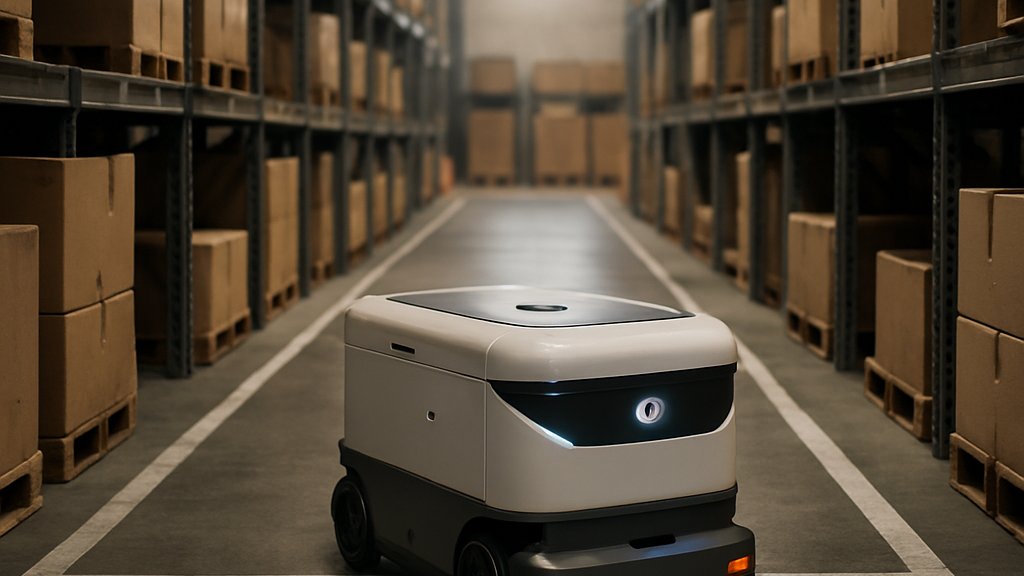
VLA Landscape Rapidly Expands
Vision-language-action research has exploded since 2017. A recent survey logged 183 contributions. Moreover, investment is rising as firms seek hands-free production lines. In contrast, many pipelines still ignore full-scene geometry. Developers instead predict directly from raw camera views.
The field now confronts harder benchmarks involving unseen objects, long instructions, and multiplexed tools. Consequently, teams need richer context for reliable 3D Robot Navigation. VistaVLA addresses that gap with an explicit 3D representation.
These trends underscore soaring demand. However, token bloat threatens latency. VistaVLA compresses that burden, setting the stage for the next section.
VistaVLA Two-Stage Pipeline
The pipeline unfolds in two carefully linked phases. First, multi-view encoders align visual and textual features, then embed them as anisotropic Gaussian primitives. Each primitive stores color, density, and semantic grounding vectors. Meanwhile, calibrated camera poses ensure geometric fidelity.
Second, the Merge-then-Query module distills roughly 100,000 Gaussians into 64 spatial tokens. Consequently, the downstream vision-language-action backbone digests scene context without memory overload.
Developers pursuing 3D Robot Navigation appreciate this separation. Moreover, the strategy separates perception costs from policy latency, keeping control loops responsive.
The two-stage design clarifies why tokenization matters. The next section dives deeper into that compression.
Merge-then-Query Tokenization
MtQ functions like a learned clustering head. Initially, it merges nearby Gaussian primitives using attention scores. Subsequently, it produces 64 ordered spatial tokens summarizing both geometry and semantics. Therefore, storage falls by 99% while action accuracy rises.
The authors note that token order remains stable across views. Consequently, transformers exploit positional priors during action decoding. This stability supports safer 3D Robot Navigation in dynamic homes.
Efficient compression unlocks new benchmarks. The following section presents headline numbers.
Benchmark Results At Glance
VistaVLA scored impressive wins across simulation and real domains. Key figures include:
- 96.05% average success on LIBERO standard tasks.
- LIBERO-Pro-Swap improved from 1.7% to 12.2%.
- +22.8 percentage points on seven real manipulation tasks.
- +30.0% on out-of-distribution trials versus VLA-Adapter.
Furthermore, ablations confirm MtQ retains critical semantics despite heavy reduction. Therefore, users gain speed without losing precision.
These metrics inspire confidence in industrial 3D Robot Navigation. Nevertheless, practitioners must weigh deployment realities, which we examine next.
Deployment Pros And Cons
VistaVLA offers clear advantages. Explicit semantic grounding improves instruction fidelity. Additionally, Gaussian primitives deliver multi-view consistency. Moreover, compressed spatial tokens slash memory budgets.
However, challenges persist. The method relies on accurate pose calibration. Consequently, misaligned cameras could degrade robot manipulation safety. In contrast, camera-space grounding avoids that dependency but sacrifices 3D coherence. Furthermore, online Gaussian construction adds compute overhead.
Real engineers must balance these factors for smooth 3D Robot Navigation. The next section explores open questions and research needs.
Future Work And Gaps
Several issues remain unresolved. Code has not yet been released. Meanwhile, latency numbers for online splatting are unknown. Consequently, reproducibility suffers.
Researchers also seek larger datasets blending tactile feedback with vision-language-action. Moreover, robustness to lighting shifts warrants study. Nevertheless, community momentum suggests fast progress.
These gaps highlight collaboration opportunities. Subsequently, professionals may consider formal upskilling.
Certification Path Forward
Engineers aiming to deploy advanced robot manipulation stacks need verified skills. Professionals can enhance their expertise with the AI+ Robotics Specialist™ certification. Moreover, the curriculum covers vision-language-action frameworks, Gaussian primitives, and efficient semantic grounding.
Consequently, graduates can accelerate safe 3D Robot Navigation rollouts. The program also delves into optimizing spatial tokens for edge inference.
These learning paths close the talent gap. Therefore, the ecosystem advances faster.
VistaVLA signals a broader shift toward geometry-aware policies. In contrast, earlier methods ignored depth. Nevertheless, both camps will likely merge insights soon.
Skilled practitioners stand to benefit greatly. Consequently, investing in structured learning now positions teams for the next wave.
VistaVLA compressed 3D context without sacrificing semantics. Meanwhile, benchmarks showed striking gains. Therefore, industry watchers expect rapid adoption.
Further releases could include code, hardware specs, and video demos. Additionally, community benchmarks will test generality.
Stakeholders should track these updates and refine integration plans. Consequently, fleets will navigate complex scenes with increasing autonomy.
For professionals, obtaining recognised credentials remains prudent. Explore advanced courses and stay informed. 3D Robot Navigation progress depends on skilled champions ready to translate research into deployment.
Disclaimer: Some content may be AI-generated or assisted and is provided ‘as is’ for informational purposes only, without warranties of accuracy or completeness, and does not imply endorsement or affiliation.


