

AI CERTS
3 hours ago
Metaverse Fraud Benchmark: TSAI-MetaFraud Boosts Finance Security
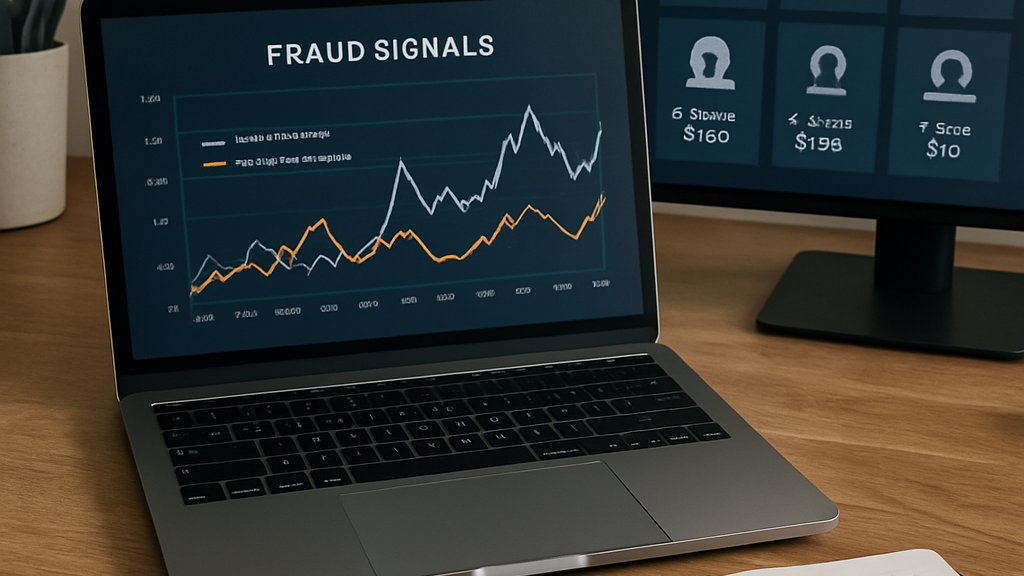
Therefore, security leaders can benchmark their controls and prepare for adaptive threats.
Ultimately, defensible metrics drive smarter investment amid volatile hype cycles.
Evolving Metaverse Fraud Landscape
Recent IMF and Visa reports show cyber fraud tripled between 2024 and 2026.
Furthermore, payment criminals now exploit avatar trades, in-world tokens, and cross-chain bridges.
In contrast, legacy monitoring lacks behavioral context and misses coordinated laundering rings.
Metaverse finance platforms therefore face escalating behavioral risk that traditional KYC tools cannot catch.
Consequently, objective benchmarks are essential for comparing emerging financial fraud AI models.
Here the Metaverse Fraud Benchmark provides a timely baseline rooted in simulated yet realistic data.
These industry trends frame the need for richer datasets.
Nevertheless, any benchmark must reflect both social engineering tactics and transaction detection complexity.
Rising fraud volumes underscore urgent measurement gaps.
Next, we examine how TSAI-MetaFraud fills that void.
Inside TSAI MetaFraud Dataset
TSAI-MetaFraud simulates an OpenSimulator economy populated by 936 active avatars.
Additionally, researchers logged 230,490 behavioral events and 74,671 peer-to-peer transactions.
Each avatar links to session biometrics, movement vectors, and keystroke patterns.
Therefore, the benchmark dataset spans both behavioral risk indicators and financial edges.
Labels divide actors into benign, behavioral fraud, financial fraud, and hybrid threats.
However, only 71 avatars fall into the fraud classes, highlighting severe imbalance.
Data files arrive as clean CSV tables that map nodes, sessions, and edges for quick ingestion.
Consequently, analysts can pair graph neural networks with classic tabular pipelines during transaction detection experiments.
The release also ships evaluation code and baseline notebooks under an MIT license.
Moreover, the GitHub issues page lists planned extensions, including NFT exchange scenarios.
Comprehensive modality coverage makes the Metaverse Fraud Benchmark uniquely valuable.
However, raw data means little without tested tasks, which we explore next.
Behavioral Signals Amplify Detection
Graph features alone rarely flag deceptive avatars that mimic normal spend patterns.
Consequently, TSAI researchers layered keystroke timing and movement entropy into model inputs.
These behavioral risk proxies reflect user attention, fatigue, and negligence.
Moreover, explainable dashboards can translate such proxies into digital financial literacy scores.
The Metaverse Fraud Benchmark tasks include cross-modal node classification to test this fusion.
Baseline tree models nailed behavioral anomalies with high F1 yet missed laundering loops.
In contrast, GraphSAGE improved financial fraud AI metrics by combining topology and behavior.
However, minority financial and hybrid classes remained difficult, scoring macro F1 around 0.23.
Subsequently, the authors propose semi-supervised propagation that leverages graph smoothness during transaction detection.
Multimodal signals clearly uplift precision on tricky patterns.
Next, we review numeric results that quantify these gains.
Benchmark Results And Gaps
Temporal link prediction provides the most intuitive business metric, because it forecasts suspicious transfers.
According to the Metaverse Fraud Benchmark, link prediction outperformed heuristic baselines by double-digit margins.
GraphSAGE achieved AUROC 0.6089 and average precision 0.6485.
Furthermore, logistic regression on plain tables lagged behind, signaling value in relational learning.
Nevertheless, extreme label scarcity hurt detection of financial and hybrid frauds.
Financial fraud AI models need richer negative sampling and cost-sensitive loss functions.
Weakly supervised protocols showed macro F1 below 0.25 when only ten fraud labels were provided.
Consequently, the benchmark dataset stresses real-world cold-start pain points.
Similarly, end-to-end transaction detection pipelines need smarter negative sampling to avoid overfitting benign flows.
Moreover, synthetic gameplay raises questions about transfer learning to live metaverse finance ledgers.
The authors invite platform partners for validation studies.
These numbers confirm progress yet expose stubborn blind spots.
We now discuss what finance teams can do with the insights.
Opportunities For Finance Teams
Security leaders can benchmark fraud controls against tasks defined in the Metaverse Fraud Benchmark.
Additionally, risk analysts may augment rule engines with behavior-aware features to reduce behavioral risk in payment flows.
Developers can prototype graph neural network pipelines using the open evaluation code.
Consequently, time to proof-of-concept shortens and executive buy-in improves.
- Integrate movement entropy into transaction detection dashboards.
- Compare model AUROC against Metaverse Fraud Benchmark baselines.
- Apply semi-supervised propagation to metaverse finance token flows.
- Fine-tune GraphSAGE for financial fraud AI governance metrics.
- Benchmark risk dashboards against key benchmark dataset metrics quarterly.
Furthermore, professionals can enhance their expertise with the AI+ Finance Strategist™ certification.
The curriculum covers graph analytics, behavioral signals, and compliance strategy.
Adopting these practices positions teams ahead of adaptive attackers.
However, ethical considerations remain critical, as discussed next.
Limitations And Ethical Concerns
Any simulated world cannot capture every emergent social behavior or macroeconomic shock.
Therefore, results may overestimate precision when deployed on commercial platforms.
Privacy laws also complicate sharing real behavioral telemetry beyond the research lab.
Moreover, fraudsters increasingly weaponize deepfakes and AI chatbots, tactics not modeled here.
In contrast, regulators demand robust explanations before approving automated financial fraud AI systems.
Consequently, developers must combine explainable dashboards with governance frameworks like NIST AI RMF.
Benchmark owners pledge to update tasks annually to mirror threat drift.
Meanwhile, ethicists urge differential privacy wrappers before public release of future gameplay logs.
Ethical diligence preserves user trust and ensures sustainable research access.
Finally, we look toward policy and research roadmaps.
Future Research And Policy
TSAI authors plan cross-validation studies on live exchange data and blockchain logs.
Meanwhile, IMF economists urge global standards for reporting virtual asset incidents.
Therefore, industry consortia could align taxonomy, metrics, and disclosure timelines.
Open benchmarks accelerate that dialogue by providing reproducible scenarios.
The Metaverse Fraud Benchmark will likely inspire hybrid synthetic-real corpora for metaverse finance oversight.
Researchers also explore federated learning to keep behavioral risk data on-device.
Subsequently, policy makers may reference benchmark dataset metrics when drafting minimum control baselines.
Moreover, multidisciplinary audits will evaluate algorithmic bias across age, gender, and regional groups.
Interoperable identity standards could further curb account hopping that obscures fraud lineage.
Consequently, regulators envision mandatory incident sharing portals built on privacy-preserving cryptography.
Collaborative governance can outpace adversary innovation.
The conclusion distills practical takeaways for readers.
Conclusion And Next Steps
TSAI-MetaFraud stakes an early claim as the leading Metaverse Fraud Benchmark for virtual economies.
It fuses behavioral telemetry, graph topology, and cashflow semantics to stress-test next-generation financial fraud AI.
Consequently, metaverse finance teams can measure models, spot gaps, and justify budgets.
Nevertheless, synthetic scope, label scarcity, and privacy hurdles demand continuous refinement.
Professionals should pilot the tasks and contribute pull requests.
Furthermore, they can pursue the AI+ Finance Strategist™ credential for specialized skills.
Staying proactive today will reduce fraud losses tomorrow.
Disclaimer: Some content may be AI-generated or assisted and is provided ‘as is’ for informational purposes only, without warranties of accuracy or completeness, and does not imply endorsement or affiliation.


