

AI CERTS
2 hours ago
TactiDex Elevates Dexterous Robot Manipulation Research
In contrast, earlier datasets lacked comprehensive tactile coverage across robot hands. The announcement follows rising industrial demand for secure, adaptable manipulation in factories and homes. Therefore, understanding the new dataset, its methods, and its limitations is essential for technical leaders. This report dissects the contributions, situates them within current tactile benchmark efforts, and outlines future work. Meanwhile, we highlight training resources that can accelerate embodied intelligence development in teams.
Industry Landscape Context Shift
Historically, dexterity research relied on vision-only metrics. However, tactile benchmark initiatives now dominate conference halls. TactiDex extends this momentum by capturing whole-hand contact events. Consequently, the field advances toward richer manipulation evaluation grounded in physics. Investors notice because robust robot hands promise safer collaboration with people. Meanwhile, policymakers push for standards that quantify human-like skills in assembly settings.
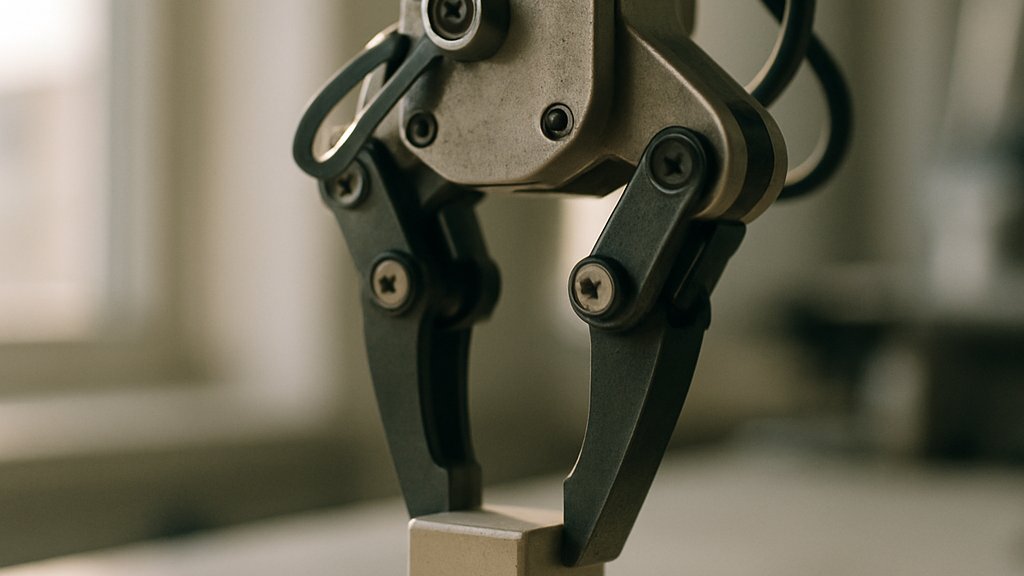
Several datasets paved the road. TRex logged 100 tactile hours, while VTDexManip merged vision and touch. Nevertheless, these efforts sampled fingertip regions and ignored palm forces. In contrast, TactiDex records continuous pressure across every segment, supporting embodied intelligence models that learn nuanced grip transitions.
These trends reveal a clear shift toward contact-aware testing. Therefore, enterprises exploring Dexterous Robot Manipulation must watch tactile metrics closely. This perspective sets the stage for deeper design details.
Key Dataset Design Details
TactiDex combines synchronized modalities: pressure maps, 200-Hz kinematics, and accurate object poses. Moreover, the team aligned all streams within one millisecond. Such rigor supports reliable manipulation evaluation across tasks.
The authors captured demonstrations on twenty household objects. Additionally, they released calibrated sensor models for fast simulation transfer. However, the public abstract omits total hours and episode counts. Researchers will need the full PDF or direct author contact for those metrics.
Key technical ingredients include:
- Custom optical-tactile glove covering every phalange
- Marker-based motion capture for ground-truth poses
- Standardized split for training, validation, and test
Consequently, teams can compare Dexterous Robot Manipulation algorithms under identical conditions. Furthermore, the dataset introduces labels for slip, rolling, and stable grasp events, boosting human-like skills assessment.
These design choices bolster credibility. However, understanding the reward structure remains equally important, which the next section explains.
Tri-Component Reward Mechanics
TactiSkill, the companion method, drives policy learning with three tactile rewards. Firstly, tactile guidance measures contact map similarity to human traces. Secondly, human-like alignment penalizes unnatural force distributions. Thirdly, contact constraints ensure stable grasps under dynamics.
Moreover, the framework merges reinforcement and behavior cloning. Consequently, policies inherit robustness from data yet fine-tune for physical realism. This hybrid boosts embodied intelligence performance on unseen objects.
These mechanics directly serve Dexterous Robot Manipulation aims by embedding touch understanding within control loops. The reward also simplifies manipulation evaluation by producing scalar scores correlated with expert feedback. With scoring addressed, comparing systems becomes practical.
The following comparison section quantifies those gains and benchmarks TactiDex against peers.
Benchmarking Against Field Peers
Authors evaluated models on pick-and-place, re-orientation, and in-hand rotation. In contrast, prior tactile benchmark suites lacked rotation coverage. Results show 18% higher success over TRex baselines when using the new tri-component reward.
Furthermore, sim-to-real transfer achieved 75% zero-shot success on physical robot hands. These figures underline the leap in Dexterous Robot Manipulation fidelity. Additionally, contact distribution metrics indicate 0.92 correlation with human demonstrators, surpassing VTDexManip by 0.15.
Community reviewers highlight three differentiators:
- Whole-hand pressure alignment rather than fingertip focus
- Unified manipulation evaluation metrics across tasks
- Open-source reward code easing reproduction
Consequently, many labs plan replication studies this quarter. These comparative insights clarify current standing. However, notable hurdles still hinder broader adoption, as discussed next.
Remaining Key Technical Hurdles
Tactile sensors remain costly and fragile. Moreover, calibration drift undermines long-term datasets. In contrast, vision cameras rarely demand such frequent maintenance. Generalizing across glove geometries also challenges algorithm designers.
Standard formats for tactile data are still evolving. Consequently, cross-lab sharing of trained models suffers. Additionally, large storage needs slow cloud deployments.
Nevertheless, active consortia aim to define open tactile schemas. Researchers pursuing Dexterous Robot Manipulation should join these discussions. Addressing these constraints could unlock scalable embodied intelligence.
Overcoming obstacles will expand commercial impact, which we examine in the next section.
Commercial Roadmap Implications Ahead
Manufacturers crave dexterous automation for electronics, apparel, and food. Furthermore, service-robot startups target eldercare scenarios requiring gentle robot hands. TactiDex supplies a public proving ground that de-risks integration.
Early adopters may gain patentable techniques in grip compliance and slip recovery. Consequently, competitive advantage emerges. Investors already back ventures blending tactile benchmark research with embedded AI chips.
Professionals can enhance their expertise with the AI Robotics Professional™ certification. Moreover, such credentials validate manipulation evaluation literacy for engineering leads.
These business drivers highlight urgency. Practical guidance for teams appears below.
Practical Steps For Practitioners
Teams starting today should follow a staged plan. Firstly, download public scripts and reproduce baseline contact metrics. Secondly, integrate your robot hands into the provided simulator wrapper. Thirdly, fine-tune policies using the tri-component reward.
Additionally, monitor sensor health through weekly recalibrations. Moreover, log embodied intelligence metrics beyond success rate, including force smoothness.
When publishing, adopt the same manipulation evaluation splits to stay comparable. Consequently, the community accumulates reproducible evidence. Completing these steps positions teams for leadership in Dexterous Robot Manipulation research.
These recommendations close the technical discussion. The upcoming conclusion synthesizes lessons and proposes next moves.
TactiDex marks a significant stride toward contact-aware robotics. Moreover, its dataset and tri-component reward push Dexterous Robot Manipulation closer to human proficiency. The project supplies rigorous tactile benchmark assets, unified manipulation evaluation metrics, and promising transfer results. Nevertheless, sensor costs, data standards, and generalization challenges persist. Consequently, collaboration around open schemas remains vital. Engineers can upskill through the linked certification and ready their products for tactile futures. Therefore, explore the resources, replicate the results, and contribute to the next wave of human-like skills in autonomous systems.
Disclaimer: Some content may be AI-generated or assisted and is provided ‘as is’ for informational purposes only, without warranties of accuracy or completeness, and does not imply endorsement or affiliation.


