

AI CERTS
3 hours ago
Will.i.am Urges Better AI Storytelling Tools
Choosing AI Storytelling Tools
Teams now survey dozens of AI Storytelling Tools promising faster scripts, melodies, and visuals. Moreover, vendors package large language models with collaborative dashboards that fit studio workflows. In contrast, many musicians still prefer traditional digital audio workstations. Will.i.am’s FYI.ai prototypes illustrate hybrid setups where autonomous agents prep stems, leaving artists free to improvise. Meanwhile, Netflix’s Ted Sarandos frames such platforms as amplifiers for storytellers, not replacements. Selecting the right stack therefore demands strategy, budget clarity, and governance.
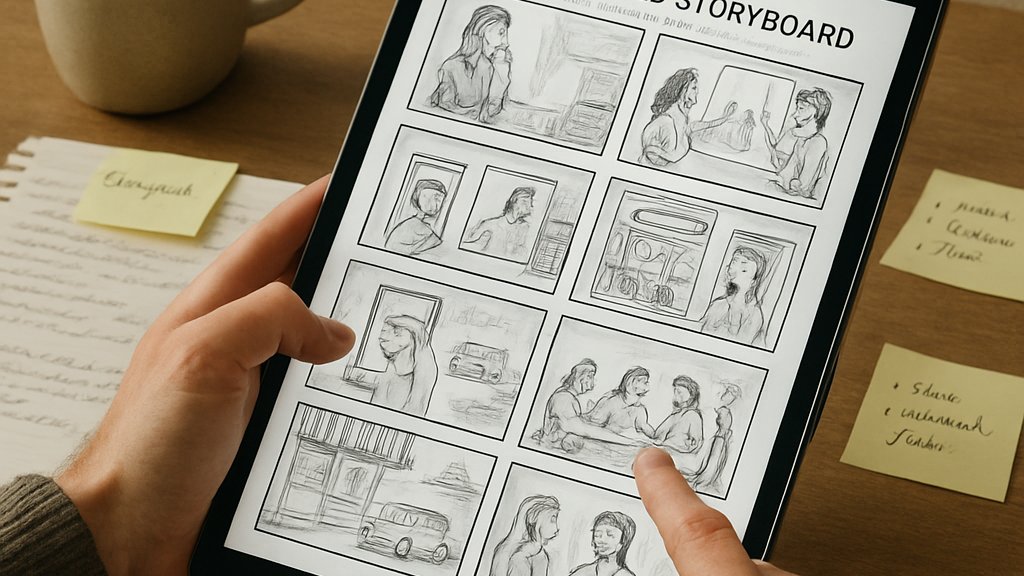
Key selection criteria include:
- Long-form narrative coherence scores, measured against academic benchmarks.
- Copyright compliance features that log dataset provenance.
- Integrations with production asset managers and cloud render farms.
- Fine-tuning options for culturally specific public narrative requirements.
These checkpoints reduce project risk. Nevertheless, leadership must still nurture human imagination. The next section explores why that gap persists.
Human Imagination Gap Today
Research shows models excel at pattern synthesis yet stumble with meaning. Consequently, long-arc character growth often collapses after several thousand tokens. Academic studies on automated planning confirm this limitation. Will.i.am argues that visionary thinking fills that space. Furthermore, his Arizona State course, “The Agentic Self,” trains students to pair hyper-creative brainstorming with autonomous agents. The approach aligns with the AI for Good movement, which stresses human-centric objectives.
Meanwhile, studio executives monitor union negotiations over synthetic actors. Workers claim algorithms lack lived context and empathy. That shortfall echoes the imagination issue. Therefore, companies experimenting with AI Storytelling Tools must invest in diversity workshops, cultural consultants, and transparent review loops.
Technical Limits Persist Still
Despite rapid parameter scaling, several core hurdles remain. Firstly, temporal consistency degrades in scenes exceeding 20 minutes. Secondly, factual grounding falters for niche historical arcs, raising accuracy concerns within the public narrative. Additionally, sentiment drift can shift tone unpredictably, undermining brand safety. Researchers are testing hybrid retrieval, planning graphs, and reinforcement learning from human feedback to address these gaps. Nevertheless, none fully replicate authentic imagination yet.
These constraints emphasize partnership over replacement. Consequently, demand grows for specialists who can orchestrate human-machine collaboration responsibly. Next, we review market forces accelerating that demand.
Market Momentum Numbers Rise
Grand View Research values AI in media and entertainment at roughly $25.9 billion during 2024. Furthermore, forecasts project expansion into the $40-70 billion range by 2026, reflecting a CAGR above 25 percent. Such growth outpaces many other digital segments within the creative industry. Moreover, analysts attribute momentum to localization, asset tagging, and rapid prototyping delivered by AI Storytelling Tools.
Subsequently, cloud hyperscalers, chip vendors, and model providers capture the largest revenue share. Startups still attract venture funding by focusing on domain-specific plugins, especially around the music industry. Will.i.am has invested in several music AI platforms, betting that algorithmic co-writers will generate fresh hooks while musicians steer emotional arcs.
These numbers excite investors. However, creators emphasize ethical safeguards, as the following viewpoints reveal.
Industry Voices Diverge Sharply
Supporters highlight democratization. Moreover, independent filmmakers can now storyboard complex sequences without seven-figure budgets. Consequently, competition could widen audiences’ choices. In contrast, unions fear job erosion and unpaid data harvesting. Meanwhile, academics caution that unchecked automation may standardize style, diminishing cultural diversity within the creative industry.
will.i.am positions himself between camps. He invests in tools yet warns against complacent reuse of legacy tropes. Sarandos counters that technology historically enriched storytelling, citing virtual production on “The Irishman.” Both agree that skilled humans remain essential. Therefore, companies must ground AI adoption in transparent impact assessments.
These debates set the stage for ethical roadmaps, explored next.
Emerging Ethical Creativity Paths
Governments draft AI bills targeting disclosure and consent. Additionally, consortiums propose watermarking for synthetic media. The AI for Good community advances frameworks measuring social benefit alongside profitability. Furthermore, venture capital firms now request responsible innovation clauses from portfolio companies.
Professionals can deepen compliance capabilities through accredited programs. For example, creators can validate expertise via the AI Writer™ certification. This credential covers narrative design, bias mitigation, and workflow integration for cutting-edge AI Storytelling Tools.
These initiatives foster trust. However, sustained progress demands continuous upskilling, discussed in the final section.
Skills And Certification Pathways
Studios now seek talent who blend storycraft, data literacy, and platform engineering. Consequently, job postings list prompt design, model evaluation, and ethics auditing as core skills. Professionals should therefore pursue structured learning paths.
Recommended roadmap:
- Master narrative principles through compact writing residencies.
- Study transformer architectures and token dynamics.
- Complete applied projects integrating AI Storytelling Tools with legacy pipelines.
- Earn the AI Writer™ certification for formal validation.
- Join cross-disciplinary forums advancing AI for Good practices.
These steps build a resilient profile. Moreover, they position creators to guide responsible AI adoption at scale.
Rigorous upskilling closes technical gaps. Consequently, the creative industry can harness algorithms without sacrificing imagination.
In summary, the imagination gap, market momentum, divergent opinions, and ethical demands create a pivotal moment. However, structured learning and standards offer a clear path forward.
Disclaimer: Some content may be AI-generated or assisted and is provided ‘as is’ for informational purposes only, without warranties of accuracy or completeness, and does not imply endorsement or affiliation.


