

AI CERTS
3 hours ago
VoicePing Multilingual Enterprise AI 3.0 Transforms Meetings
Market analysts forecast the speech-to-speech sector to grow 21% yearly, and investors are watching closely. Consequently, technology leaders need clear guidance on capabilities, limits, and competitive pressures. This article dissects VoicePing 3.0, benchmarks, and market context while mapping practical steps for enterprise communication leaders. Moreover, we examine how custom dictionaries, on-device modes, and MCP integrations reshape workplace collaboration across global teams.
Multilingual Enterprise AI Impact
In contrast, many firms still rely on manual note-taking and ad-hoc interpreters during cross-border meetings. Such stopgaps slow decisions and inflate costs. Multilingual Enterprise AI can automate transcription and translation while preserving speaker context. Consequently, executives gain searchable records and faster follow-up.
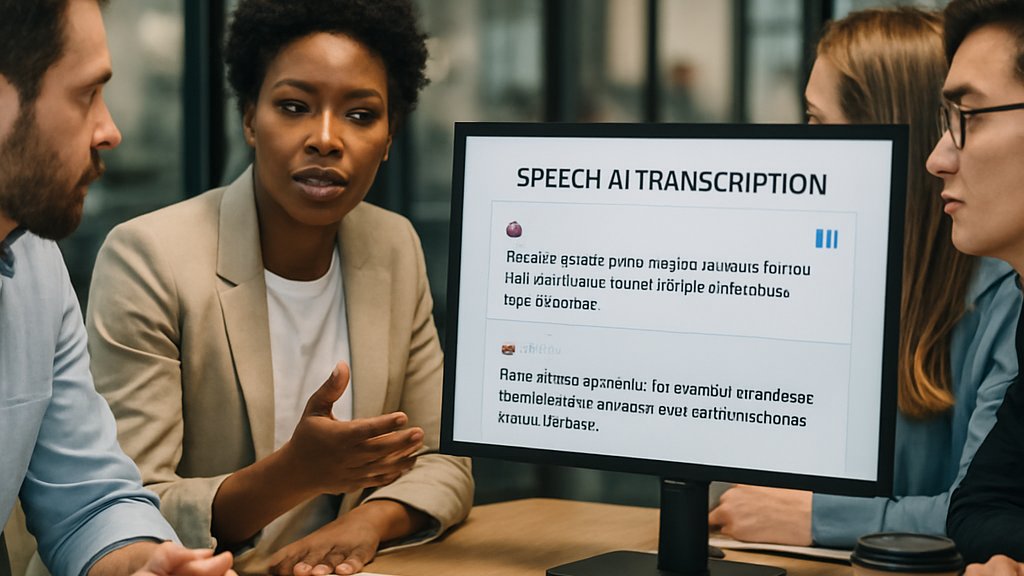
Market research firm Mordor Intelligence projects the real-time voice translation market will reach $12.6 billion by 2030. Furthermore, hybrid work accelerates demand from global teams that now collaborate daily across 48 language pairs. VoicePing cites support for that same number of languages, positioning itself well against cloud hyperscalers. Moreover, enterprises now evaluate solutions on latency, accuracy, and data sovereignty, not flashy demos.
These trends confirm rising urgency for reliable language automation. However, companies still need a concrete product overview before investing.
Global Market Needs Rising
Remote work shattered geographic hiring limits, yet linguistic hurdles persist across sales, support, and engineering. Consequently, global teams often juggle multiple conferencing tools alongside separate translation apps. That fragmentation undermines enterprise communication workflows and creates compliance blind spots.
Meanwhile, employees expect frictionless live translation comparable to consumer apps. Research by Gartner shows 57% of collaboration leaders now budget for embedded speech AI within productivity suites. Moreover, security officers demand solutions meeting ISO27001 and SSO requirements before approving rollout.
Demand shows no sign of slowing. Therefore, platform breadth and enterprise controls become decisive selection criteria.
VoicePing 3.0 Overview
VoicePing 3.0 landed on 6 July 2026 after twelve months of re-engineering. Furthermore, the release bundles Multilingual Enterprise AI features into a single web, mobile, and desktop suite.
- Real-time ASR and live translation driven by Multilingual Enterprise AI, supporting 48 languages
- AI meeting minutes, speaker diarization DER 4.01 % on internal benchmark
- Event QR listener mode supporting 5,000 concurrent devices for workplace collaboration events
- File subtitling and dubbing leveraging custom dictionaries for specialized terminology
- MCP/API hooks enabling external speech AI models like ChatGPT and Claude
- Enterprise communication safeguards including SSO, IP restrictions, and ISO27001 controls
Additionally, VoicePing ships proprietary ASR and MT models showing 19.3 % average WER and 87.2 /100 English-to-Japanese translation accuracy in company tests. Nevertheless, the vendor acknowledges performance varies with audio quality and domain jargon.
VoicePing 3.0 therefore presents a robust feature matrix. However, understanding the underlying technology clarifies where the platform truly differentiates.
Core Speech Tech Advances
At the heart of the suite sits VoicePing ASR v0.1, a multilingual model crafted for tonal Asian languages. Moreover, the system applies domain-adaptive training to cut word error rates on Japanese, Thai, and Hindi meeting audio.
The companion MT v0.1 feeds translations into the UI within 300 milliseconds on stable bandwidth. Consequently, participants receive contextually aware subtitles that maintain brand terminology, thanks to custom dictionaries. The integrated diarization engine labels speakers with 4 % error, easing action assignment inside workplace collaboration portals.
This stack exemplifies Multilingual Enterprise AI in production, not a lab demo. Furthermore, MCP integration lets external assistants query transcripts while respecting role-based permissions. Such open architecture appeals to speech AI engineers seeking programmable hooks.
The technical stack stresses latency, accuracy, and extensibility. In contrast, competitive forces focus equally on pricing and ecosystem reach.
Competitive Voice Landscape Analysis
Major cloud vendors also chase enterprise communication budgets. For instance, DeepL recently previewed voice translation tied to its popular text service. Similarly, Google, Microsoft, and Amazon bundle speech AI APIs into existing cloud credits, lowering entry costs.
However, VoicePing counters with on-device options that protect regional data sovereignty. Moreover, its Asian language focus plugs accuracy gaps often seen in generic models. Independent labs still need to validate these claims under noisy conditions.
Consequently, buyers weigh integration depth, security posture, and total cost rather than raw accuracy alone. Multilingual Enterprise AI providers must therefore deliver holistic value, not isolated algorithms.
Competitive dynamics will sharpen as hyperscalers lower latency and pricing. Nevertheless, governance and compliance could decide final winners.
Governance And Data Security
Regulators now fine companies heavily for mishandled voice data. Therefore, enterprises demand granular controls covering retention, encryption, and audit trails. Consequently, Multilingual Enterprise AI deployments demand granular controls covering retention, encryption, and audit trails.
Additionally, administrators can restrict access by IP, SSO group, and token scope before enabling MCP transcript sharing. Such measures align with infosec frameworks and support seamless workplace collaboration across global teams without breaching policy.
Professionals can enhance their expertise with the AI Telecommunications Specialist™ certification, boosting compliance confidence during Multilingual Enterprise AI deployments.
Robust governance transforms technological promise into sustainable practice. Consequently, forward-looking firms now plan roadmaps extending beyond initial pilots.
Future Outlook For Teams
VoicePing’s roadmap lists Meeting Bot previews for Zoom, Meet, and Teams plus offline mobile modes. Moreover, expanded subtitle workflows will strengthen live translation quality at hybrid events.
Industry forecasts suggest speech AI budgets will double by 2028 as global teams normalize real-time multilingual workflows. Multilingual Enterprise AI vendors that deliver consistent accuracy, transparent governance, and flexible APIs will capture that growth.
Subsequently, procurement leaders should pilot against realistic noise profiles, measure ROI on reduced interpreter spend, and document compliance wins.
Future gains depend on disciplined evaluation and change management. Therefore, early adopters gain a lasting competitive edge.
VoicePing’s 3.0 launch underscores how Multilingual Enterprise AI moves from concept to operational reality. Moreover, the platform unites transcription, live translation, and governance in one secure stack. Consequently, decision makers can boost enterprise communication efficiency, lighten interpreter budgets, and empower global teams. Nevertheless, independent benchmarks and change-management planning remain essential before scaling. Professionals seeking deeper mastery should explore the linked certification and evaluate pilots against real noise scenarios. Act now to position your organisation at the forefront of multilingual workplace collaboration.
Disclaimer: Some content may be AI-generated or assisted and is provided ‘as is’ for informational purposes only, without warranties of accuracy or completeness, and does not imply endorsement or affiliation.


