

AI CERTS
2 months ago
AI Fuels Logistics Process Automation In Global Trade
Driving Logistics Process Automation
Agentic AI combines OCR, large language models, and orchestration layers. Moreover, the stack reads commercial Documents, validates fields, and pushes data into TMS or ABI systems. Flexport’s February 2026 release claims a 0.2 percent U.S. Customs error rate after pilots. Meanwhile, Uber Freight embeds similar logic across procurement, tracking, and payments.
Logistics Process Automation therefore shifts from isolated pilots to integrated production workflows. Vendors now market “fleets” of agents able to collaborate, learn, and audit each other. This momentum underpins the broader adoption curve. These advances set the context for deeper analysis below. Therefore, let us explore how the market metrics align with these claims.
Agents Redefine Paperwork
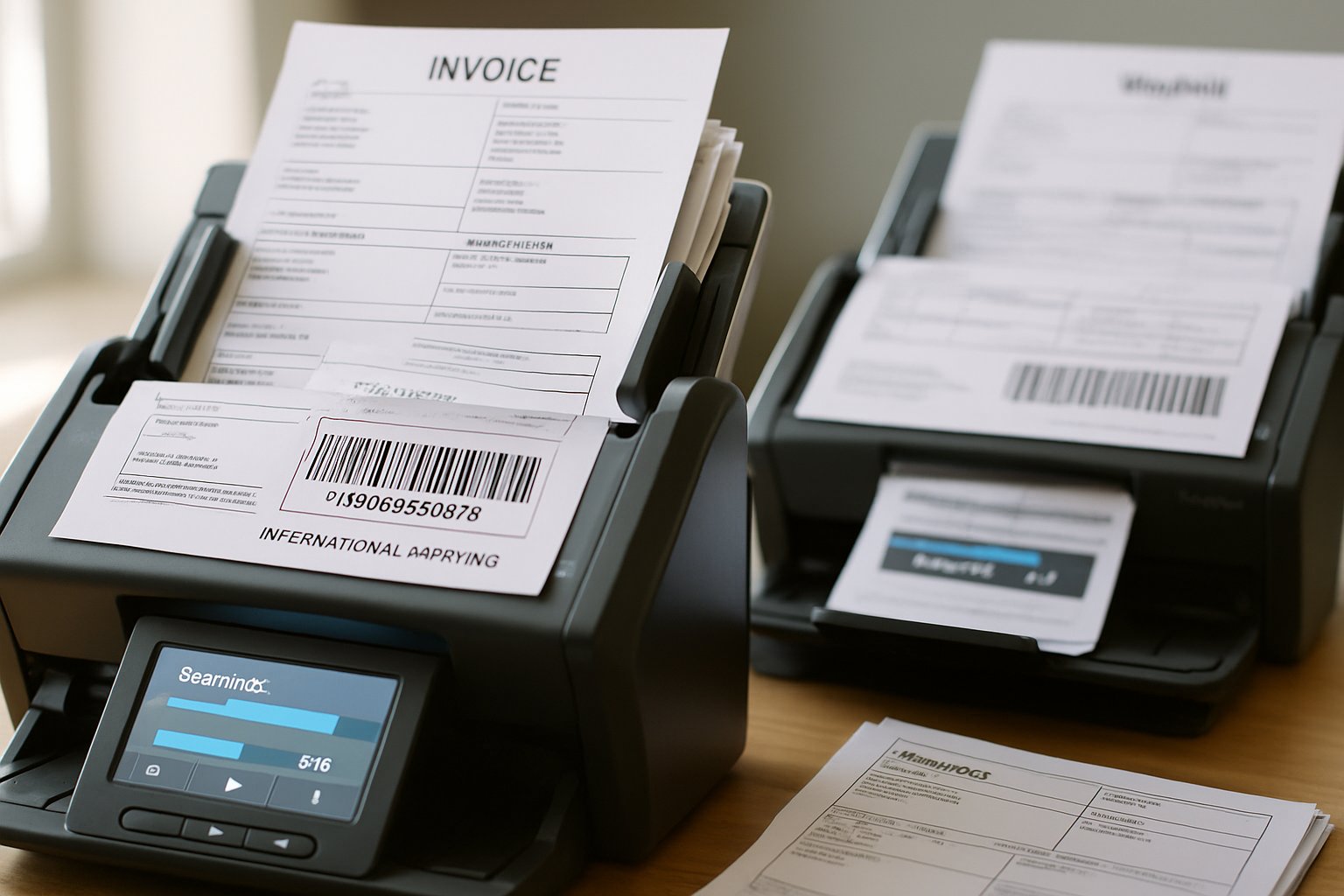
Traditional forwarding teams spent hours copying data between invoices, bills of lading, and entry portals. Consequently, error rates remained stubbornly high. Agents change this model. They extract structured fields, cross-check tariff codes, and even draft refund claims for overpaid duties. Furthermore, retrieval-augmented generation supplies regulations or historical filings at inference time, grounding every suggestion.
Several specialist vendors, including Shipamax and StackAI, now embed this logic directly inside document pipelines. Logistics Process Automation appears here as human-plus-machine collaboration, not unchecked autonomy. Most deployments escalate edge cases like restricted goods to trained compliance staff. In contrast, routine shipments flow through unattended.
Market Drivers And Data
Multiple financial signals encourage change. The U.S. customs brokerage market will reach roughly USD 5.48 billion by 2026. Global freight forwarding sits near USD 325 billion for 2025. Even modest productivity gains therefore free considerable margin. Gartner and BCG label agentic AI a strategic imperative for supply chains in 2025–2026.
Additionally, vendor case studies cite 30–80 percent cuts in manual touch time and up to 40 percent faster release cycles. Nevertheless, analysts warn that governance maturity remains uneven. Logistics Process Automation must travel through a landscape of varying data quality and regulatory tolerance. That complexity informs every implementation roadmap.
- Flexport: 0.2 percent reported filing errors during pilot.
- Shipamax and StackAI: 90–99 percent extraction accuracy on structured Documents.
- Industry surveys: 42 percent of leaders delay projects pending clearer compliance guidance.
These figures highlight both promise and caution. However, data also reveal momentum that decision-makers cannot ignore.
Benefits And Early Wins
Time savings top every business case. Moreover, reduced re-keying lowers demurrage risk and speeds Shipping cycles. Flexport’s automated auditor even surfaces historical misclassifications, unlocking tariff refunds. Consequently, importers recapture working capital that once vanished into duty overpayments. Agents also operate 24/7, providing continuous coverage across global zones.
Furthermore, embedded audit trails improve transparency for regulators. Logistics Process Automation thus strengthens compliance while boosting efficiency. These advantages explain why leading forwarders target 80 percent task automation by 2025. Yet gains depend on disciplined deployment, as the next section explains.
Risks, Gaps, Governance
No technology eliminates liability. Importers remain legally responsible for every Customs declaration. Therefore, false confidence poses a severe threat. In contrast, human-in-the-loop guardrails reduce exposure. Analysts also flag immature observability. Many agent stacks lack standardized logging, making post-incident root cause analysis hard. Additionally, edge cases such as restricted commodities or ambiguous valuation rules still stump automation.
Governance frameworks must define escalation paths, retention policies, and role-based access. Logistics Process Automation only delivers sustainable value when paired with auditable controls. These realities demand meticulous preparation before scale.
Implementation Best Practices
Successful rollouts share common traits. Firstly, teams curate high-quality master data for products, HS codes, and valuation rules. Secondly, phased pilots begin with low-risk lanes. Moreover, instrumentation tracks precision, recall, and exception rates from day one. Subsequently, organizations integrate agent outputs with ABI or equivalent national single windows, ensuring every filing carries an immutable audit trail. Professionals can deepen their expertise through the AI Supply Chain™ certification.
Furthermore, vendors recommend clear success criteria tied to measurable cycle-time and cost metrics. Logistics Process Automation thrives under continuous monitoring and iterative tuning. Consequently, teams should schedule quarterly governance reviews and stress tests.
Skills And Next Steps
Workforces must evolve alongside technology. Data stewards, prompt engineers, and compliance specialists now collaborate daily. Additionally, vendor management becomes critical as organizations juggle multiple agent providers. Training plans should emphasize regulatory literacy, LLM prompt safety, and exception triage techniques. Moreover, cross-functional drills prepare staff for edge-case escalations.
Logistics Process Automation demands both technical fluency and domain knowledge. Companies investing early in hybrid skill sets will capture outsized efficiency gains. These preparations position enterprises for the next wave of AI-driven trade facilitation.
These strategic insights reveal a balanced picture. Meanwhile, fast-moving competitors already embed agentic AI at the core of their service models.
Consequently, laggards risk ceding margin and customer loyalty as manual processes persist.
Key Takeaways Ahead
Agents slash repetitive tasks. Governance remains non-negotiable. Market momentum is undeniable. Therefore, executives should evaluate pilots without delay.
Nevertheless, they must pair every deployment with rigorous oversight. Forward-looking leaders who execute both tracks will shape the new logistics norm.
Consequently, the next section distills final guidance for action.
Conclusion
Agentic AI transforms global trade paperwork. Moreover, statistics confirm meaningful accuracy and speed gains when paired with oversight. Risks remain, yet disciplined governance offsets exposure. Therefore, Logistics Process Automation stands poised to redefine compliance, cost, and customer service across Shipping corridors. Nevertheless, success hinges on skilled teams and auditable processes. Forwarders and importers should explore targeted pilots, pursue structured certifications, and monitor evolving regulations. Act now to secure strategic advantage and unlock new efficiencies.
Disclaimer: Some content may be AI-generated or assisted and is provided ‘as is’ for informational purposes only, without warranties of accuracy or completeness, and does not imply endorsement or affiliation.


