

AI CERTS
2 hours ago
Google’s Hybrid AI Stack Challenges Nvidia With TPU Expansion
Anthropic committed to up to one million TPUs worth tens of billions of dollars. Meanwhile, OpenAI quietly rented TPUs to cut inference costs and balance supply. Meta is also reportedly negotiating access, signaling rapidly growing interest. This article unpacks the technical, commercial, and strategic forces behind Google’s latest move. It explores why Chips, Infrastructure, and software Diversity now matter more than raw flops.
Hybrid AI Stack Shift
Google originally built TPUs for internal workloads, prioritizing large matrix operations over graphics flexibility. In contrast, GPUs served a broad audience that prized programmability. Google now packages both hardware and compiler layers as a single exportable product.
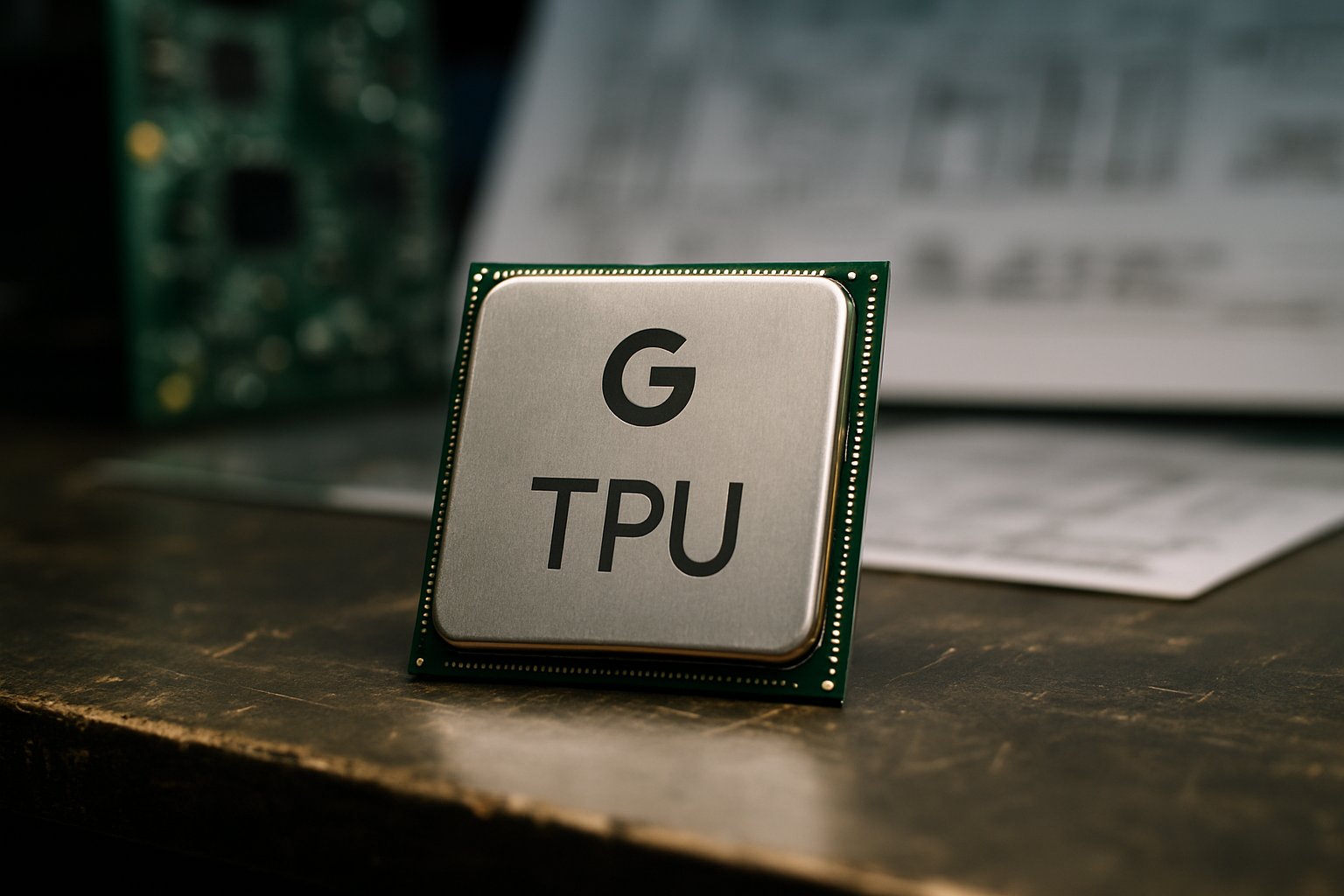
Therefore, the company promotes the Hybrid AI Stack as an answer to a concentrated supply market. By unifying silicon and software, Google claims predictable performance per watt across training and inference. Furthermore, hyperscalers gain negotiating power when alternative accelerators reach meaningful volume.
Google pairs TPUs with open runtimes to build leverage, not just speed. These moves set the stage for landmark customer agreements. Consequently, recent deals illustrate adoption momentum.
TPU Deals Accelerate Adoption
October 2025 delivered the clearest signal yet. Moreover, Anthropic revealed plans to deploy up to one million TPUs, exceeding one gigawatt of capacity. Google Cloud CEO Thomas Kurian cited strong price-performance and efficiency.
Key numbers show why customers moved quickly:
- 1M TPUs reserved by Anthropic, worth "tens of billions" (Oct 2025).
- 70-85% NVIDIA data-center GPU share in 2025, per analysts.
- Reports in June 2025 that OpenAI rented TPUs to trim inference expenses.
Meanwhile, Meta is weighing similar agreements for 2026 rentals and 2027 on-prem installs. Consequently, Google’s order book spans multiple flagship model builders. Each contract validates the Hybrid AI Stack in production, not just pilot labs. Therefore, financial commitments reinforce the broader business narrative.
Large purchases show that alternative Chips can scale commercially. However, software compatibility remains the gating factor, leading to new engineering projects ahead. Subsequently, the story shifts to portability breakthroughs.
Software Portability Advances Rapidly
Portability decides whether alternative Chips win mainstream mindshare. Therefore, Google invested in XLA, PJRT, and StableHLO to abstract hardware targets within heterogeneous Infrastructure. Additionally, the internal TorchTPU initiative aims to make PyTorch feel native on TPUs.
Meta collaborates on this runtime to encourage hardware Diversity across its data centers. In contrast, Nvidia’s CUDA stack matured over 15 years, embedding itself in countless workflows. Nevertheless, Google’s approach positions the Hybrid AI Stack as a drop-in backend once plugins stabilize.
Framework-level integration lowers switching cost for developers and tooling teams. Consequently, portability progress underpins ongoing commercial negotiations. Yet Nvidia’s dominance still shapes competitive realities.
Nvidia Dominance Faces Pressure
Analysts estimate Nvidia still controls about 80 percent of data-center accelerator shipments. Consequently, pricing power and allocation favors Nvidia, raising costs for everyone else. However, every high-profile TPU contract undermines that negotiating leverage.
Large buyers now benchmark relative performance per watt, latency, and Infrastructure supply security across Chips. Therefore, the Hybrid AI Stack introduces real price tension, even before complete feature parity arrives. Nevertheless, industry observers caution that CUDA’s ecosystem depth remains a formidable moat.
Google must match software libraries, debugging tools, and community resources to shift inertia. Meanwhile, customers weigh immediate savings against migration effort. Operational factors illustrate those migration hurdles.
Operational Hurdles And Risks
Running TPUs outside Google’s walls forces data center redesigns. Cooling loops, power distribution, and networking racks differ from GPU oriented Infrastructure. Additionally, procurement timelines stretch when advanced packaging and optical interconnects face limited foundry capacity.
Moreover, workforce skills must expand to include new performance counters and debugging flows. Organizations pursuing hardware Diversity need fresh verification pipelines to maintain reliability. Consequently, some pilots stall before moving beyond cloud rentals.
Integration complexity may slow short-term displacement of incumbent Chips. However, successful pilots offer a blueprint for wider rollout. Strategic planning therefore becomes crucial.
Strategic Outlook For Leaders
Boards increasingly demand multi-vendor roadmaps that mitigate geopolitical and supply shocks. Therefore, CTOs are assembling reference designs that blend GPUs, TPUs, and future ASICs. This composition embodies the Hybrid AI Stack philosophy of flexible yet optimized acceleration.
Additionally, cloud arbitrage strategies move workloads between regions based on spot pricing. In contrast, on-prem deployments target predictable latency and data governance. Professionals can enhance expertise with the AI Cloud Architect™ certification.
Leaders who master Chips strategy, Infrastructure planning, and workforce Diversity will set competitive pace. Consequently, early movers lock in cost advantages and supply priority. The following actions can guide next steps.
Recommended leadership actions include:
- Benchmark TPUs against GPUs for real workloads.
- Join OpenXLA community meetings for roadmap insight.
- Train engineers on PJRT and torch_xla tooling.
- Negotiate capacity reservations early to secure capacity.
Actionable roadmaps convert concept into measurable savings. Subsequently, organizations gain leverage in supplier negotiations.
Certifications And Next Steps
Skill gaps often block adoption as much as hardware shortages. Therefore, targeted learning programs accelerate deployment success. The cited AI Cloud Architect™ course deepens knowledge of workload sizing, networking, and cost models.
Meanwhile, vendor-neutral communities such as OpenXLA host design reviews and code labs. Consequently, cross-company collaboration sustains the Hybrid AI Stack evolution.
Continuous education and open standards reinforce technical Diversity and procurement resilience. These strengths position enterprises for the coming compute cycle. Finally, the main conclusions emerge.
Google’s widened portfolio demonstrates that competition in accelerated computing is finally real. Moreover, early adopters already benefit from lower inference bills and greater bargaining leverage. The Hybrid AI Stack promises sustainable supply, yet demands disciplined planning and skilled teams. Consequently, organizations should audit workloads, forecast capacity, and design multi-cloud Infrastructure around flexible accelerators.
Professionals who grasp accelerator economics and software portability will steer budget conversations with authority. Therefore, now is the time to pursue certifications and join communities advancing the Hybrid AI Stack vision. Begin with the linked credential and shape your organization’s future today.
Disclaimer: Some content may be AI-generated or assisted and is provided ‘as is’ for informational purposes only, without warranties of accuracy or completeness, and does not imply endorsement or affiliation.


