

AI CERTS
2 hours ago
TDK Bets Big on Brain-Inspired Hardware
The company revealed two complementary platforms during the last 18 months. First, a Spin-memristor element unveiled in 2024 slashed inference Energy by roughly one-hundredfold during a sound demo. Second, an Analog reservoir chip built with Hokkaido University learned rock-paper-scissors in real time at CEATEC 2025. Meanwhile, TDK founded the AIsight subsidiary and introduced the SED0112 digital signal processor for AI glasses. These moves frame a coherent pursuit of Brain-Inspired Hardware across sensors, components, and system solutions. The following report unpacks the technologies, timelines, and commercial stakes.
TDK Strategy Pivoting Fast
Historically, TDK earned revenue from passive components and magnetic sensors. Today, neuromorphic research sits inside the same unit that invented ferrite cores decades ago. Moreover, the firm reported fiscal 2025 sales of 14.4 billion dollars, providing cash for risky chip bets. Therefore, executives describe Brain-Inspired Hardware as a natural extension that tightens integration between sensors and compute. TDK’s scale funds sustained R&D. However, commercial proof remains essential. The next section examines spin-memristor progress.
Inside Spin-memristor Claims Today
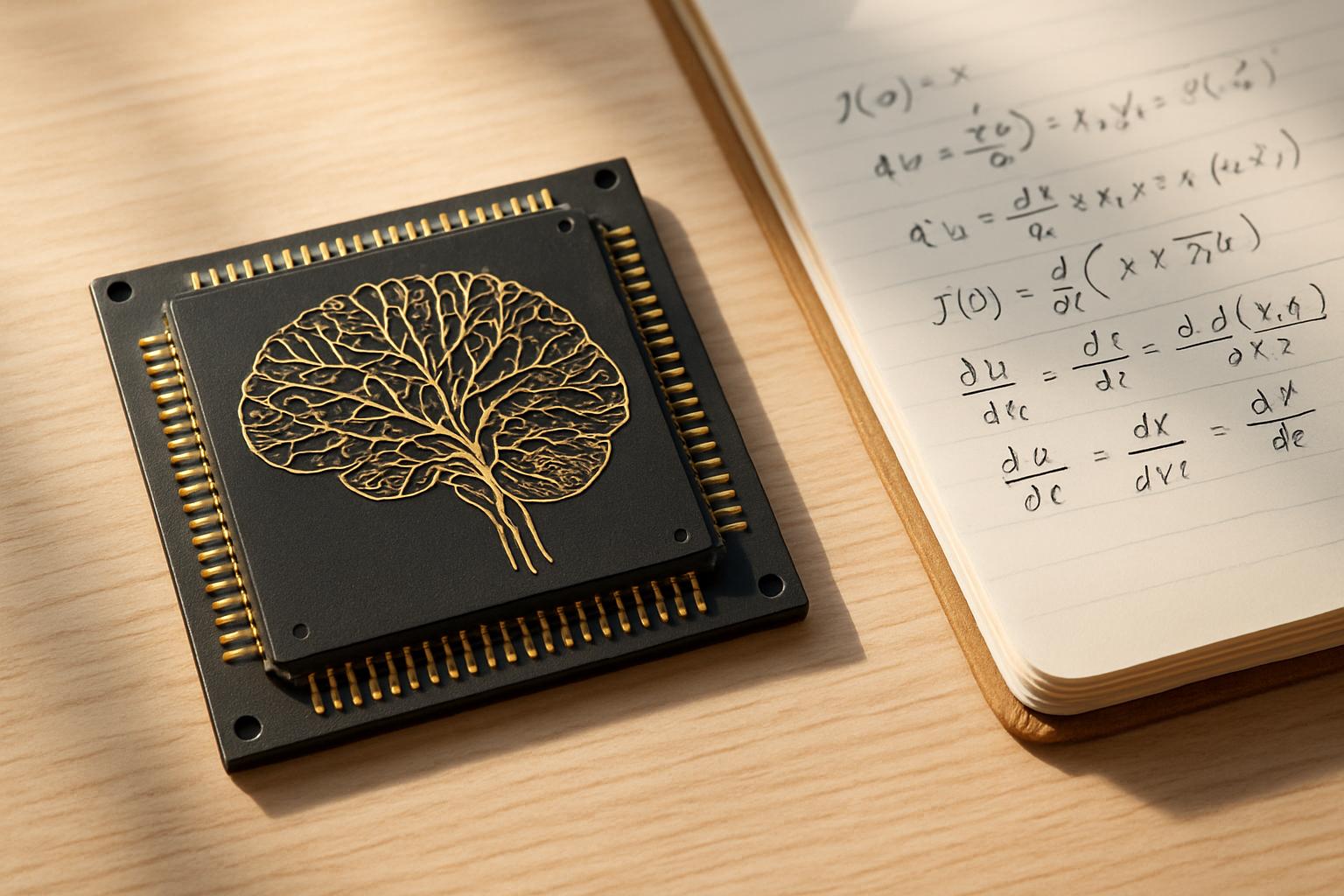
TDK’s 2024 paper introduced a Spin-memristor combining resistive memory with spintronics control. Consequently, the device stores analog weights while consuming nanoamp currents, a prerequisite for true synapse emulation. In contrast, conventional SRAM accelerators leak Energy continuously, inflating battery drain in wearables. TDK quoted a 1/100 Energy reduction during a real-time sound separation demo using 24 devices. However, independent benchmarks are not yet public, leaving open questions about endurance and process yield. Spin-memristor prototypes look promising. Nevertheless, the Analog reservoir may offer complementary strengths.
Analog Reservoir Breakthrough Demo
Hokkaido University collaborated with TDK to fabricate an Analog reservoir chip mimicking cerebellar dynamics. Therefore, the prototype processes time-series sensor data through rich internal chaos, while only a linear readout trains. During CEATEC 2025, volunteers challenged the board at rock-paper-scissors; it adapted within seconds and won half the rounds.
Furthermore, power draw stayed below one milliwatt, underscoring the platform’s Energy advantage for always-on wearables. Researchers highlight instant on-device learning as a differentiator from cloud-connected models that demand connectivity. Analog reservoirs thrive on temporal patterns. Consequently, TDK also pursues a digital DSP to broaden reach.
Edge DSP Commercial Signal
January 2026 saw the launch of SED0112, an always-on DSP sitting beside inertial and microphone sensors. Subsequently, TDK folded the product into its AIsight unit, promising samples for smart glasses makers this year. Unlike Brain-Inspired Hardware experiments, the DSP uses standard CMOS yet borrows lessons from reservoir latency management. Consequently, developers can prototype today while TDK refines Spin-memristor arrays for future generations. Near-term silicon secures design wins. Meanwhile, market context reveals how quickly rivals are moving.
Market Context And Competition
Market researchers disagree on the size of neuromorphic demand, yet all forecast rapid growth. ResearchAndMarkets projects sales reaching 2.2 billion dollars in 2026, up from 1.8 billion a year prior. In contrast, other surveys cite wider ranges because definitions differ between hardware, software, and cloud services.
- Intel Loihi 2 research chip
- BrainChip Akida commercial SoC
- IBM analog in-memory arrays
- Qualcomm ultra-low-power NPUs
- SynSense event-based sensors
Consequently, TDK must prove that Brain-Inspired Hardware delivers unique value rather than incremental gains. Competition will intensify as funding pours in. Nevertheless, technical hurdles could slow every contender.
Challenges Facing Brain Chips
Developing memristive circuits at wafer scale remains difficult. Variability, drift, and yield issues plagued earlier memory cells, and spintronics layers add fabrication complexity. Moreover, integration with CMOS requires new process recipes that foundries must validate at volume. TDK collaborates with Tohoku University prototyping lines, yet production economics still need clarity. Meanwhile, security and lifecycle support challenge any Analog learning device that adapts on the fly. Professionals can deepen their domain knowledge through the AI+ Data Robotics™ certification, which covers adaptive edge architectures. Manufacturing and governance obstacles are nontrivial. Consequently, roadmaps warrant close inspection.
Roadmap And Next Steps
TDK pledges to scale Spin-memristor test arrays into full tiles before 2027. Similarly, the company plans a reservoir evaluation kit for robotics partners next spring. Furthermore, executives hinted at hybrid chips merging digital DSP blocks with Brain-Inspired Hardware cores. Consequently, analysts expect first commercial design wins in narrow sensor hubs before broader adoption. Clear milestones will validate these forecasts. Nevertheless, investors await concrete customer commitments.
Conclusion
Brain-Inspired Hardware has moved from TDK’s labs to credible demonstrations. Nevertheless, prototypes alone will not guarantee market dominance. Consequently, new tiles and reservoir chips must clear manufacturing and reliability gates. Meanwhile, rivals race to deliver alternative Brain-Inspired Hardware for edge inference. Therefore, engineers and product leaders should track TDK’s Brain-Inspired Hardware roadmap for competitive insights.
Professionals seeking an expert edge can enroll in the linked certification and master future Brain-Inspired Hardware ecosystems. Moreover, early adopters may unlock battery life gains that shift consumer expectations across wearables and robotics. Act now to stay informed as shipments approach. Finally, bookmark this space for continuous coverage as data emerges.
Disclaimer: Some content may be AI-generated or assisted and is provided ‘as is’ for informational purposes only, without warranties of accuracy or completeness, and does not imply endorsement or affiliation.


