

AI CERTS
2 hours ago
GPU Utilization and AI Infrastructure Economics
Microsoft, NVIDIA, and cloud providers all report similar patterns. Meanwhile, empirical studies reveal average utilization below 50 percent for many workloads. Such gaps translate into wasted capacity and spiraling Costs. Yet straightforward telemetry pipelines now expose actionable insights. The following analysis details drivers, practices, and next steps.
Rising GPU Utilization Focus
Historically, utilization lived inside developer profiling dashboards. However, surging accelerator budgets changed priorities. NVIDIA’s data center revenue records heightened executive attention. FinOps working groups now publish GPU retention benchmarks.
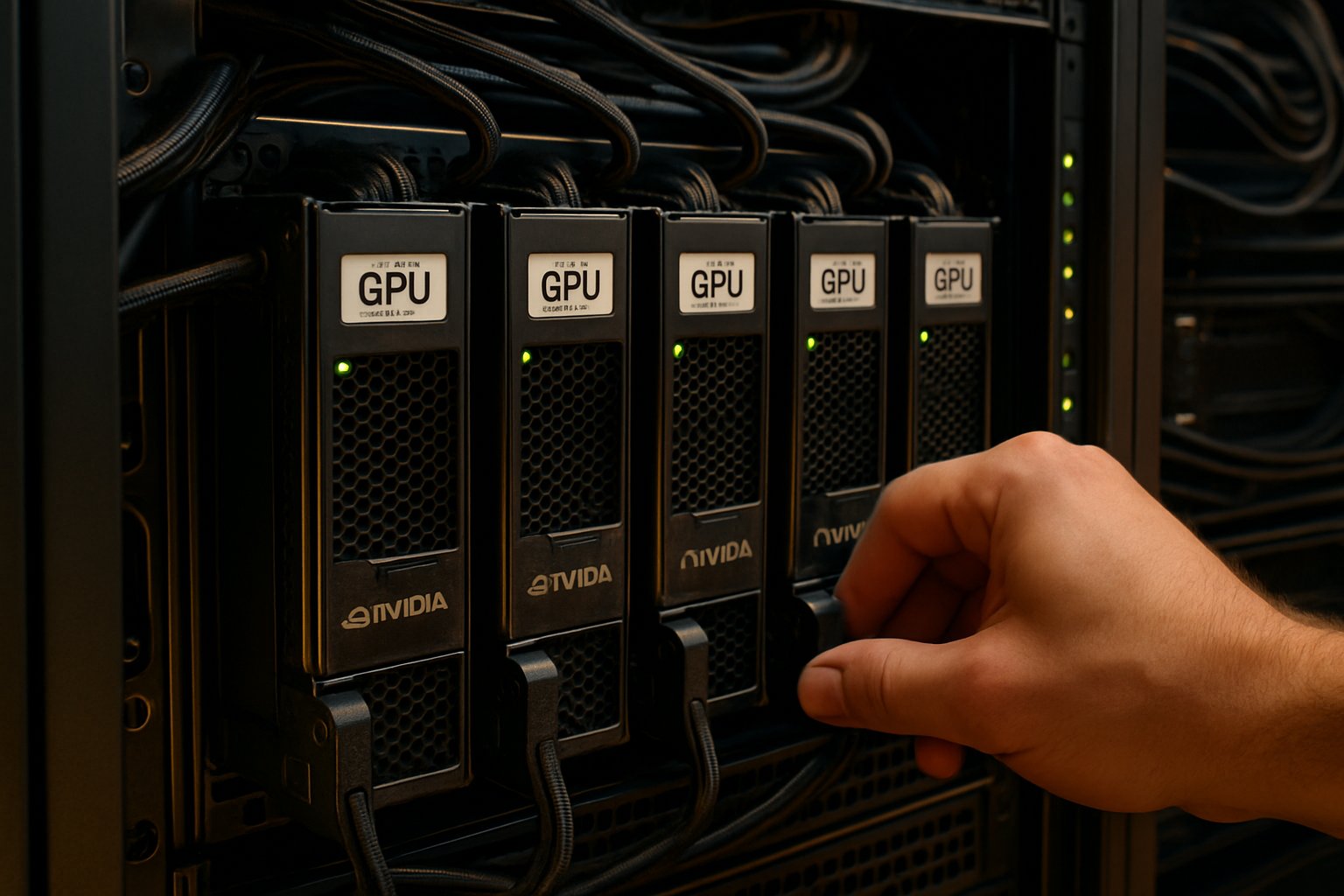
In contrast, many enterprises still observe 15-30 percent average utilization. Microsoft Research attributes most waste to fixable pipeline stalls. “GPU underutilization stems from insufficient GPU computations and interruptions,” the 2024 paper notes. Furthermore, its authors found 85 percent of issues needed minor script tweaks.
Collectively, these findings place utilization at the heart of AI Infrastructure Economics. Consequently, platform leaders view every idle minute as lost Tokens. This perspective sets the stage for metric pipeline investments.
In summary, low utilization represents material Costs and opportunity loss. Nevertheless, robust telemetry can reverse the trend. Let us examine the financial forces accelerating this push.
Budget And Demand Drivers
Capital intensity frames every infrastructure discussion. GPUs command premium pricing across on-prem and cloud markets. AWS charges over three dollars per A100 hour in many regions. Consequently, AI Infrastructure Economics dominates quarterly planning discussions.
Consequently, CFOs link every budget request to utilization projections. Analysts describe this linkage as the “Tokens per dollar” metric. Moreover, FinOps dashboards now display real-time GPU dollar burns.
Jevons Paradox offers an ironic twist. Greater efficiency often triggers even higher aggregate consumption. Therefore, organizations must couple savings with hard allocation limits.
Recent NVIDIA guidance shows idle-GPU waste fell from 5.5 to 1 percent after automation. Google Cloud highlights similar gains using inference routing features.
Efficient clusters lower immediate Costs while protecting future capacity. However, demand elasticity can erase gains without governance. Next, we explore how metric pipelines supply that governance.
Building Reliable Metric Pipelines
Effective pipelines gather high-frequency DCGM counters and scheduler metadata. Additionally, they align GPU_UTIL with job identifiers for accountability. NVIDIA engineers outlined a reference design last November.
Key Telemetry Field Choices
- DCGM_FI_DEV_GPU_UTIL: high-level engine activity percent.
- DCGM_FI_PROF_SM_ACTIVE: granular streaming multiprocessor occupancy.
- DCGM_FI_DEV_FB_USED: frame buffer memory allocation.
- Scheduler ID: Slurm job or Kubernetes pod UID.
Moreover, combining these signals creates a precise GPU idle metric. Subsequently, dashboards calculate per-user waste and SLA compliance. This visibility strengthens AI Infrastructure Economics discussions with developers and finance. It replaces subjective arguments with objective data.
Accurate telemetry unlocks shared truth across disciplines. Consequently, teams can automate responses confidently. The following section reviews those automations.
Automation Unlocks Significant Savings
Once metrics exist, policy engines act. Idle reapers reclaim GPUs after configurable inactivity windows. Run:AI schedulers pack fractional workloads using MIG. Accordingly, CFO dashboards embed AI Infrastructure Economics metrics alongside revenue indicators.
Consequently, NVIDIA’s fleet saved thousands of GPU-hours weekly. HeteroScale reported a 26.6-point utilization jump using autoscaling policies.
AWS Compute Optimizer now surfaces rightsizing guidance driven by accelerator telemetry. Therefore, engineers receive actionable recommendations during pull requests.
These tools reinforce AI Infrastructure Economics by linking utilization to immediate Costs savings. Moreover, they shorten experiment queues, improving developer morale. Yet unchecked automation may disrupt latency-sensitive inference.
Proper guardrails balance savings with reliability. Nevertheless, several technical caveats deserve scrutiny. We dissect those limitations next.
Limits And Operational Tradeoffs
DCGM_GPU_UTIL can mislead during memory-bound kernels. Accordingly, teams monitor SM_ACTIVE and memory bandwidth together.
Furthermore, aggressive preemption might violate service agreements. Google advises separate pools for low-latency inference.
Jevons Paradox resurfaces when freed capacity invites extra experimentation. Therefore, policy councils must set Tokens and budget ceilings.
Cross-vendor metric discrepancies complicate benchmarking. Nevertheless, open standards efforts are underway.
Each limitation highlights the need for contextual judgment. Consequently, success depends on balanced strategy. The roadmap below outlines practical steps.
Actionable Roadmap For Teams
Start by auditing current telemetry coverage. Include at least GPU_UTIL, SM_ACTIVE, and job identifiers. Strong AI Infrastructure Economics discipline underpins each action item.
Next, publish shared dashboards for engineering and finance. Additionally, set idle-time objectives and review them weekly.
- Define reclaim thresholds with stakeholder sign-off.
- Pilot idle reaper on non-production queues.
- Integrate rightsizing alerts into pull requests.
- Track Costs, Tokens, and utilization together.
- Reevaluate policies quarterly against growth projections.
Professionals can enhance their expertise with the AI Cloud Specialist™ certification. Moreover, such credentials strengthen AI Infrastructure Economics conversations.
Jevons Paradox remains in play, so enforce hard capacity budgets. Consequently, efficiency gains will materialize financially.
A disciplined roadmap converts metrics into money. In contrast, neglect invites runaway spending.
GPU utilization has evolved from a profiler statistic to a board-level KPI. Moreover, recent case studies prove measurable returns. Accurate pipelines, thoughtful automation, and governance anchor sustainable AI Infrastructure Economics. Consequently, organizations save Costs, accelerate research, and reduce energy footprints. Nevertheless, teams must watch metric caveats and Jevons Paradox dynamics. Tokens, budgets, and performance targets require continual alignment. Therefore, start collecting enriched telemetry today. Finally, explore certifications to deepen expertise and drive strategic value.
Disclaimer: Some content may be AI-generated or assisted and is provided ‘as is’ for informational purposes only, without warranties of accuracy or completeness, and does not imply endorsement or affiliation.


