

AI CERTS
1 hour ago
Global AI Governance debate heats up over U.S. data-center pause
The proposal lands amid rising public skepticism. A 2025 Pew survey found half of Americans feel more worried than excited about AI. Moreover, more than 100 municipalities had already enacted local pauses. Therefore, a federal response seemed inevitable. However, the scale of the suggested freeze stunned many observers.
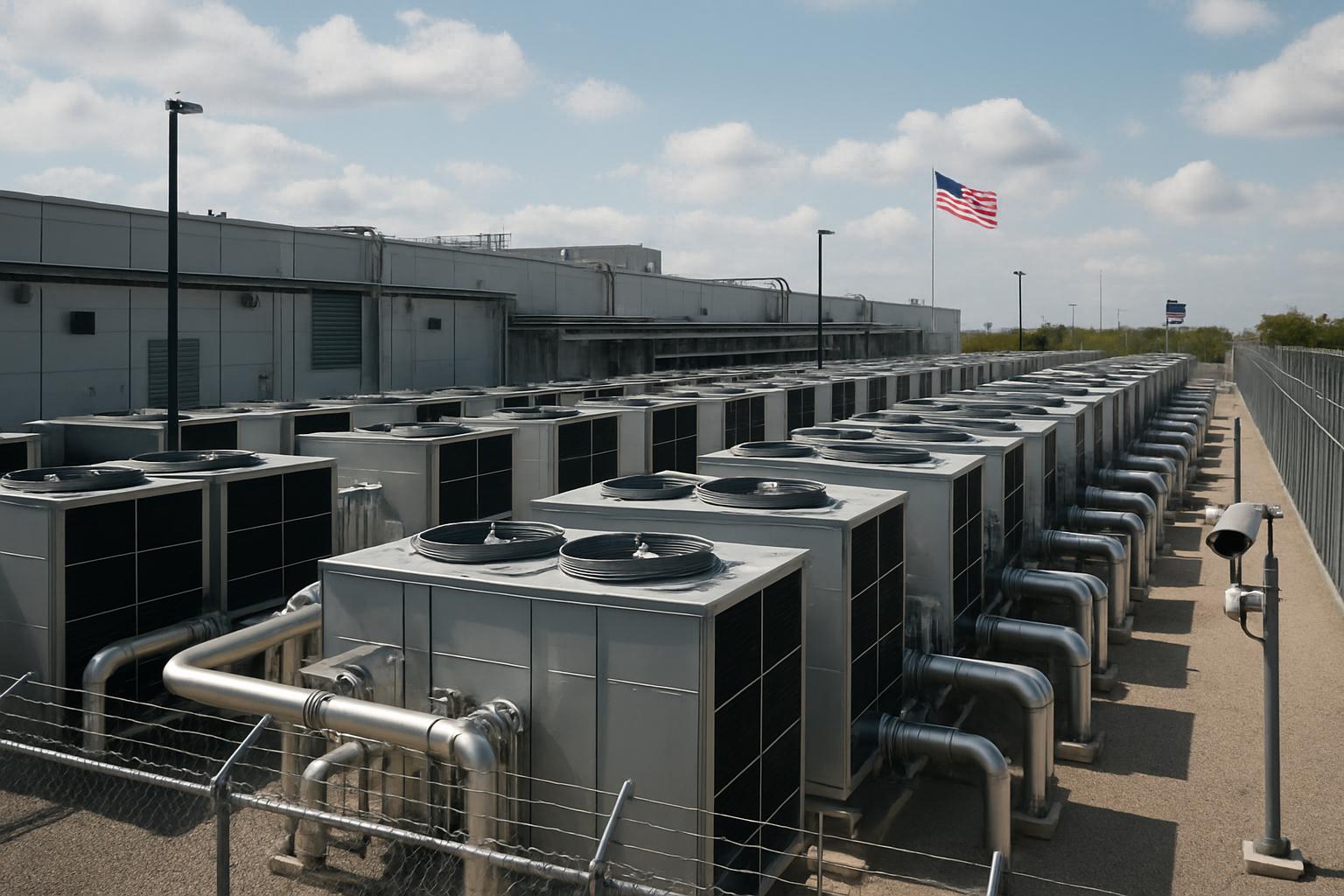
Federal Data Center Pause
The bill blocks construction or upgrades on facilities drawing over 20 megawatts until Congress acts. Additionally, it forbids exporting high-end AI hardware to countries lacking equivalent protections. Sanders argues these steps buy time for comprehensive safety reviews. In contrast, the Data Center Coalition warns of throttled internet capacity and lost revenue. Nevertheless, the legislation squarely inserts Global AI Governance into America’s economic debate.
Under the act, Congress must approve laws covering product safety, labor fairness, and environmental impact before lifting the pause. Consequently, developers and utilities would need federal certification for future projects. Professionals seeking to navigate the coming rules can strengthen credentials with the AI Government Specialist™ certification.
These requirements highlight competing priorities. However, they also underscore Washington’s commitment to precaution. This tension propels the discussion toward broader governance frameworks.
Global AI Governance Outlook
Many analysts view the moratorium as a testing ground for worldwide standards. Furthermore, the export ban attempts to prevent a race to lenient jurisdictions. Such extraterritorial leverage mirrors semiconductor sanctions, yet enforcement will prove complex. International allies may welcome unified guardrails, yet rivals could accelerate their own deployments.
Therefore, the final shape of International cooperation depends on negotiations that balance innovation with oversight. Regulation harmonized across borders would reduce compliance costs for cloud providers. Nevertheless, geopolitical friction complicates consensus. Each government wants both safety and strategic advantage.
These dynamics suggest any U.S. pause could ripple through supply chains. Consequently, executives must watch parliamentary timelines abroad as closely as Capitol Hill deliberations.
Economic Impact Debates
Industry groups cite severe costs. According to their estimates, a freeze could threaten hundreds of thousands of jobs and billions in taxes. Meanwhile, backers counter that unregulated expansion risks even larger displacements. Sanders released a 2025 report warning AI might eliminate nearly 100 million U.S. positions within ten years.
Moreover, cloud providers recently signed a White House pledge to fund grid upgrades. They hope voluntary action will avert legislative barriers. Nevertheless, lawmakers remain skeptical, arguing corporate promises lack binding enforcement. The prospect of stalled capacity raises investor anxiety, yet consumer advocates cheer the precaution.
Projected Climate Impact Risks
The Center for Biological Diversity projects data centers could consume 12% of U.S. electricity by 2030. Consequently, sector emissions might swallow 44% of the nation’s 2035 power-sector carbon budget. In contrast, industry-commissioned studies claim renewable purchases will offset much of that load.
Regardless, water and land footprints worry local planners. Therefore, municipalities already impose conditional approvals tied to renewable sourcing. Such precedents bolster calls for stricter federal oversight within broader Global AI Governance conversations.
These environmental concerns elevate climate policy within the AI discourse. Subsequently, energy regulators must coordinate with technology agencies.
Widespread Labor Displacement Risks
Labor unions echo Sanders by predicting automation waves across logistics, customer support, and coding. Meanwhile, tech leaders promise new roles in model supervision and data labeling. Pew data shows persistent public anxiety despite those assurances.
Consequently, the bill mandates worker-impact studies before approving large systems. Additionally, revenue-sharing proposals seek to distribute AI productivity gains. Whether such measures materialize internationally remains uncertain.
These unresolved labor questions fuel heated budget hearings. However, bipartisan agreement on worker retraining funds could emerge as a compromise.
Shifting International Policy Dynamics
Europe’s AI Act provides an existing template. Meanwhile, China tightens export controls on advanced chips. Therefore, multiple regimes already influence deployment timelines. A U.S. moratorium would add another layer, pushing multinationals to align divergent rules.
Furthermore, smaller states might adopt U.S. standards to attract compliant investments. Conversely, jurisdictions favoring rapid growth could bypass restrictions. Such fragmentation challenges uniform Global AI Governance. Nevertheless, diplomatic forums like the OECD and G7 continue drafting voluntary principles.
Coordination successes in cybersecurity treaties suggest gradual convergence is possible. Consequently, observers recommend early engagement with trade partners to avoid conflicting mandates.
Technical Pause Verification Challenges
Enforcing a global freeze demands reliable monitoring. Satellite imagery tracks new construction, yet covert retrofits remain harder to spot. Moreover, remote GPU clusters can be hidden within mixed-use facilities below the 20-megawatt threshold.
Therefore, auditors will need power-grid data, chip shipment manifests, and cloud telemetry. International inspectors may require access similar to nuclear safeguards. However, companies fear exposure of proprietary architectures.
These obstacles illustrate why some experts prefer graduated Regulation over blanket moratoria. Nevertheless, improved transparency protocols could satisfy both innovation and safety goals.
Prospects And Next Steps
Capitol Hill watchers rate the bill’s immediate passage as unlikely. However, its introduction already shapes committee agendas. Drafts of narrower energy-efficiency requirements and export reporting rules circulate among staffers.
Meanwhile, stakeholders prepare for hearings. Expect economists, climate scientists, and workforce experts to testify on costs and benefits. International envoys will likely outline compatibility concerns. Companies gaining early compliance skills may secure competitive advantage.
- March 25 2026: Bill introduced; immediate media scrutiny
- 100+ local moratoria: Existing community actions cited as precedent
- 12% electricity share: High-end projection for 2030 data center demand
- 50% public concern: Pew survey reflects nationwide anxiety
These milestones frame the evolving narrative. Consequently, analysts urge leaders to model scenarios under varied policy horizons.
Agencies drafting companion measures frequently consult certified specialists. Professionals can validate their expertise through the AI Government Specialist™ course, positioning themselves at the forefront of Global AI Governance strategy.
Legislative momentum will persist through election season. Therefore, organizations must integrate regulatory intelligence into product roadmaps now.
The issues discussed above converge on a central theme: responsible progress. Meanwhile, activists and investors monitor every amendment. Whether the moratorium survives intact or evolves into targeted rules, the debate redefines acceptable risk in artificial intelligence deployment.
Consequently, leaders who anticipate stricter Regulation will adapt more smoothly. International peers will gauge U.S. resolve, shaping their own paths accordingly.
Conclusion: The Artificial Intelligence Data Center Moratorium Act thrusts Global AI Governance into mainstream policy. While Sanders underscores existential threats, industry warns of economic fallout. Transitioning responsibly requires balanced energy, labor, and security measures. Moreover, verification hurdles demand technical innovation and diplomatic trust. Nevertheless, proactive planning can convert uncertainty into opportunity. Organizations should monitor legislative signals, engage in standards forums, and upskill through programs like the AI Government Specialist™ certification. Act now to influence rules that will guide artificial intelligence for decades.
Disclaimer: Some content may be AI-generated or assisted and is provided ‘as is’ for informational purposes only, without warranties of accuracy or completeness, and does not imply endorsement or affiliation.


