

AI CERTS
2 hours ago
Pentagon Bets Big On Military AI Integration
Nevertheless, questions about security, governance, and ethics intensified immediately. Meanwhile, venture investors praised the signal sent to the broader Defense technology ecosystem. Military AI now sits at the core of war-fighter modernization, not on the edge. However, clarity on contract value, timelines, and safeguards remains elusive. Therefore, professionals must track both capability gains and persistent gaps.
Military AI Strategy Shift
January’s AI Acceleration Strategy cemented the vision. Accordingly, officials promised faster experimentation, streamlined procurement, and cultural reform. The document used “AI-first” repeatedly, underscoring intent. Previously, AI served discrete analytic roles. In contrast, the new paradigm embeds models inside every operational loop. Consequently, commanders expect sensor data to route through generative agents before decisions. That shift mirrors commercial workflow automation trends. Furthermore, the strategy emphasizes multi-vendor resilience to avoid lock-in. Pentagon advisors argue competition drives quality and cost control. Nevertheless, critics warn multi-vendor overlap complicates accreditation and patching cycles.
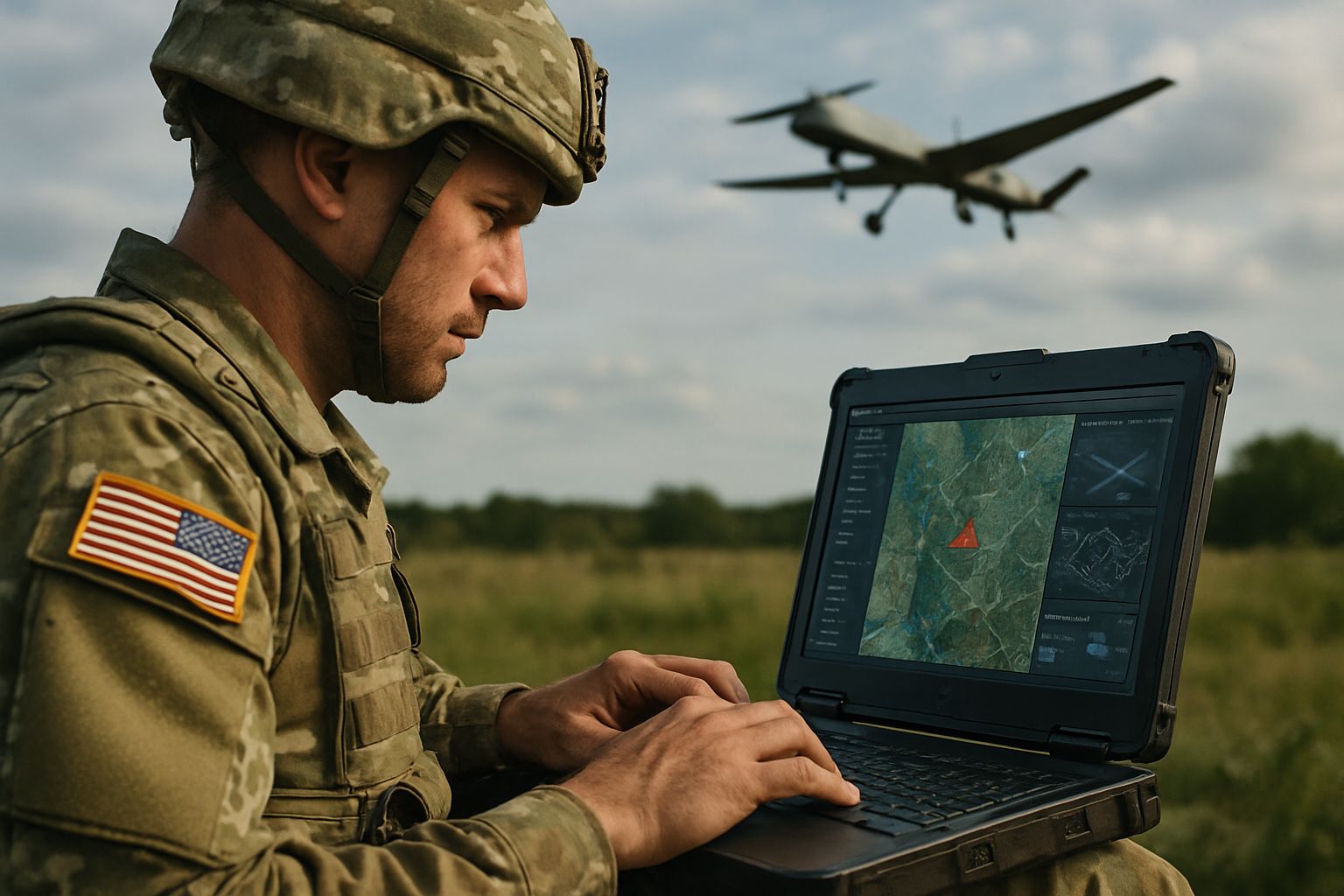
Two key milestones enabled momentum. First, GenAI.mil debuted in December 2025 as a unified marketplace for cleared models. Subsequently, over one million personnel issued tens of millions of prompts inside months. Second, the May agreements expanded access from Impact Level 5 to Levels 6 and 7. Therefore, secret and top-secret data can now flow through external models under tight controls. These developments signal irreversible commitment. However, they also reveal major oversight challenges.
These strategic pivots redefine information dominance. However, practical execution hurdles will test intent in coming quarters.
Platform Rollout Details
GenAI.mil operates as an orchestration layer across cloud zones. Moreover, it provisions role-based access, logging, and agent libraries. Seven vendors—SpaceX/xAI, OpenAI, Google, NVIDIA, Reflection, Microsoft, and Amazon—won initial clearances. Meanwhile, Anthropic remains sidelined amid ongoing litigation. Reporters still lack contract values or performance metrics. Nevertheless, officials insist capability drops will start before fiscal year end.
The platform supports rapid agent construction through low-code tools. Consequently, logisticians can script convoy planners within hours. Intelligence analysts prototype imagery triage pipelines just as quickly. Additionally, DevSecOps teams integrate model outputs into existing command-and-control dashboards.
- 1.1–1.3 million users onboarded within months
- Hundreds of thousands of agents created across functions
- Impact Level 6 and 7 hosting approved for all seven vendors
However, external audits of those statistics remain pending. Therefore, independent validation will influence budget renewals.
The rollout’s scale impresses observers. Yet missing transparency on costs and telemetry controls clouds enthusiasm.
Benefits And Metrics
Advocates highlight measurable gains. First, decision cycles shrink from days to minutes, according to internal simulations. Moreover, early field trials showed 23 percent faster targeting updates in contested airspace. Consequently, operational tempo improved without additional platforms. Military AI amplifies human judgment rather than replacing it, leaders claim. Additionally, multi-vendor architecture bolsters resilience against single-point failure.
Analysts also cite recruiting advantages. Younger service members view cutting-edge software as a retention incentive. Meanwhile, the commercial sector benefits through spillover innovations. Furthermore, NVIDIA reports accelerated demand for secure inference hardware. These metrics attract congressional attention as budget season nears.
Nevertheless, headline numbers lack peer-review. Independent laboratories request raw logs to confirm prompt counts and agent efficacy. In contrast, classified constraints complicate data sharing. Therefore, a transparent yet secure audit framework remains a priority.
The preliminary metrics paint an optimistic picture. However, durable credibility demands third-party verification soon.
Risks And Tensions
Security stands atop the risk ledger. Pushing commercial models into secret environments introduces leak pathways. Moreover, model telemetry could expose mission patterns if misconfigured. Consequently, cybersecurity operators demand ironclad isolation. Additionally, Autonomous Weapons critics fear algorithmic drift toward lethal autonomy. Civil-liberties groups cite potential Surveillance overreach inside domestic support missions.
Legal friction compounds complexity. The Pentagon labeled Anthropic a supply-chain risk in March. Subsequently, a federal judge issued an injunction, questioning procedural fairness. Therefore, vendor selection now carries litigation exposure. Meanwhile, internal pushback at Google underscores workforce activism. Consequently, corporate policies could shift unexpectedly.
Ethical doctrine lags technical pace. Nevertheless, the Defense Innovation Board is drafting updated human-in-the-loop guidelines. Until then, commanders rely on existing rules of engagement. However, ambiguous accountability for agent output persists. Multi-vendor ecosystems further blur responsibility lines.
These intertwined risks demand vigilant governance. However, coordinated policy updates remain incomplete.
Governance Road Ahead
Regulators must finalize model accreditation standards for Impact Level 7. Moreover, they need continuous monitoring rules for drift and poisoning. Consequently, a joint CDAO and NSA task force now drafts a control catalog. Additionally, acquisition staff seek template clauses for data retention and update cadence. Meanwhile, congressional committees schedule classified hearings on oversight gaps.
Industry cooperation will shape outcomes. Vendors propose using on-premise parameter storage with zero telemetry. In contrast, some operators prefer periodic fine-tuning to sustain accuracy. Therefore, compromise frameworks could involve differential privacy and strict audit logging. Furthermore, allies watch closely, hoping to reuse templates within NATO networks.
Ultimately, success hinges on transparent metrics, enforceable contracts, and responsive policy loops. Nevertheless, sustained funding will depend on demonstrable battlefield impact.
Governance initiatives have clear momentum. However, implementation details will determine actual trust.
Skills For Professionals
The AI-first pivot creates urgent skill gaps within Defense and industry. Consequently, program managers must understand model accreditation, prompt engineering, and secure deployment. Moreover, acquisition officers need fluency in multi-vendor orchestration clauses. Professionals can deepen expertise with the AI in Government™ certification. That curriculum covers compliance, impact-level security, and mission integration.
Engineers should master secure inference patterns across Autonomous Weapons command chains. Additionally, intelligence analysts will require advanced Surveillance data fusion techniques. Meanwhile, ethicists must translate philosophy into clear operational checklists. Therefore, cross-disciplinary learning becomes mandatory, not optional.
Hiring managers already list “Military AI platform experience” in vacancy notices. Moreover, salary premiums mirror cloud migration waves a decade earlier. Consequently, early adopters gain leverage inside and outside government.
Continuous learning now underpins operational readiness. However, structured certifications accelerate that journey.
These evolving roles redefine career pathways. Nevertheless, credentialed professionals will steer safer, smarter adoption.
Conclusion
The Pentagon’s latest move positions Military AI at the heart of United States warfare strategy. Moreover, GenAI.mil and the IL6/IL7 agreements promise faster, smarter, and more resilient operations. Nevertheless, security, legal, and ethical uncertainties persist. Therefore, transparent governance and rigorous audits remain essential. Professionals who upskill early, especially through targeted programs like the AI in Government™ certification, will shape the future landscape. Consequently, readers should explore relevant training, engage in policy discussions, and prepare for accelerated change.
Disclaimer: Some content may be AI-generated or assisted and is provided ‘as is’ for informational purposes only, without warranties of accuracy or completeness, and does not imply endorsement or affiliation.


