

AI CERTS
53 minutes ago
Genki AI Debut Signals New Era of AI Creative Infrastructure
However, big promises invite scrutiny. Early beta data, shared by Genki, cites 3.2 percent conversion rates and $3,250 first-week sales. Independent confirmation remains pending, yet the numbers illustrate demand for faster monetization. Moreover, legal and logistics complexities still challenge creators who depend on print-on-demand workflows. Therefore, understanding how Genki positions its stack and compares with incumbents is essential. The analysis also reveals how the company manages risk for professionals evaluating emerging AI commerce platforms.
Global AI Creative Infrastructure Context
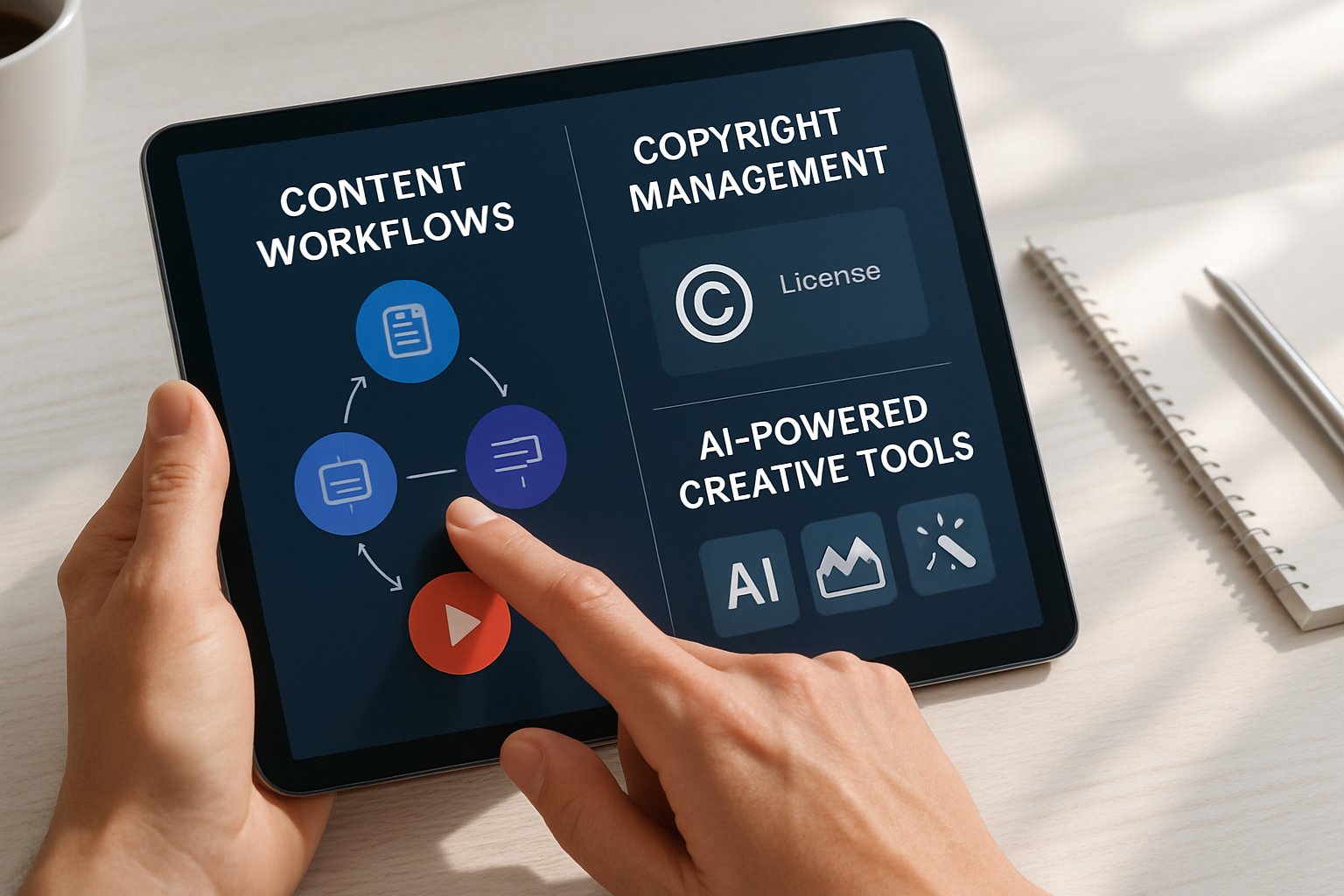
Generative tools once lived in isolation. Consequently, creators stitched together design, listing, and shipping services manually. Industry voices now describe a pivot toward end-to-end stacks branded as AI Creative Infrastructure. These stacks integrate generation, compliance, analytics, and commerce within a single cloud workflow.
Market watchers link the shift to funding patterns. In 2025, investors poured billions into agentic workflow startups. Moreover, established platforms like Adobe and Runway rebranded products as infrastructure rather than tools. Analysts therefore expect infrastructure revenue to surpass standalone generation revenue by 2027.
The data confirms momentum behind consolidated creative systems. Meanwhile, Genki enters the scene claiming a fully autonomous stack. Consequently, our next section dissects its launch details.
Genki AI Launch Details
Genki AI went live on 1 May 2026 with a multilingual site and a GlobeNewswire press release. The company positions its platform as AI Creative Infrastructure that compresses design-to-storefront time into minutes. Furthermore, it opened a Global Creator Recruitment Program offering free credits for early adopters.
Product messaging highlights an autonomous operation engine. Consequently, creators can enter text or artwork and receive 2D or 3D product renders. Automated copy localization and pricing follow. Finally, one-click publishing pushes listings to Amazon, Shopify, TikTok Shop, and Genki Mall.
Genki cites beta metrics including 3.2 percent conversion and $3,250 in first-week sales for top collections. However, the figures remain self-reported and lack external validation. Nevertheless, they illustrate the platform’s commercial ambition.
Early traction signals potential yet requires careful verification. Therefore, we next examine the broader impact on the Creator Economy.
Creator Economy Impact Analysis
The Creator Economy now encompasses over 50 million individuals earning online income from content or products. Moreover, recent reports peg total market value between $100 billion and $250 billion, depending on methodology. Such scale attracts infrastructure providers that promise faster merchandising.
Genki argues that AI Creative Infrastructure lowers barriers more than standalone marketplaces. In contrast, traditional platforms still require manual mockups and copywriting. Consequently, small teams chasing timely trends lose momentum before products launch.
IP ownership also stands central. Genki’s statement stresses long-term IP value, aiming to move creators away from ad-revenue dependence. Furthermore, the platform offers revenue-share options, though final terms remain unpublished.
These dynamics position Genki as a catalyst within the expanding Creator Economy. Next, we explore how autonomous operations and fulfillment support that promise.
Autonomous Operations And Fulfillment
Genki brands its engine as autonomous, meaning chained AI agents execute tasks without constant prompts. The workflow spans design, listing generation, pricing, tax estimation, and shipping label creation. Consequently, operations overhead drops sharply for resource-constrained teams.
Integrated fulfillment remains tougher. Genki partners with print-on-demand factories that produce items only after a sale. Moreover, it claims worldwide delivery in 7-14 days, although partner names are not public. Therefore, quality control and customs compliance will test the model. Such integration exemplifies AI Creative Infrastructure applied to physical commerce.
- Design-to-product rendering completes in under one minute, according to company demos.
- Listing localization supports 20 languages, covering 90 % of global ecommerce volume.
- Automated tax calculation spans 200 jurisdictions, reducing manual research.
- Integrated tracking notifies buyers through platform or channel APIs.
Taken together, autonomous operations and reliable fulfillment could free creators to focus on branding. Nevertheless, rivals are racing to offer similar pipelines, which we review next.
Competitive Landscape And Comparables
Genki enters a busy arena already populated by Runway, Artlist, Shutterstock, and Shopify plugins. Moreover, each contender markets its suite as AI Creative Infrastructure, though feature depth differs. Runway excels in video, while Shopify relies on third-party apps for design automation.
In contrast, Genki offers a vertically integrated stack that rolls design and IP management into one bill. Storefront hosting and logistics sit inside the same interface. Consequently, decision makers must weigh breadth against specialization. Pricing also varies; Genki offers a freemium plan with credit-based upgrades.
Expert commentary suggests multiple winners may coexist. However, platforms that secure clear IP policies and robust fulfillment partners will likely dominate. Therefore, transparency may trump raw feature count. Investors track which AI Creative Infrastructure platforms secure the strongest supply chains.
Competitive forces will push Genki to validate its claims quickly. Accordingly, the next section reviews key risks and mitigation strategies.
Risks Outlook And Recommendations
Legal uncertainty around training data persists. Copyright offices worldwide still question AI-generated works lacking human authorship. Consequently, creators risk takedowns if underlying data sets include protected material.
Genki states that users retain IP over outputs, yet its Terms remain undisclosed. Therefore, professionals should review contractual indemnities before onboarding. Moreover, global tax and customs rules create operational complexity that autonomous systems must navigate.
On the technical side, brand differentiation matters. Mass AI product flooding could erode margins. Consequently, creators must balance automation with narrative storytelling.
Robust AI Creative Infrastructure demands transparent contracts and audited data. Risks are manageable with clear contracts, unique branding, and verified logistics. Finally, our article outlines professional development pathways supporting this evolving field.
Certification Pathways For Professionals
Skill depth will decide career prospects as AI systems permeate commerce. Moreover, marketers who can align model capabilities with brand strategy gain advantage. Professionals can enhance their expertise with the AI+ Marketing™ certification.
The course covers ethical data sourcing, autonomous operations design, and cross-border fulfillment compliance. Consequently, graduates can evaluate platforms like Genki more rigorously. Additionally, companies benefit from staff who translate AI Creative Infrastructure promises into audited workflows.
Targeted certifications bridge the gap between hype and accountable deployment. With learning pathways defined, we close with key insights.
Conclusion And Next Steps
Genki AI’s debut underscores a turning point for AI Creative Infrastructure in commerce. The platform bundles generation, IP management, operations automation, and fulfillment into a single workflow. Consequently, creators can test ideas globally before competitors even render their first mockup.
Nevertheless, legal clarity, logistics transparency, and brand differentiation remain decisive. Therefore, professionals should scrutinize contracts, demand partner disclosures, and invest in narrative craft. Moreover, pursuing structured learning, such as the linked certification, equips teams to harness this emergent infrastructure responsibly.
Stay informed as standards evolve, and explore certifications that turn knowledge into measurable advantage.
Disclaimer: Some content may be AI-generated or assisted and is provided ‘as is’ for informational purposes only, without warranties of accuracy or completeness, and does not imply endorsement or affiliation.


