

AI CERTS
43 minutes ago
ServiceNow’s Workforce Automation Playbook for Agentic Scaling
Readers will gain a strategic perspective on deployment risks, governance gaps and competitive pressures. Finally, a compact Playbook outlines next steps toward production readiness. However, hype alone cannot address service desk pain or software provisioning delays. Therefore, we ground the discussion in documented milestones and analyst commentary. By the end, executives should understand whether agentic Workforce Automation can truly drive durable value.
Agentic AI Core Concepts
Agentic AI extends standard bots by planning multi-step tasks, reasoning, and learning from outcomes. Instead of single actions, agents coordinate with peers and sometimes recruit fresh agents for niche tasks. Furthermore, the vendor brands its orchestration layer as an AI agent control tower that supervises every move. Auditable logs, role-based permissions, and continuous evaluations form the governance backbone in this model. Consequently, enterprise teams can observe throughput, error rates, and cost profiles from one console.
Consequently, Workforce Automation emerges when those agents tackle enterprise-wide duties collectively. Agentic AI therefore promises flexible yet governable automation. However, benefits mean little without tangible implementation frameworks. The next section explores the tower’s core advantages.
AI Control Tower Benefits
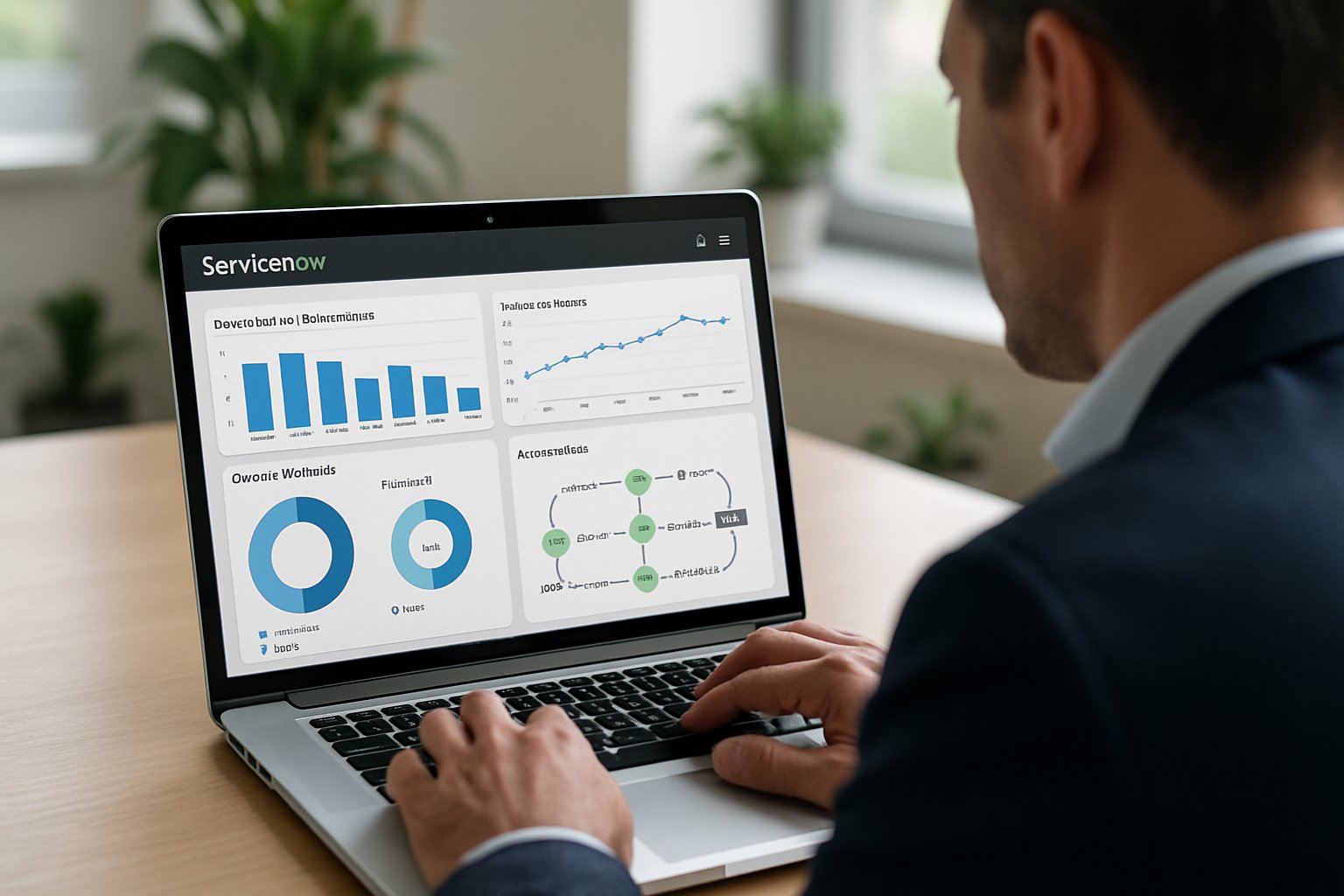
The Control Tower concept centralizes lifecycle management for thousands of agents across domains. Moreover, it delivers policy enforcement, version tracking, and performance dashboards without custom code. In contrast, fragmented scripts often duplicate credentials and hide failures inside email alerts. Vendor metrics illustrate the Workforce Automation impact: 97% of software provisioning requests now complete without human intervention. Meanwhile, service desk volume reportedly dropped nearly 40% in internal deployments.
- Unified auditing across IT, HR, and customer channels
- Role-based controls aligned with regulatory mandates
- Near real-time agent health scores and cost analytics
- Low-code policy updates pushed instantly
These benefits showcase measurable efficiency gains. Nevertheless, real success depends on field execution by autonomous teams. Let us examine how an Autonomous Workforce performs in production.
Autonomous Workforce In Action
An Autonomous Workforce treats coordinated agents as employees with defined roles and KPIs. Human managers coach agents, escalate exceptions, and retire under-performers through dashboard controls. Additionally, Yokohama release added no-code Agent Studio, letting analysts describe outcomes rather than write flows. Subsequently, thousands of pre-built agents became available across IT, HR, and security. Early adopters report rapid Scaling from pilot to enterprise scope because orchestration handles inter-agent dependencies.
However, analysts warn that each new agent expands the attack surface and operational overhead. Together, Workforce Automation moves beyond simple macros. Professionals can enhance their expertise with the AI Project Manager™ certification. Autonomous teams therefore accelerate ticket resolution and provisioning cycles. Yet, security and governance remain pivotal. The following section reviews associated risks.
Security And Governance Risks
Second-order prompt injection demonstrates how chained agents can leak sensitive data if default settings remain open. Therefore, experts advise supervised execution modes, stricter input validation, and continuous red teaming. Moreover, every new integration requires threat modeling against privilege escalation and lateral movement. The platform answers with policy templates, least-privilege defaults, and the AI Control Tower’s alerting.
Nevertheless, independent audits are scarce, so buyers should demand evidence beyond vendor slides. Regular reviews verify Workforce Automation remains compliant during stress events. Effective governance limits blast radius and builds trust among regulators. Consequently, market adoption hinges on diligent risk mitigation. Competitive dynamics further influence investment decisions.
Market Context And Competition
Research firms value the hyperautomation market at roughly $26 billion by 2027 with double-digit CAGR. UiPath, Automation Anywhere, and Microsoft now advertise agentic features inside their automation suites. Additionally, Salesforce and SAP integrate large language models into workflow engines. In contrast, the Now Platform offers native orchestration and a single data model across departments.
This positioning anchors Workforce Automation within a single data model. Analysts see the $2.85 billion Moveworks acquisition as a decisive move to secure conversational front ends. However, integration complexity, licensing costs, and talent availability could blunt competitive momentum. Competitive pressures demand disciplined road-maps and proven ROI. Executives therefore need a practical Playbook for adoption.
Strategic Adoption Playbook Steps
A phased Playbook reduces risk while demonstrating incremental value.
- Define high-volume pain points with clear success metrics.
- Prototype with three to five agents under strict governance.
- Establish an oversight board including security, finance, and HR.
- Scale agents incrementally, monitoring cost per transaction weekly.
- Automate continuous training and retirement processes.
Gradual Scaling maintains control while proving business impact. Moreover, cross-functional playbooks ensure agents interact safely with existing Operations tooling. ServiceNow recommends starting with IT service requests, then expanding to finance workflows. Consequently, aligned metrics let executives compare manual and automated Operations side by side. That phased path evolves Workforce Automation responsibly. This structured approach safeguards budgets and credibility. Key lessons next summarize success factors.
Key Takeaways And Next
Workforce Automation via agentic AI offers measurable productivity and better user satisfaction. However, benefits rely on disciplined architecture, robust security, and phased Scaling. ServiceNow, through its Moveworks integration and Control Tower, delivers a differentiated orchestration stack. Nevertheless, independent validation, cost modeling, and workforce reskilling remain essential for sustainable Operations. Leaders should adopt the outlined framework, invest in oversight, and pursue specialized training paths. Therefore, earning the earlier linked AI Project Manager™ credential strengthens governance competence and change leadership.
In closing, agentic Workforce Automation can offload repetitive work, accelerate ticket closure, and surface rich analytics. Moreover, a unified control tower and lifecycle governance reduce shadow scripts and audit gaps. Yet, unchecked agent proliferation introduces security exposure and higher cognitive load. Consequently, executives must enforce stage gates, observe live metrics, and retire ineffective agents promptly.
ServiceNow provides opinionated tooling, yet cross-vendor ecosystems demand open standards and vigilant staff. Start small, measure relentlessly, and scale responsibly, then showcase results to secure enduring budget support. Finally, invest in accredited paths such as the linked AI Project Manager™ course to sharpen strategic automation leadership.
Disclaimer: Some content may be AI-generated or assisted and is provided ‘as is’ for informational purposes only, without warranties of accuracy or completeness, and does not imply endorsement or affiliation.


