

AI CERTS
2 months ago
Autonomous Agent Workflows: Event Triggers Redefine Enterprise AI
Therefore, leaders need clear guidance before granting software full autonomy. The following analysis blends recent product news, quantified benefits, and looming risks.
Furthermore, we highlight certification paths that upskill managers deploying these systems. Meanwhile, rivals such as Salesforce, AWS, and Microsoft are racing to match capabilities. In contrast, Reactive Software frameworks such as LangChain push deeper runtime controls into code.
Autonomous Agent Workflows Rise
Research from Microsoft explains an autonomous agent as a system that reasons, uses tools, and acts unprompted.
Consequently, pairing that reasoning with event listeners produces immediate value once Autonomous Agent Workflows react to data.
Forrester's 2026 study, commissioned by Writer, found a 333% ROI when organizations scaled such automation.
However, experts warn that machine-speed actions demand equally rapid oversight.
Enterprises see faster execution and early ROI. Nevertheless, autonomy amplifies governance stakes.
Therefore, understanding event listeners becomes essential.
Defining Event Triggers
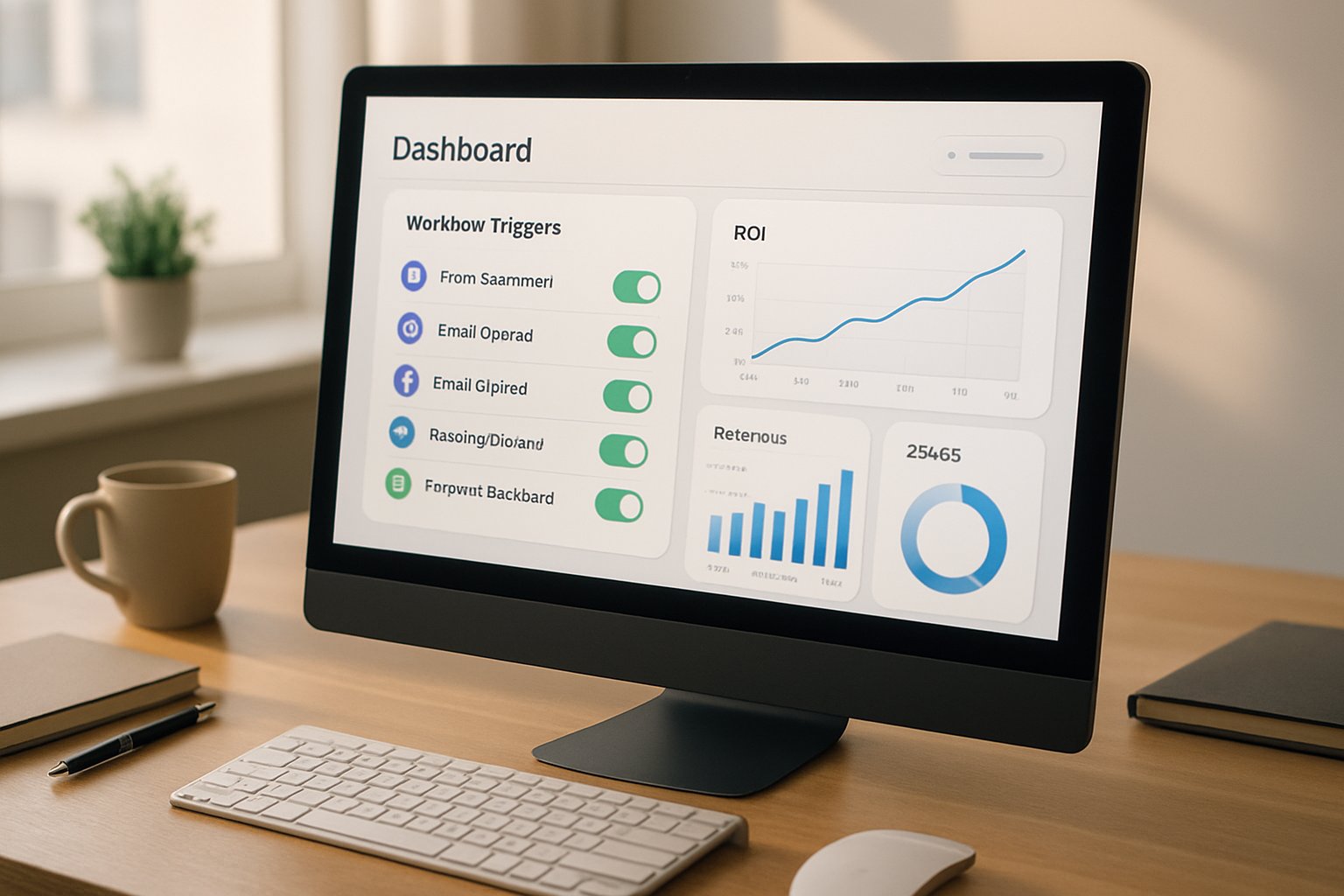
Event triggers listen for new emails, files, or meeting completions, then start playbooks without human clicks.
Moreover, Writer released connectors for Gmail, Gong, Slack, and Google Drive that implement these listeners.
Microsoft's Copilot Studio documentation contrasts event listeners with time-based scheduling, noting reduced latency and manual effort.
In contrast, Reactive Software pipelines often rely on polling; event subscriptions lower traffic and improve cost.
Event triggers cut delay and spark real-time execution. Consequently, they form the backbone of Autonomous Agent Workflows across industries.
Next, we examine how Writer packaged these capabilities.
Inside Writer Rollout
On March 25, 2026, the company unveiled Agent Skills and a natural-language playbook builder for business teams.
Additionally, more than 200 ready Skills now cover CMS publishing, CRM updates, and compliance checks.
April 30 brought event triggers that fire Autonomous Agent Workflows the moment a matching signal arrives.
Doris Jwo, its VP Product, said the agent can “practically know something happened externally and act without intervention”.
Furthermore, new governance dashboards record every step, supporting audits and rollback.
Writer positioned speed and accessibility as core differentiators. Nevertheless, competing vendors refuse to concede terrain.
The competitive landscape illustrates broader momentum.
Competitive Vendor Landscape
Salesforce introduced Agentforce, linking its Flow engine with language models and deep CRM data.
Meanwhile, AWS Bedrock Agents emphasize CloudWatch observability, while Microsoft offers Copilot Studio for structured design.
Reactive Software communities extend LangChain or AutoGen, giving developers granular control over tools and memory.
Consequently, enterprises now face an abundance of choices and architectures.
Each vendor frames Autonomous Agent Workflows as a natural extension of existing clouds.
Competition accelerates innovation and standards. However, safety engineering cannot lag.
Therefore, engineering guardrails deserve focus.
Engineering Safety Guardrails
Hallucinations or malicious inputs can push agents toward harmful actions.
Therefore, vendors add retrieval-augmented generation, server-side validation, and approval checkpoints within Autonomous Agent Workflows.
The vendor plans composite rules requiring human review for sensitive updates, limiting exposure.
AWS integrates CloudWatch traces, while Reactive Software frameworks log each tool call for replay.
Moreover, law firm Jones Walker stresses that oversight must occur at runtime, not quarterly audits.
Robust guardrails tame unpredictable reasoning. Consequently, confidence grows alongside capability.
Next, we quantify business returns.
Business Gains Quantified
Forrester's composite study reported a $12.02M net benefit and payback inside six months for organizations deploying Autonomous Agent Workflows.
Additionally, more than 5,000 playbooks already automate content creation, dashboard sharing, and compliance scans.
- 333% ROI over three years (Forrester TEI)
- $12.02M net present value per composite firm
- More than 5,000 playbooks live across enterprises
The firm cites marketing briefs converted to assets minutes after a sales call concludes.
Salesforce customers highlight instant quote generation once an opportunity stage changes.
However, analysts caution that vendor-commissioned metrics warrant third-party validation.
Early numbers suggest strong upside. Nevertheless, scrutiny ensures sustainable credibility.
Governance discussions remain vital.
Governance Risks Persist
Legal counsels warn that autonomous missteps can create binding contracts or data leaks before detection.
In contrast, traditional automation waits for human confirmation, limiting liability.
Subsequently, enterprises deploy role-based access, encryption, and flight-recorder logs for every playbook run.
Meanwhile, regulators explore updated frameworks covering Reactive Software systems that decide and act autonomously.
Therefore, compliance officers embed Autonomous Agent Workflows within supervised sandboxes.
Risk management now touches design and runtime. Consequently, certifications help teams build responsibly.
A structured skill path closes the loop.
Conclusion And Action
Autonomous Agent Workflows have progressed from prototypes to event-driven production systems inside major enterprises.
Moreover, competition among Writer, Salesforce, and cloud giants accelerates features, while Reactive Software communities refine open tooling.
Nevertheless, governance remains decisive; durable logs, approvals, and trusted data guard against legal fallout.
Consequently, leaders should pair technology adoption with structured learning.
Professionals can validate skills through the AI Product Manager™ certification, deepening expertise in Autonomous Agent Workflows governance.
Take action now, assess your triggers, and build safer, faster automation.
Disclaimer: Some content may be AI-generated or assisted and is provided ‘as is’ for informational purposes only, without warranties of accuracy or completeness, and does not imply endorsement or affiliation.


