

AI CERTS
2 hours ago
DeepSeek Jolts China AI Competition, Shaking Global Markets
Furthermore, readers will see how pricing, policy, and benchmarks intertwine within an escalating technological arms race. Throughout, the term China AI Competition appears frequently because it now frames every boardroom discussion. However, mere scoreboard snapshots hide deeper cost, governance, and IP tensions. Therefore, executives need a structured lens to parse hype from material risk. The following sections deliver that lens in plain, data-driven language.
DeepSeek Reshapes AI Rankings
The Hangzhou startup DeepSeek’s R1 model entered public preview on 20 January 2025. Moreover, independent leaderboards immediately placed the release among top open-source models for advanced reasoning tasks. LiveBench data showed top-five placement, while OpenCompass confirmed similar standing across multilingual prompts. In contrast, several Chinese incumbents required months to reach comparable scores. Analysts noted the achievement cost under six million dollars, an unprecedented efficiency claim. Nevertheless, skeptics questioned the figure and cited ongoing audits of chip procurement disclosures.
These ranking gains shifted media narratives about the broader China AI Competition almost overnight. Consequently, some U.S. commentators argued that frontier parity might arrive sooner than expected. This perception set the stage for dramatic market reactions addressed next. R1’s ascent proved technical possibility and psychological impact. However, capital markets felt the shock more acutely. Let us examine those financial tremors now.
Market Shockwaves Unfold Globally
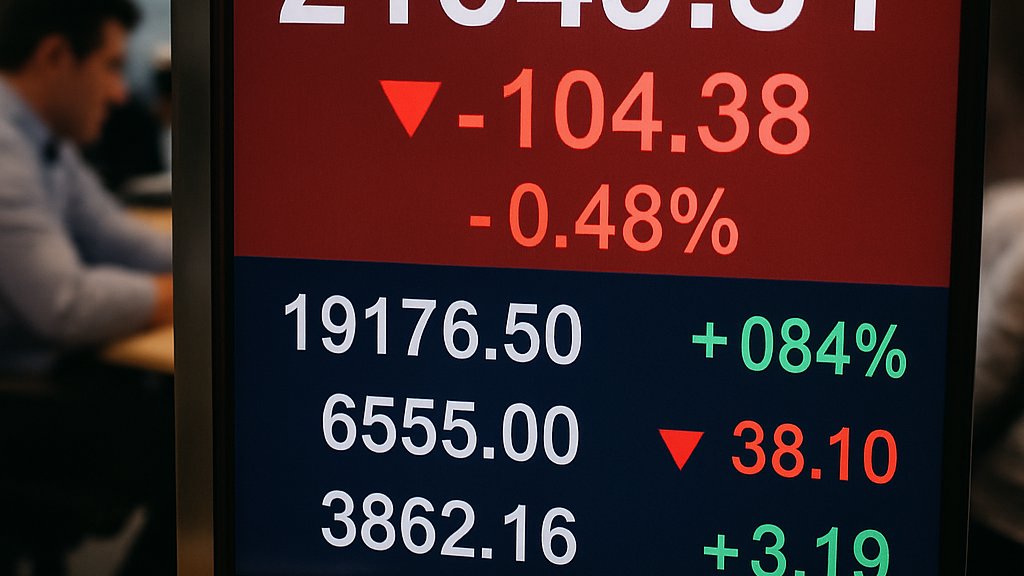
Wall Street reacted within minutes after early China AI download charts circulated across social media. Subsequently, Nvidia shares plunged, erasing roughly six hundred billion dollars in market capitalisation. Moreover, several big-tech peers lost double-digit percentage points before automated circuit breakers engaged. Bloomberg linked the slide to cost disclosures that threatened existing revenue assumptions.
- Nvidia market cap lost about US$600B in one session
- R1 training cost disclosed under US$6M
- Token price near US$2.19, 78% below GPT-4o
Meanwhile, the firm’s claimed token price of $2.19 undercut GPT-4o by seventy-eight percent. Morgan Stanley warned that such discounts could compress gross margins across the entire AI stack. Analysts said DeepSeek might secure Asia’s largest mega-round within months. Consequently, venture investors predicted sooner mega-round fundraising for hardware independence. Some projected a post-money valuation north of fifteen billion dollars, despite limited revenue history.
These numbers kept the China AI Competition headline in global finance outlets all week. Capital volatility underscored strategic stakes outlined in upcoming policy discussions. Markets priced new technology risk within a single session. However, governmental responses aimed to shape longer-term outcomes. Policy scrutiny now moves into focus.
Policy Response Intensifies Rapidly
The White House National Security Council announced an immediate review of user data flows. Additionally, a bipartisan congressional committee released a 70-page report alleging unlawful model distillation practices. Investigators claimed the application funneled American prompts to servers governed by PRC law. Consequently, export-control advocates pressed for tighter GPU licensing rules. In contrast, academic voices urged caution, citing benefits of open-source models for research transparency. Beijing regulators, meanwhile, framed the episode as proof of domestic self-reliance progress.
Subsequently, local governments offered tax incentives to accelerate upcoming mega-round negotiations. Observers said the wider China AI ecosystem would leverage any perceived Washington overstep for domestic support. Legal uncertainty fed yet another news cycle about the China AI Competition. These proceedings signaled that policy, not code, might decide leadership. Regulators across capitals now study model supply chains. Nevertheless, technical benchmarks still sway public sentiment, as the next section explains. Let us analyze those metrics.
Benchmark Results Spark Debate
Leaderboard volatility complicated definitive judgments about superiority. Moreover, LiveBench tasks change weekly, and researchers caution against over-interpreting narrow deltas. OpenCompass reviewers observed that fine-tuned open-source models can briefly outrank bigger proprietary systems. Yet reproducibility studies sometimes failed because parameter settings were not fully disclosed. Meanwhile, China AI research groups raced to replicate reports with mixed success.
Consequently, critics suggested independent third-party audits before proclaiming victors in the China AI Competition. Altman publicly praised DeepSeek, although he hinted at potential data misuse. Meanwhile, OpenAI spokespeople raised direct distillation accusations during a press call. These divergent statements fueled further debate on intellectual property enforcement. Benchmarks provide fast feedback yet invite confusion. Therefore, cost structure becomes the next logical differentiator. We examine that economics below.
Business Model Cost Advantage
Pricing may decide adoption more than raw capability. Furthermore, the startup offers enterprises output tokens at a fraction of prevailing U.S. rates. DeepSeek also publishes transparent cost breakdowns to reinforce that message. Bloomberg compared per-token averages and confirmed a seventy-eight percent gap. Consequently, corporate pilots increased because budget holders could test higher context windows affordably. Analysts predicted revenue acceleration once a planned mega-round injects additional inference capital.
However, they warned that sustained subsidies might compress long-term valuation unless premium tiers emerge. Meanwhile, low prices pressure U.S. incumbents to release lighter open-source models for edge devices. These economic levers again reshape narratives within the China AI Competition. Cost leadership challenges technical incumbency. Nevertheless, strategic implications extend beyond spreadsheets. Broader geopolitical factors now enter view.
Strategic Implications Ahead Now
Corporate strategists must reassess sourcing, compliance, and platform dependencies. Additionally, supply chain audits should verify chip provenance against future sanctions scenarios. Some boards mandated scenario planning that pairs Western safety tooling with cheaper Chinese inference. In contrast, defense contractors adopted ring-fenced architectures to avoid cross-border data exposure. Consequently, vendor diversification emerges as a hedge for uncertain regulation. Consultants also expect accelerated mega-round closings to support custom accelerators, reducing Nvidia reliance.
Investment bankers argue that each financing could boost the firm’s valuation toward capital market parity. Meanwhile, talent competition intensifies as engineers chase frontier research and upside equity. These trends keep the drumbeat of the China AI Competition echoing across boardrooms. Strategic decisions now intertwine with policy uncertainty. Therefore, executives require clear guidance on immediate actions. The final section addresses that need.
Conclusion And Outlook Future
The past eighteen months transformed boardroom assumptions about the China AI Competition. Technical breakthroughs, cost disruption, and policy crossfire converged into a single strategic narrative. Moreover, low pricing and rapid iteration show how China AI ventures can unsettle global incumbents. Nevertheless, unresolved questions around data governance and intellectual property still temper exuberant valuation forecasts.
Consequently, prudent executives will diversify suppliers, audit compliance, and develop sandboxed deployment architectures. Leaders can validate knowledge through the AI Executive™ certification. Furthermore, this credential equips teams to navigate escalating stakes within the China AI Competition landscape. Action now will distinguish tomorrow's winners.
Disclaimer: Some content may be AI-generated or assisted and is provided ‘as is’ for informational purposes only, without warranties of accuracy or completeness, and does not imply endorsement or affiliation.


