

AI CERTS
2 hours ago
Aidoc’s Series E Boosts AI Medical Imaging Momentum
Consequently, hospital leaders are watching closely. This article unpacks the deal, strategic context, and implications for AI Medical Imaging adoption. Readers will gain clarity on investor motives, regulatory signals, and operational challenges. Moreover, we examine what comes next for health systems evaluating enterprise platforms.
Market Context And Momentum
Radiology departments face mounting case volumes and shrinking specialist rosters. Meanwhile, error reduction pressures intensify because missed findings drive malpractice costs. Therefore, providers hunt for AI Medical Imaging technology that scales expertise without exploding budgets.
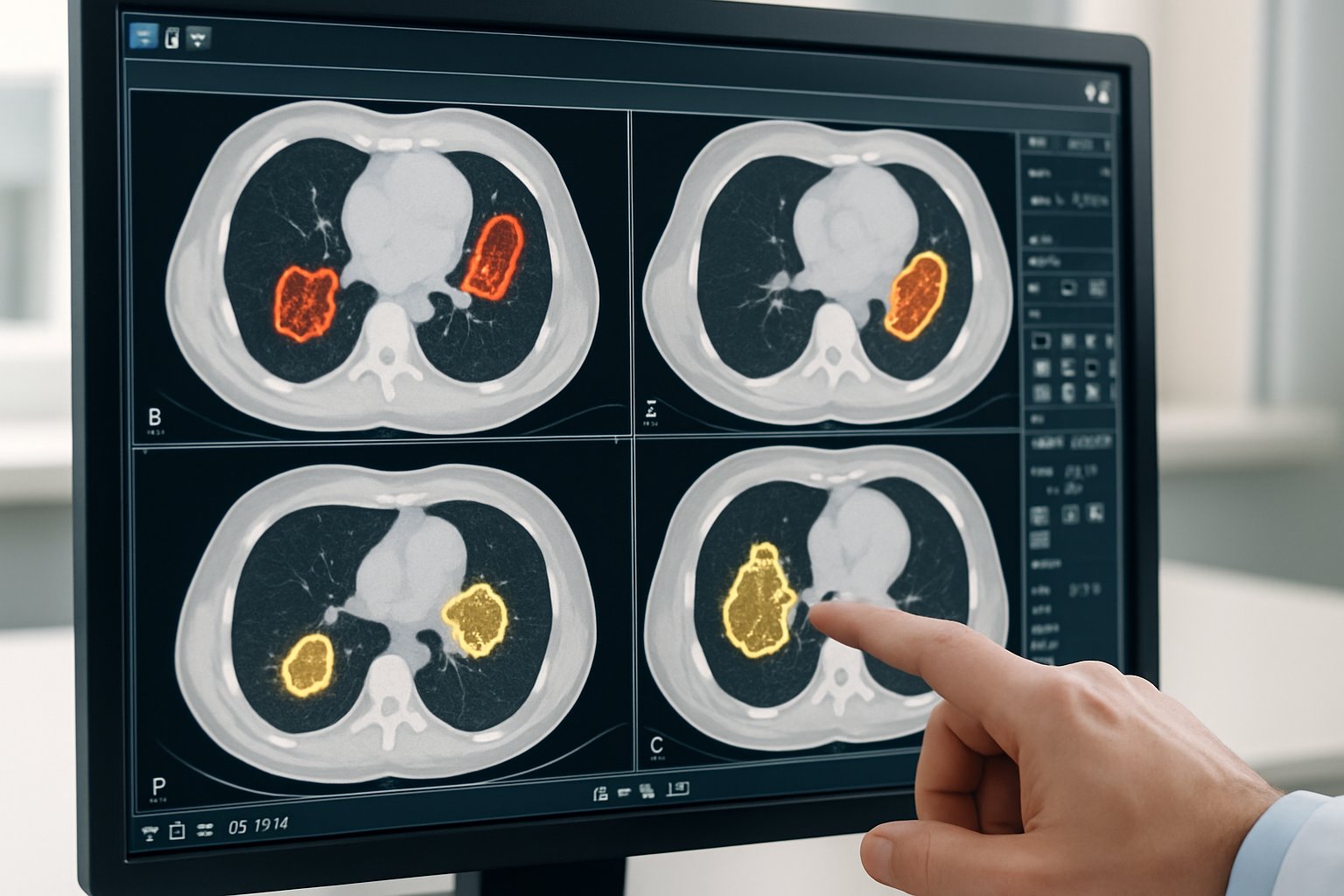
Earlier waves of point solutions targeted single findings such as pulmonary embolism. However, hospitals struggled to manage dozens of narrow tools. Integration, monitoring, and updates consumed scarce IT bandwidth.
Analysts now predict a shift toward consolidated platforms powered by foundation models. Moreover, McKinsey cites imaging AI platforms as a $3-4 billion annual opportunity by 2030. Aidoc positions its aiOS and CARE model squarely in this wave.
The broader context clarifies why capital allocators remain bullish. Next, we dissect the Series E specifics.
Inside The Series E
Series E totals $150 million, identical to Aidoc’s 2025 growth round. In contrast, the new capital focuses less on coding and more on scaling. Goldman Sachs Alternatives led, signaling mainstream growth-equity confidence in AI Medical Imaging.
General Catalyst, SoftBank Vision Fund 2, and NVentures joined as returning or strategic participants. Furthermore, management describes the raise as non-down, implying valuation stability despite market turbulence. Aidoc declined to disclose the post-money figure.
Consequently, total Funding now exceeds $500 million, according to company statements. Few Imaging start-ups have reached that milestone outside China. Investors appear to bet that enterprise contracts will deliver durable recurring revenue.
These Funding dynamics set the stage for product execution. We now explore the technical roadmap.
Platform Strategy And Roadmap
Aidoc markets a two-layer architecture. The CARE foundation model ingests multimodal data to power many downstream tasks. Meanwhile, aiOS orchestrates deployment, monitoring, and billing across third-party algorithms.
Elad Walach promises “pixel to draft report” automation within two years. Consequently, radiologists could receive preliminary structured findings before opening their viewer. That vision echoes generative AI trends outside healthcare.
CARE already underpins rib-fracture triage CADt cleared by the FDA in 2025. Moreover, the company pursues multi-condition CT triage clearances under the Breakthrough Device pathway. Michael Braginsky argues foundation models will become as common as ChatGPT.
Aidoc views CARE as the missing operating system for AI Medical Imaging across modalities. Platform breadth promises scale, yet regulation remains pivotal. Therefore, our next section reviews the evolving rulebook.
Regulation Validates Foundation Models
FDA clearance of CARE1™ marked a watershed for foundation models in regulated imaging. Nevertheless, many questions persist around drift, update cadence, and site variability. Regulators now expect continuous performance monitoring, not just pre-market trials.
Aidoc touts analysis of 110 million patient cases across nearly 2,000 hospitals. However, independent peer-review publications remain limited for several indications. Clinical leaders therefore demand transparent sensitivity, specificity, and false-positive rates.
CT protocols complicate generalization because scanner models and reconstruction kernels differ widely. Consequently, hospitals insist on site-level validation before enabling autonomous prioritization. Aidoc offers audit dashboards to address that need.
The clearance effectively crowned CARE a flagship for AI Medical Imaging governance. Regulatory scrutiny will intensify as models expand. Opportunities for health systems still look attractive, as we outline next.
Opportunities For Health Systems
Hospitals evaluate AI Medical Imaging investments against operational metrics such as time-to-Diagnosis and length of stay. Studies show quicker triage can shorten emergency department boarding times. Moreover, insurers increasingly reimburse stroke pathways when AI supports earlier intervention.
Aidoc claims several clients cut critical result turnaround by 30 percent. Further, enterprise platforms consolidate contracting, which reduces vendor management overhead. That simplification matters for integrated delivery networks running dozens of CT scanners.
Benefits extend beyond radiology. CARE-based cardiovascular modules flag incidental aortic aneurysms for preventive follow-up. Consequently, population-health teams gain earlier intervention opportunities.
- 110 million cases analyzed to date
- Nearly 2,000 hospitals live on aiOS
- Over 20 FDA clearances across CT and X-ray modalities
- $500 million total Funding secured
Collectively, these gains entice financially pressed providers. Still, risks warrant careful attention, as the following section argues.
Risks And Open Questions
Implementation costs can undercut return on investment if adoption stalls. Furthermore, clinicians may distrust machine prioritization without robust explainability. Litigation risk persists when AI influences Diagnosis but responsibility remains ambiguous.
Model drift creates hidden safety liabilities over multi-year contracts. In contrast, manual audits require scarce expert time. Therefore, automated monitoring and alerting become essential safeguards.
Market competition also looms. Large modality vendors and nimble start-ups chase the same CT workflow dollars. Moreover, payer reimbursement decisions could shift budgets away from stand-alone tools.
These challenges highlight critical gaps. Nevertheless, actionable frameworks and training can mitigate many issues. Our conclusion suggests practical next steps.
Looking Ahead And Action
Aidoc’s Series E cements its place among the best-capitalized AI Medical Imaging vendors. Continued Funding will hinge on converting pilot enthusiasm into enterprise renewals. Health systems should request independent outcome studies before signing multiyear deals.
Prospective buyers can also mandate contractual triggers tied to Diagnosis accuracy metrics. Moreover, governance committees must oversee model updates and CT protocol variations. Professionals can deepen strategic insight.
They should consider the AI+ Supply Chain™ certification for structured guidance. Consequently, partnership models, not algorithms alone, will determine long-term winners. Hospitals that pilot, measure, and iterate quickly will capture the most benefit.
Vendors that prove sustained accuracy across diverse Imaging environments will capture premium pricing. Ultimately, AI Medical Imaging success will rest on transparent evidence, vigilant governance, and aligned incentives. Early movers in AI Medical Imaging will set quality benchmarks for peers. Act now to evaluate platforms, refine workflows, and train teams for the data-driven era.
Disclaimer: Some content may be AI-generated or assisted and is provided ‘as is’ for informational purposes only, without warranties of accuracy or completeness, and does not imply endorsement or affiliation.


