

AI CERTS
2 months ago
AI Design Tools After DALL-E Deprecation
Moreover, project owners face cost, latency, and stylistic uncertainties during migration. This article unpacks the Deprecation, the market context, and practical steps for smooth continuity. Readers will gain data, expert quotes, and actionable checklists for informed decisions. Meanwhile, certification paths will help teams deepen multimodal expertise.
DALL-E Exit Signals Emerging
OpenAI formally issued a Deprecation notice for dall-e-2 and dall-e-3 on November 14, 2025. Consequently, the public API will refuse those model IDs after May 12, 2026. Moreover, documentation urges developers to migrate to new image endpoints without delay. The shutdown timeline illustrates OpenAI’s tighter product lifecycle control. In contrast, previous model retirements allowed longer overlap windows.
These facts confirm that the Footnote in OpenAI’s roadmap carries substantial operational weight. Therefore, teams relying on AI Design Tools cannot postpone adaptation. Deprecation deadlines now loom large for many production workflows. However, newer capabilities promise meaningful gains, as the next section explains.
GPT Image Ascends Rapidly
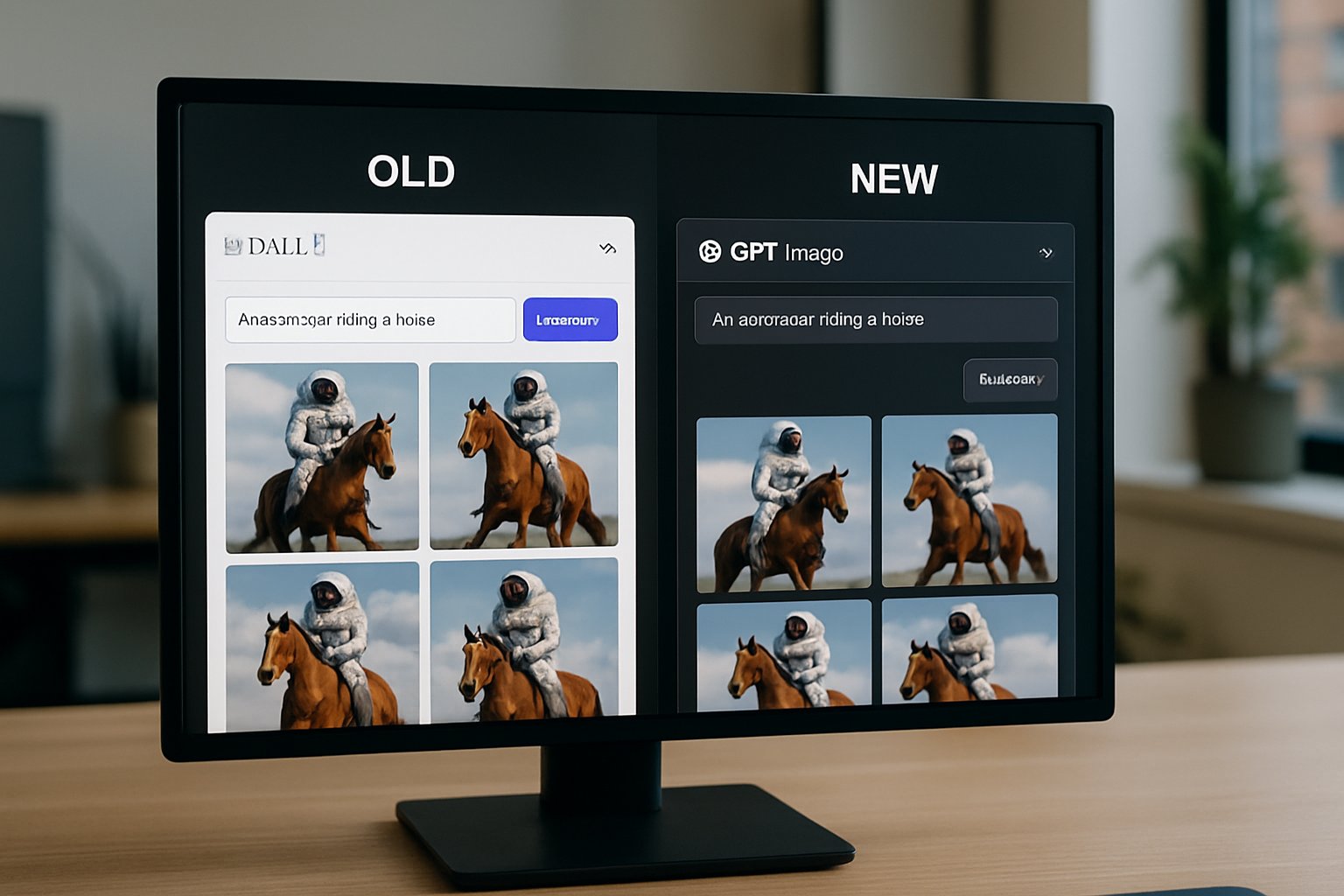
OpenAI unveiled GPT-Image-1.5 on December 16, 2025, branding it the new ChatGPT Images experience. Moreover, the company recommends GPT Image for every future creative implementation. The model improves instruction following, generation speed, and edit fidelity over DALL-E-3 benchmarks. Additionally, early testers report lower latency when resizing or in-painting complex Images.
In contrast, stylistic drift remains a concern for branding assets that demand rigid visual continuity. Nevertheless, many AI Design Tools already pilot GPT Image to harness the multimodal context advantages. These performance leaps entice product managers. Consequently, pressure builds for accelerated migration, even with lingering uncertainties.
Migration Pain Points Detailed
Developer forums catalogue mismatches between DALL-E responses and GPT Image JSON schemas. Subsequently, engineers must rewrite error handling, pagination, and retry logic. Moreover, prompt engineering requires new token budgets because the model supports longer multimodal context windows. In contrast, the Deprecation countdown continues regardless of refactor complexity. Modelslab recommends a three-step benchmarking protocol:
- Run 50 legacy prompts against DALL-E and record visual KPIs.
- Execute identical prompts on successor models and compare KPIs.
- A/B-test production traffic with canary rollout before full switch.
Furthermore, pricing differences may affect unit economics. OpenAI’s pricing sheet shows GPT-Image-1.5 costing more per high-resolution frame than DALL-E-3. Nevertheless, improved speed could offset spend by reducing idle compute time. Well-managed AI Design Tools pipelines shorten remediation cycles. These migration frictions represent the harshest reality check for teams. However, the broader market outlook still favors rapid experimentation. Teams that ignore these obstacles risk downtime after May 12. Consequently, understanding market forces becomes equally important.
Market Impact Forecast Insights
Research firms project compound annual growth rates above 30% for text-to-image platforms through 2029. Technavio, for example, cites a 34.5% CAGR driven by enterprise adoption of automated Images in marketing.
Key Stats Snapshot Data
Enterprise buyers of AI Design Tools watch these indicators closely. Moreover, analysts argue that OpenAI’s consolidated roadmap reassures investors about focus. Nevertheless, uncertainty around pricing and Deprecation cadence tempers valuation models. In contrast, rivals like Midjourney and Stability AI stress open weights and stylistic continuity. These divergent messages create competitive tension. Consequently, product owners must interpret market signals carefully before locking roadmaps. Growth prospects remain strong, yet volatility persists. Subsequently, we examine how competitors adjust strategy.
Competitive Landscape Shifts Rapidly
Midjourney continues emphasizing artistic controls and community curation. Meanwhile, Adobe Firefly integrates deeply into Creative Cloud, offering enterprise licensing and brand-safe Images. Stability AI leverages open checkpoint fine-tuning, courting teams wary of vendor lock-in. Runway pushes video capabilities, differentiating beyond still Images. Furthermore, API aggregation vendors propose abstraction layers that reduce future Footnote surprises.
Nevertheless, any abstraction cannot shield teams from abrupt Deprecation timelines across providers. Consequently, several AI Design Tools vendors market themselves as stable choices. These industry dynamics amplify the urgency of decisive planning. Therefore, the next section distills an actionable checklist.
Action Plan Checklist Teams
The following steps synthesize guidance from OpenAI docs and leading migration guides.
- Audit AI Design Tools code for dall-e strings; replace before May 12, 2026 cutoff.
- Benchmark core prompts on GPT-Image-1.5; capture latency, cost, quality metrics.
- Refine prompts where style drift harms brand visuals; retest until parity holds.
- Share migration progress with design, compliance, and finance teams weekly.
- Compare open-source alternatives if proprietary constraints prove unacceptable.
Professionals can enhance their expertise with the AI Foundation™ certification. Moreover, many AI Design Tools teams use certification study projects as real migration sandboxes. These checklist actions foster smoother transitions. Consequently, organizations mitigate downtime and budget overruns. Structured planning simplifies the complex handoff. Subsequently, leaders can focus on creative innovation rather than firefighting.
Forward Looking Final Thoughts
OpenAI’s retirement deadline marks a watershed for visual developers. However, the consolidation promises richer multimodal context and faster iteration. Teams that modernize their AI Design Tools workflows will capture those benefits first. In contrast, late movers risk broken customer experiences and lost revenue. Proactive investment in AI Design Tools, education, and benchmarking now prevents frantic rewrites next spring. Consequently, consider pursuing the AI Foundation™ certification to solidify individual and organizational readiness. By acting today, you secure creative agility for tomorrow’s unpredictable Footnote shifts.
Disclaimer: Some content may be AI-generated or assisted and is provided ‘as is’ for informational purposes only, without warranties of accuracy or completeness, and does not imply endorsement or affiliation.


