

AI CERTS
57 minutes ago
DeepSeek V4 Challenges AI Hardware Industry Reliance on Nvidia
Readers will gain a clear view of model specifications, commercial stakes, and looming verification questions. Furthermore, we map near-term implications for the broader AI Hardware Industry. We also highlight professional development routes, including a policy-oriented certification that supports informed decision making. Prepare for concise analysis grounded in publicly reported figures and expert commentary.
China Seeks Chip Independence
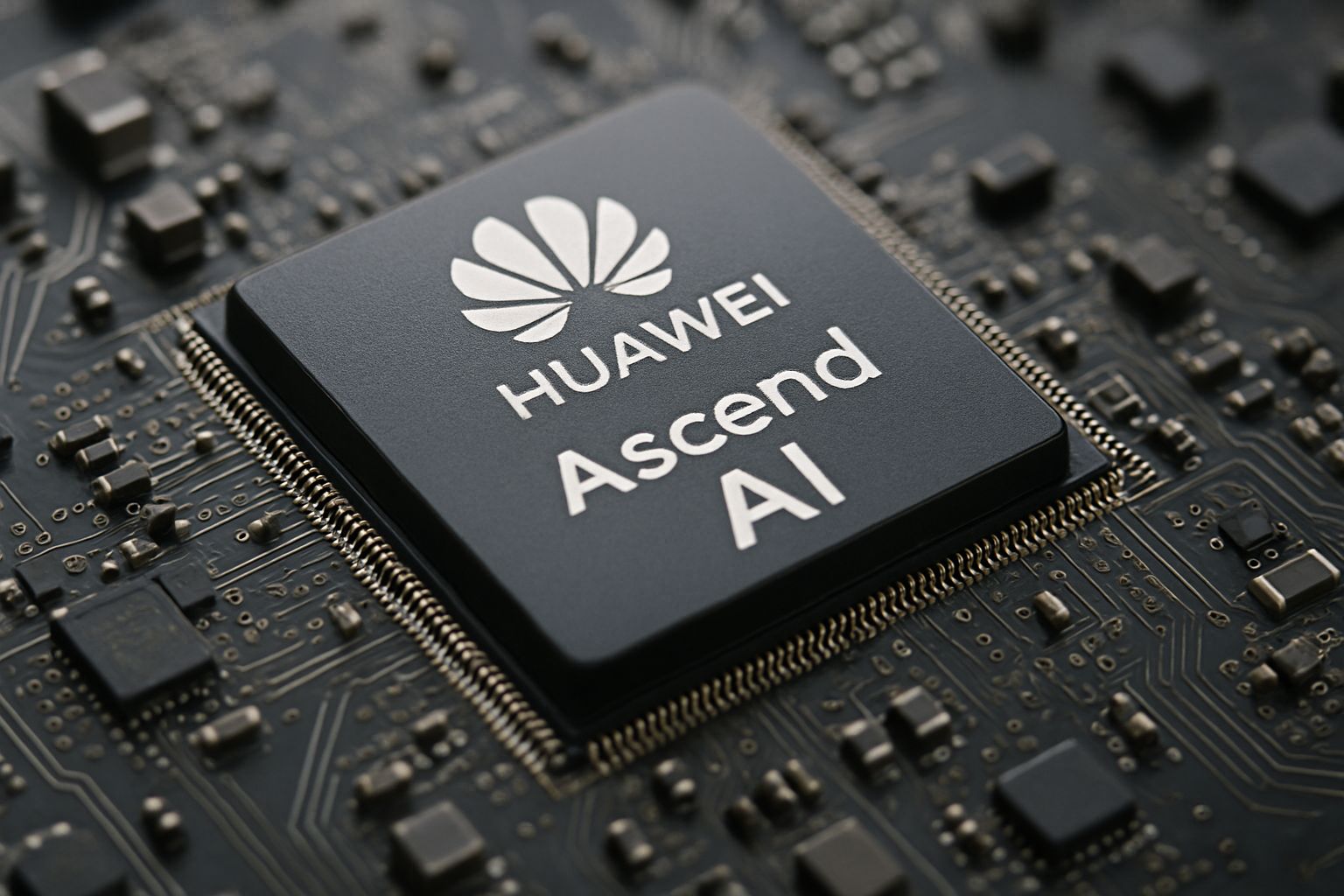
Beijing’s industrial planners have pushed technology Independence for years. However, actual progress depended on matching Nvidia performance at scale. DeepSeek V4 arrives amid tightening United States export controls. Moreover, Huawei claims its Ascend SuperNode clusters can now host trillion-parameter workloads with acceptable latency. If verified, that capability reduces overseas GPU reliance, reinforcing supply resilience goals.
Lian Jye Su of Omdia noted that parity across hardware stacks would prove tangible sovereignty achievements. Nevertheless, the analyst cautioned that evaluation must occur through independent benchmarks. Such scrutiny will determine whether symbolic Independence translates into durable competitiveness.
The drive for domestic control is moving from policy slogan to delivered silicon. Consequently, chip Independence could soon reshape the AI Hardware Industry. Technical specifics of V4 clarify that potential.
DeepSeek V4 Core Technicals
DeepSeek released two variants, Pro and Flash, built on a mixture-of-experts architecture. Pro holds 1.6 trillion parameters, while Flash carries 284 billion. Furthermore, both versions sustain a one-million-token context window, matching leading Western claims. TileLang and MXFP4 quantization compress memory footprints, therefore enabling efficient execution on Huawei Ascend hardware. DeepSeek reports more than 70 percent inference cost reduction compared with its earlier V3.2 release.
Training efficiency also improved through selective activation of roughly 3 percent of total parameters per token. Consequently, activated parameter counts shrink to 49 billion for Pro and 13 billion for Flash. These numbers matter for the AI Hardware Industry because memory bandwidth often bottlenecks large models. In contrast, lower active weights lighten that constraint, especially on emerging NPUs.
- V4-Pro: 1.6T parameters; 49B active; 1M tokens
- V4-Flash: 284B parameters; 13B active; 1M tokens
- Inference cost: 70% cheaper than V3.2
- Ascend 950PR shipments planned: 750,000 units in 2026
These metrics showcase DeepSeek’s engineering emphasis on practical deployment. However, hardware availability will dictate real-world impact. The supply picture has already shifted since the preview, as we examine next.
Ascend Demand Surge Grows
Reuters reported that ByteDance, Alibaba, and Tencent scrambled to reserve Ascend 950PR capacity days after the announcement. Meanwhile, Huawei plans to manufacture roughly 750,000 units this year, scaling output through the second half. Consequently, initial supply will likely remain constrained, despite aggressive production targets. Chinese cloud platforms already offer V4 preview endpoints on domestic nodes, highlighting pent-up developer appetite.
Omdia estimates that demand could exceed supply by up to 40 percent during 2026. In contrast, Nvidia H200 allocations still dominate many multinational roadmaps. Such divergence pressures procurement teams inside every major participant in the AI Hardware Industry. Therefore, multi-vendor strategies and dynamic workload placement may become normal practice.
Market response underscores perceived strategic importance of domestic accelerators. Nevertheless, volume shortfalls could slow momentum if unresolved. Evaluating benefits helps explain why buyers tolerate that risk.
Benefits For Local Ecosystem
Running frontier models on homegrown silicon keeps data, talent, and revenue inside national borders. Moreover, cost savings from MXFP4 quantization should widen as Ascend hardware matures. Developers gain API consistency between domestic clouds, boosting portability. Additionally, DeepSeek’s MIT licence lets enterprises self-host without prohibitive fees.
These factors strengthen the broader AI Hardware Industry by diversifying supplier bases. Huawei also benefits, converting political support into commercial scale. Consequently, second-tier chip makers like Cambricon could piggyback on V4 optimizations. Professionals can enhance their expertise with the AI Policy Maker™ certification.
Local gains appear significant in efficiency, sovereignty, and ecosystem cohesion. However, unresolved risks still shadow the narrative. We explore those challenges next.
Risks And Constraints Persist
Performance parity with Nvidia remains unproven pending independent benchmarks. Furthermore, sceptics highlight limited software tooling compared with CUDA’s mature libraries. Training provenance also draws scrutiny after allegations of illicit distillation from Western models. DeepSeek denies wrongdoing, yet documentation gaps persist.
Supply chain fragility presents another vulnerability. Reuters sources warn that lithography bottlenecks could delay Ascend ramp-up beyond summer. Nevertheless, Huawei asserts production remains on schedule. Consequently, stakeholders must monitor delivery data closely.
Technical proof points and shipment records will decide perception of genuine Independence. Until then, uncertainty may temper adoption speed. Those uncertainties directly influence strategic planning across the AI Hardware Industry.
Implications For AI Hardware
DeepSeek’s pivot validates emerging NPU ecosystems, pressuring incumbents to justify premium pricing. In contrast, established vendors might accelerate low-precision support to counter Huawei’s narrative. Global policymakers will reassess export control frameworks as domestic capability grows. Therefore, competitive dynamics within the AI Hardware Industry could realign during 2026.
Cloud operators may pursue hybrid clusters featuring domestic NPUs, Nvidia GPUs, and possibly AMD alternatives. Consequently, procurement teams will weigh performance, cost, and geopolitical exposure. Long-context workloads could become an acid test because memory traffic stresses every architecture.
Competitive pressure will likely benefit end users through faster innovation. Nevertheless, fragmentation could raise integration costs for developers. Pragmatic action plans can alleviate these hurdles.
Strategic Actions Moving Forward
Enterprises should request transparent training logs, benchmark results, and hardware roadmaps before large commitments. Meanwhile, vendors must publish standardized performance data to build trust. Regulators could convene multi-stakeholder forums to address IP and security concerns. Moreover, professionals should upskill in heterogeneous deployment frameworks and policy analysis.
The AI Hardware Industry thrives when expertise, governance, and competition advance together. Therefore, targeted education programs, including the earlier mentioned certification, can close knowledge gaps. Such preparation positions teams to exploit whichever architecture prevails.
Concrete steps today reduce future lock-in risk. Consequently, preparedness becomes a strategic differentiator.
DeepSeek V4 marks a calculated stride toward domestic silicon autonomy. The latest NPU generation, yet unproven at massive scale, supplies the necessary foundation. Consequently, demand surges, bottlenecks loom, and rigorous validation remains pending. Nevertheless, the AI Hardware Industry benefits from the resulting competitive momentum. Stakeholders who track deliveries, insist on transparent benchmarks, and invest in policy literacy will navigate volatility. Explore emerging insights and strengthen credentials through the AI Policy Maker™ certification and related programs.
Disclaimer: Some content may be AI-generated or assisted and is provided ‘as is’ for informational purposes only, without warranties of accuracy or completeness, and does not imply endorsement or affiliation.


