

AI CERTS
2 months ago
SenseNova U1 Redefines Computer Vision Models With Direct Reading
Moreover, U1 arrives under an Apache-2.0 license that invites experimentation across markets. Meanwhile, domestic Chinese chip makers already optimise for the weights, signalling broader geopolitical ripples. Therefore, readers will gain a clear view of deployment steps and strategic considerations. Furthermore, we point to resources and certifications that help teams build secure, ethical systems.
Why Direct Reading Matters
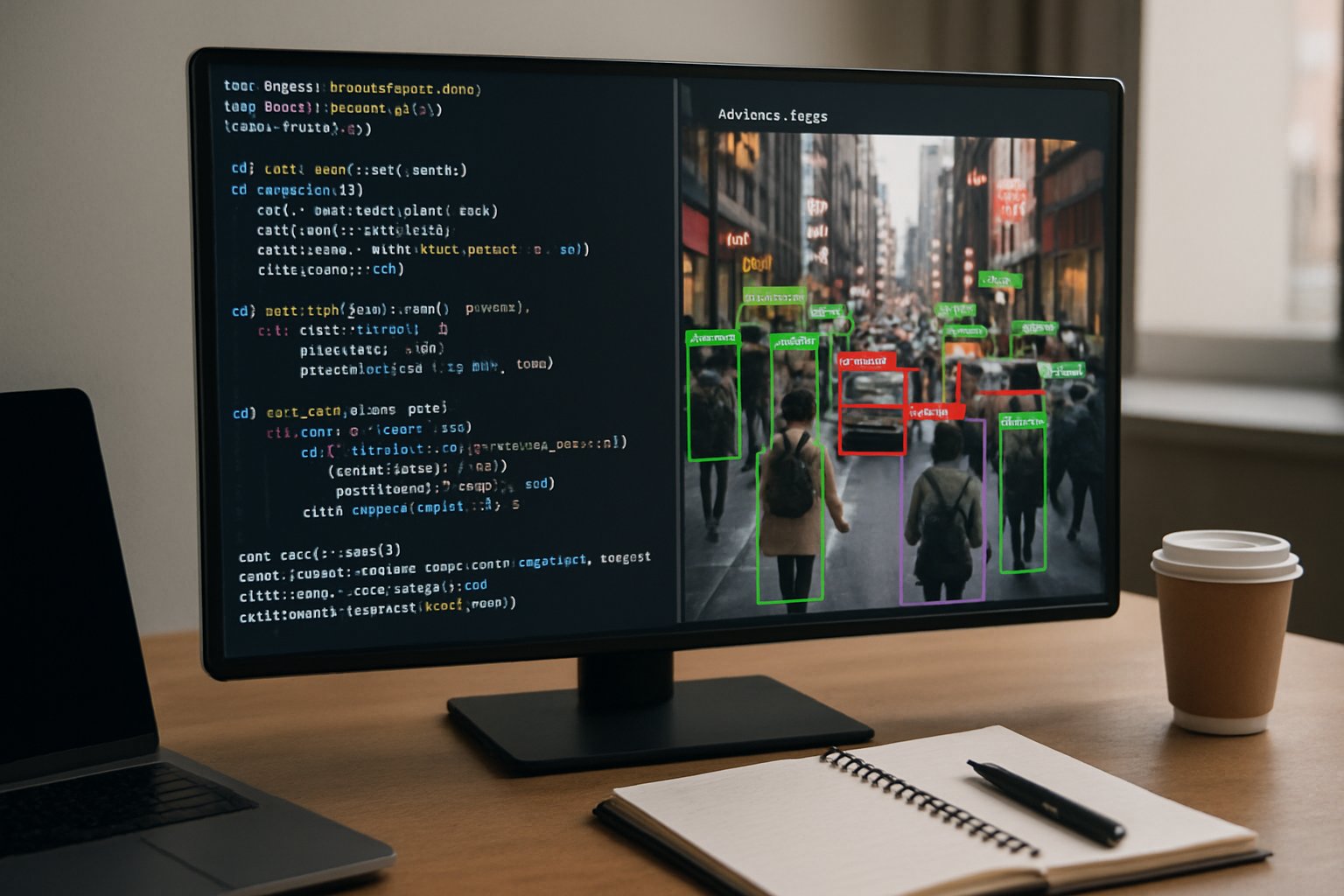
Traditional multimodal pipelines pass images through a visual encoder and often a VAE before language reasoning begins. Consequently, information can degrade during those handoffs.
SenseNova U1 eliminates that bottleneck by treating pixels and tokens as a single stream. In contrast, most Computer Vision Models still juggle two independent latent spaces. Therefore, U1 promises tighter semantic alignment and lower latency.
Additionally, fewer modules mean fewer parameters to keep in memory, which improves Efficiency on constrained hardware. Researchers at WIRED quoted Dahua Lin, who said the model “can reason with images as well,” underscoring the shift.
These architectural gains target everyday production pain points. However, understanding the core design choices clarifies possible trade-offs before adoption. Let us now examine the inner mechanics that enable this unified flow.
Inside NEO-Unify Core Architecture
NEO-Unify merges spatial and linguistic attention heads within the same transformer blocks. Moreover, SenseTime adds a Mixture-of-Tokens approach that routes sub-tasks to specialised experts.
This design contrasts sharply with encoder-decoder setups that many Computer Vision Models employ. Consequently, U1 processes an Image in one pass, yielding interleaved captions, diagrams, or visual answers.
Training relied on mixed modalities sourced from public datasets and proprietary synthetic corpora. Furthermore, adaptive sparsity keeps active Compute below eight billion parameters despite the dense backbone.
- Unified pixel-token embedding without external encoder
- Mixture-of-Tokens sparsity for scalable Efficiency
- Apache-2.0 weights and inference scripts on GitHub
- Optimised kernels for Cambricon and Biren chips
Together, these elements seek balanced accuracy, speed, and hardware reach. Subsequently, numbers tell whether the gamble paid off.
Performance And Benchmark Highlights
SenseTime’s release notes cite strong results on VSI-Bench, MMBench, and MindCube. Moreover, comparison charts place U1 Lite near Qwen-Image 2.0 Pro on several vision tasks.
On spatial reasoning, the earlier SenseNova-SI line reached 68.8% on VSI-Bench. Consequently, the company argues that U1 inherits similar spatial strengths while delivering better inference Efficiency.
However, external researchers emphasise that third-party validation remains pending. Adina Yakefu told WIRED that open sourcing will let the community test Computer Vision Models rigorously.
Key reported metrics include FID 14.2 on a public text-to-Image set and 85.7 on MindCube accuracy. Therefore, early indicators suggest competitive quality against larger closed generators.
Initial figures inspire cautious optimism. Nevertheless, deployment realities often depend on hardware alignment.
Deployment On Domestic Chips
Sanctions limit Chinese access to top NVIDIA GPUs. Consequently, SenseTime optimised kernels for Cambricon MLU370 and Biren BR104 accelerators.
Benchmarks show eight-bit quantised inference running at 27 tokens per second on a single MLU card. Moreover, that speed beats many Computer Vision Models of comparable size when using similar power budgets.
Reduced memory footprints also enhance Efficiency, allowing edge servers to host Image pipelines previously restricted to data centres.
These hardware synergies could widen domestic adoption. In contrast, international teams must evaluate driver maturity and support. Enterprises also need to weigh business gains against ethical and regulatory considerations.
Opportunities For Enterprise Teams
Unified token streams simplify API contracts, reducing integration overhead. Additionally, faster Compute can lower cloud costs for batch content generation.
- Interactive technical manuals with synced Image and text
- Real-time visual analytics dashboards
- Automated infographic creation for marketing
Professionals can enhance their expertise with the AI Security Level 2 certification.
Such training builds governance skills alongside technical fluency. Consequently, teams gain confidence when deploying sensitive Computer Vision Models. Risks still demand equal attention.
Risks And Open Questions
Direct reading is new, so robustness under adversarial prompts remains unclear. Furthermore, missing training data disclosures complicate security audits.
External experts caution that open weights can accelerate deepfake production. Nevertheless, transparent release also enables defensive research on Vision safety.
SenseTime’s past sanction history introduces reputational considerations for Western partners. Therefore, lawyers should review export control implications before embedding Computer Vision Models in global products.
Balancing openness with responsibility remains challenging. Subsequently, practitioners need a clear roadmap for evaluation.
Roadmap For Practitioners
Start with a controlled pilot using the Hugging Face weights and example notebooks. Moreover, measure latency, Compute utilisation, and quality against existing baselines.
Independent researchers should replicate SenseTime’s spatial benchmarks using open datasets like CO3D and BLINK. Consequently, credible data will position Computer Vision Models within a transparent performance hierarchy.
Teams must also run red-team exercises targeting prompt injection, Image corruption, and output leakage. Additionally, document mitigation steps for governance audits.
Finally, align hardware procurement with planned throughput. Efficiency metrics should drive cluster sizing, especially when domestic chips replace traditional GPUs.
Following this checklist accelerates informed decision making. Meanwhile, continued community testing will refine best practices.
Conclusion And Next Steps
SenseNova U1 demonstrates that ambitious architecture changes can reach production quickly. Moreover, direct reading challenges long-standing assumptions about Computer Vision Models.
Efficiency gains, open weights, and domestic chip support create concrete incentives for trials. Nevertheless, unresolved questions around safety and governance require vigilant oversight.
Consequently, leaders should combine rigorous testing with structured education. Teams can deepen security knowledge through the linked certification while evaluating Computer Vision Models for their unique workflows.
Take the next step today by downloading the weights, running benchmark scripts, and exploring advanced training programs that turn Vision breakthroughs into lasting business value.
Disclaimer: Some content may be AI-generated or assisted and is provided ‘as is’ for informational purposes only, without warranties of accuracy or completeness, and does not imply endorsement or affiliation.


