

AI CERTS
2 months ago
Beijing Show Signals Autonomous Drive Future for China Tech Cars
Moreover, China tech heavyweights framed autonomy as the next export weapon amid a soft domestic market. Retail deliveries fell 17 percent in Q1, yet exports soared over 60 percent, according to CAAM figures. These numbers created urgency, yet lingering safety concerns kept policymakers cautious. Therefore, the tone oscillated between exuberant demos and sobering regulatory briefings.
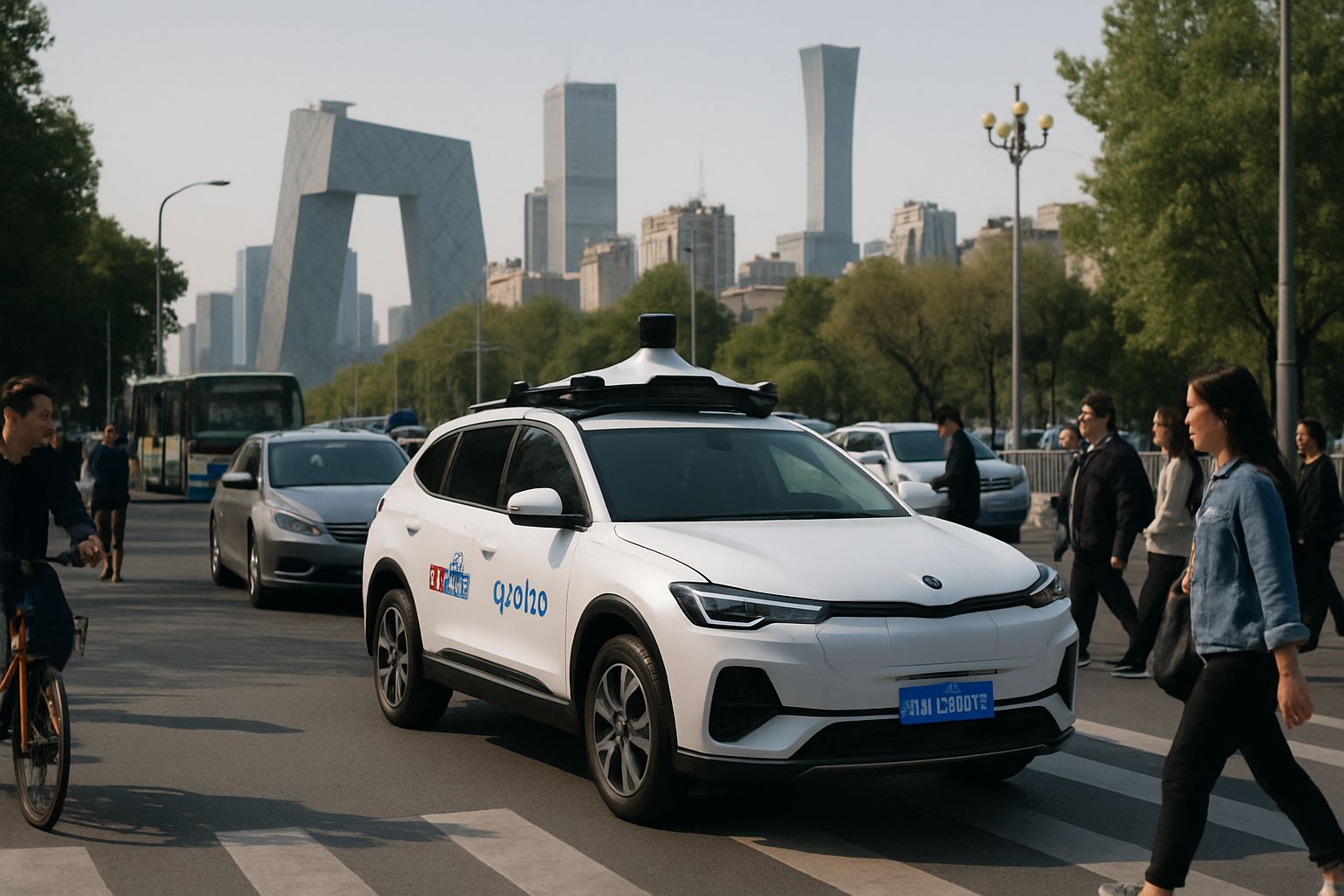
Autonomous Drive Future Market
Analysts noted that almost every Chinese brand now sells or previews hands-free features. Tu Le of Sino Auto Insights stated, "No other region matches this breadth". Meanwhile, China tech darlings Geely, Huawei, and Xpeng outlined revenue models that hinge on software subscriptions, not hardware margins. Consequently, the Autonomous Drive Future narrative aligns with boardroom pressure to reverse shrinking profits. In contrast, legacy suppliers race to secure compute contracts before platforms consolidate.
CAAM forecasts level-2 and higher vehicles hitting 20 million by 2028, all driven by automotive AI stacks. These projections excite venture capital, yet international trade tensions may distort adoption rates. The market outlook appears vast but volatile. However, product showcases provide clearer evidence, as the next section explains.
Tech Showroom Highlights Rise
Walking the aisles of the Beijing show felt like stepping into a supercomputer cluster on wheels. Geely's Eva Cab flaunted 3,000 TOPS, triple redundant steering, and a 2,160-line digital LiDAR. Additionally, Huawei broadcast its 800-billion-yuan autonomy budget across towering LED walls. Xpeng, Nio, and BYD answered with immersive cockpits driven by automotive AI agents. Therefore, the Autonomous Drive Future appeared tangible inside every dazzling booth. Consequently, visitors issued voice commands, folded their arms, and watched concept cars glide within fenced loops.
Nevertheless, staff members kept emergency kill switches close, underscoring persistent safety concerns. The driverless dream looked tantalising yet tightly choreographed. Show floor theatrics highlighted technical maturity. However, regulation still dictates real-world rollout, as discussed next.
Regulatory Path Still Unclear
China's MIIT closed consultation on national autonomous safety rules just weeks before the expo. The draft mandates defined operational design domains, driver monitoring, and minimal-risk maneuvers. Moreover, the text outlines data escrow obligations intended to calm international security debates. The Autonomous Drive Future depends on these guardrails. In contrast, local pilot permits remain patchy because cities interpret guidance differently. Consequently, companies testing across Shenzhen, Beijing, and Wuhan juggle varied reporting cycles.
Lawyers expect the final statute to land in early 2027, slightly after Geely's planned Eva Cab launch. These timing gaps fuel boardroom anxiety regarding capital deployment. Policy clarity will determine investment pacing. Meanwhile, hardware advances attempt to outrun bureaucracy, as the subsequent section details.
Infrastructure And Compute Race
For the Autonomous Drive Future, higher autonomy levels depend on sensor fusion, high-definition maps, and blistering edge compute. Consequently, chip suppliers touted 5-nanometre SoCs delivering more than 1000 TOPS per rack-style module. WeRide's WRD 3.0 platform embraced multi-chip flexibility to woo cost-sensitive OEMs. Additionally, Huawei promoted a cloud-to-car training loop that lets automotive AI models update weekly. Beneath the hype, energy budgets remain unforgiving, especially for export markets with tight efficiency rules. Industry engineers outlined three technical yardsticks:
- Peak compute per watt
- Latency for emergency braking
- Secure over-the-air validation
Manufacturers must balance those metrics while preserving cabin space and cost envelopes. Compute strategies underpin tomorrow's autonomy roadmap. However, recent outages reveal that software reliability matters even more, as the next section shows.
Risks Shake Public Trust
On 31 March, more than 100 Apollo Go robotaxis froze across Wuhan evening traffic. Passengers exited unharmed, yet social media amplified frustration within minutes. Moreover, city police labelled the cause a system failure, reviving widespread safety concerns. In contrast, Baidu argued that redundant protocols prevented collisions and thus proved the driverless dream viable. Public acceptance remains a linchpin for the Autonomous Drive Future. Nevertheless, photos of stalled vehicles fed provincial legislators' scepticism toward rapid fleet expansion.
Subsequently, insurance underwriters raised queries about liability apportionment at higher automation levels. These incidents remind executives that one glitch can derail billions in R&D. Operational setbacks threaten market confidence. Therefore, global strategy sessions increasingly focus on brand reputation, explored in the following section.
Global Ambitions Drive Exports
Despite domestic headwinds, Chinese makers exported record volumes during Q1 2026. Moreover, buyers in South-East Asia and Latin America welcomed affordable models loaded with automotive AI assistants. Geely plans to deploy the Eva Cab robotaxi platform in European tourist cities by 2028. Meanwhile, Xpeng targets Gulf states with Level-2 plus packages marketed under the Autonomous Drive Future banner.
Consequently, trade partners scrutinise cybersecurity measures to protect location data. Regulatory divergence could slow shipments if international standards splinter. Nevertheless, the Beijing show illustrated unified Chinese intent to shape global rulebooks. Exports extend commercial runway for innovators. However, talent pipelines must grow, leading to our final discussion.
Upskilling For Emerging Roles
Scaling autonomy networks demands specialised project managers, safety engineers, and data ethicists. Furthermore, venture leaders increasingly require credentialed talent to satisfy board risk committees. Professionals can enhance their expertise with the AI Project Manager™ certification. Additionally, corporate academies bundle such courses into promotion tracks, reinforcing internal accountability.
The Autonomous Drive Future workforce, therefore, extends beyond coders to include sociologists and legal analysts. Consequently, universities partner with automakers to design multidisciplinary curricula. Talent development will decide which brands lead. Meanwhile, executives monitor next year's metrics to gauge progress.
Auto China 2026 confirmed that the Autonomous Drive Future is both imminent and contested. Manufacturers dazzled crowds, regulators sharpened rules, and outages humbled bold claims. Moreover, exports, compute breakthroughs, and credentialed talent signpost sustained momentum for China tech champions. Nevertheless, safety concerns and geopolitical hurdles persist. Industry leaders should therefore invest in transparent testing, resilient architectures, and rigorous human capital programs. Interested readers can explore the linked certification and join the driverless dream today.
Disclaimer: Some content may be AI-generated or assisted and is provided ‘as is’ for informational purposes only, without warranties of accuracy or completeness, and does not imply endorsement or affiliation.


